An interior design style is a short list of rules: which colors, materials and furniture shapes belong together. Reading about styles only gets you so far, because the names blur once you see two sofas side by side. So we put one empty living room through 14 styles and kept everything else fixed. Same window, same doorway, same floor, same camera.
Scroll through, compare, and use the notes under each image to tell look-alikes apart. If you would rather see a style in your own room, the last section shows how.
Before and after: drag to compare
Drag the line on each photo to see what the tool changed and what it left alone. The first three are real rooms, each run once: a furnished bedroom, a kids’ room and a kitchen. The last starts from an empty living room. None of the images are retouched, and two of the three real-room results changed things they should not have. We say which below.
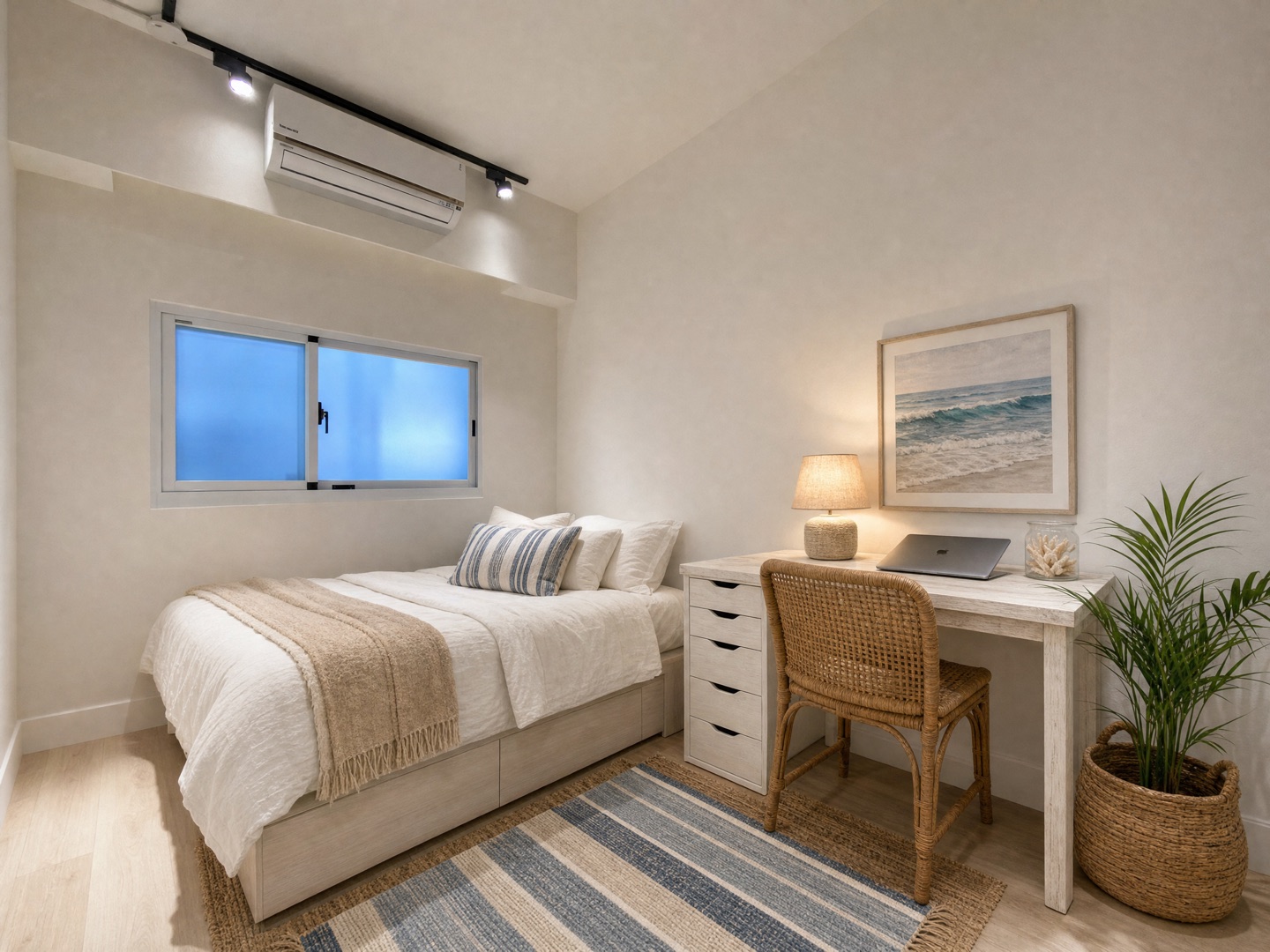
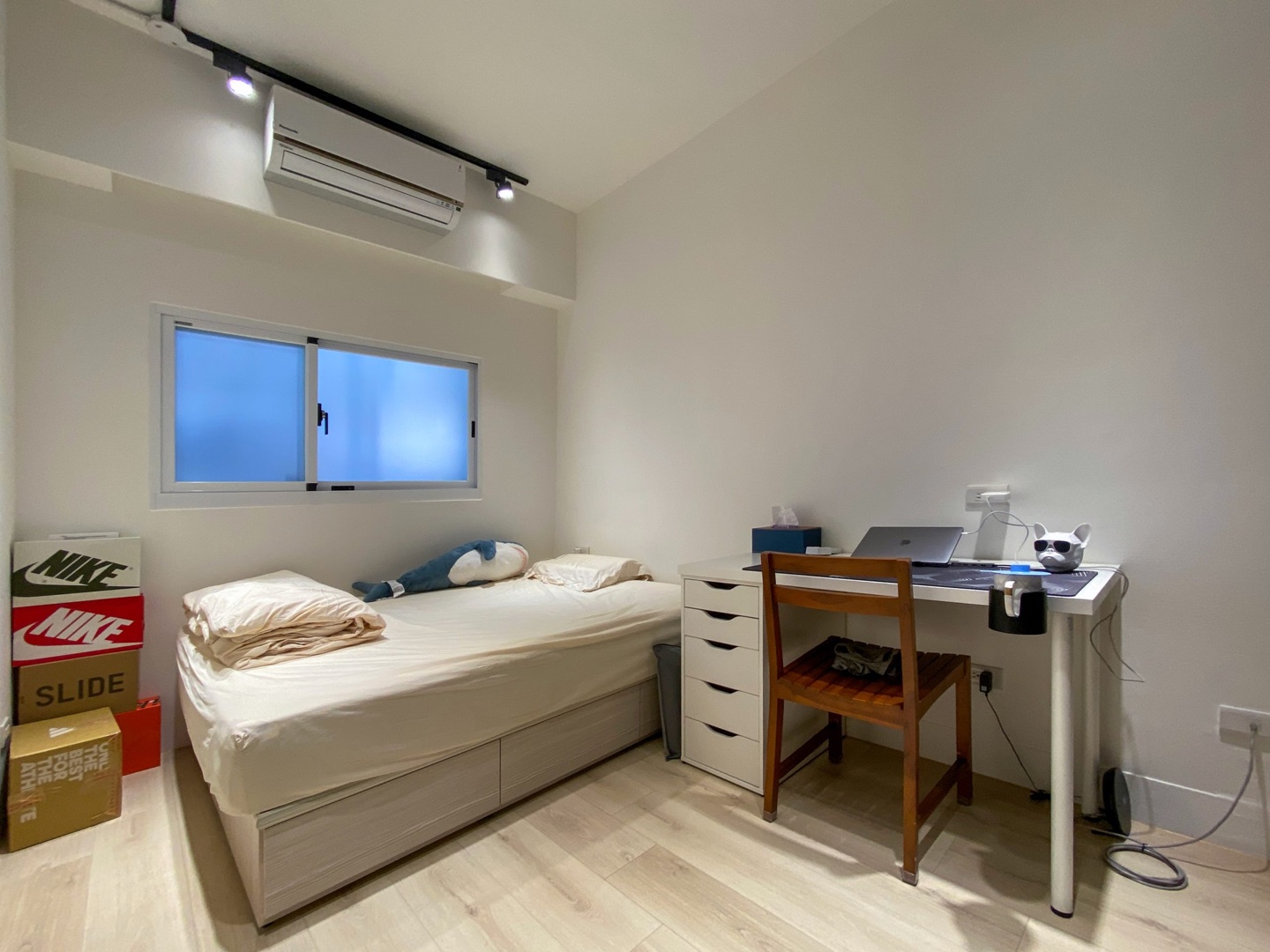
Coastal, in a furnished bedroom. New white bedding with a striped cushion and a knit throw, a striped rug over jute, a rattan chair, a sea print, a lamp and a palm. The stacked shoe boxes are gone.
The window, the air conditioner and ceiling track light, the floor, and where the bed and desk stand all stayed. When a room is already furnished, only the movable things change.
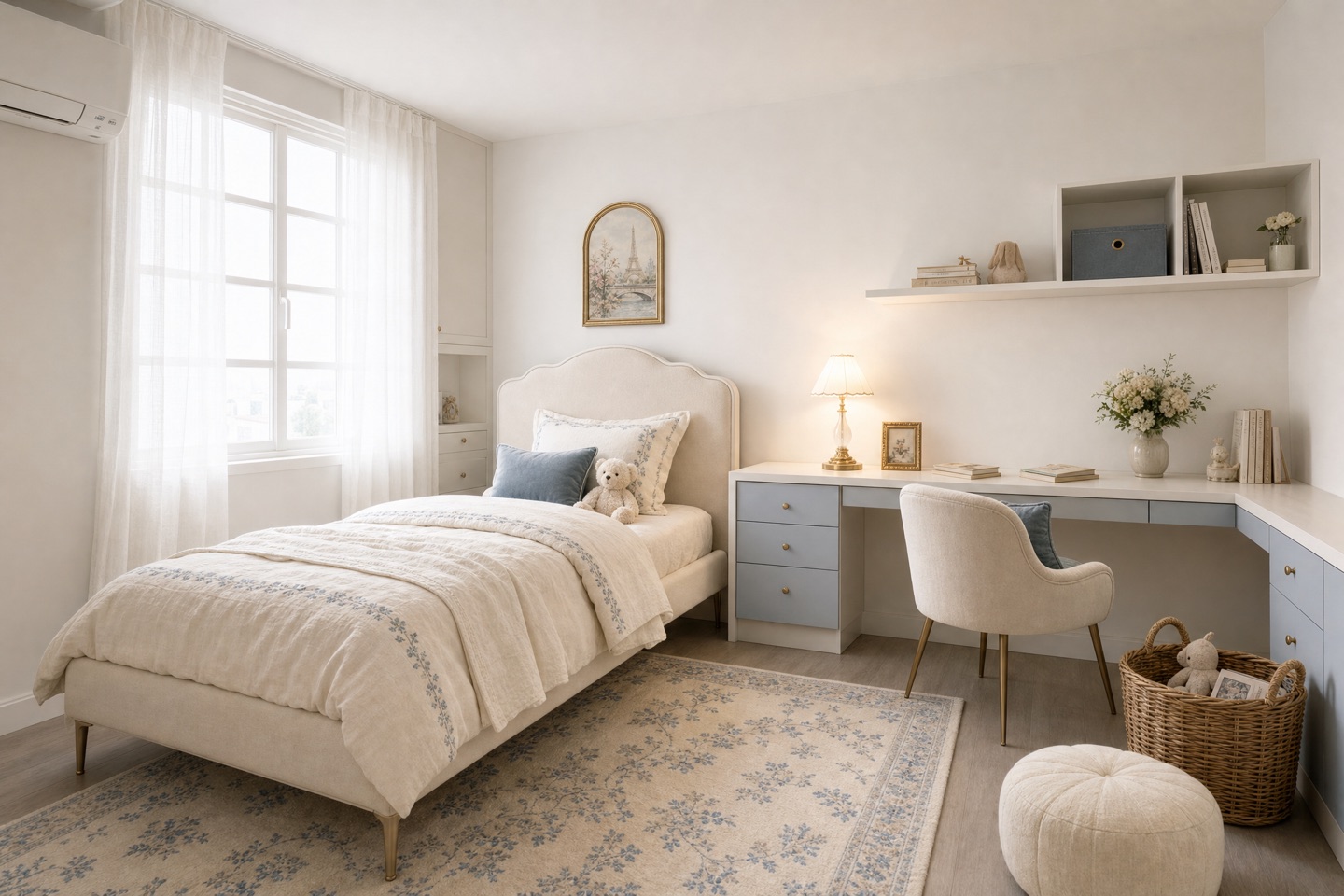
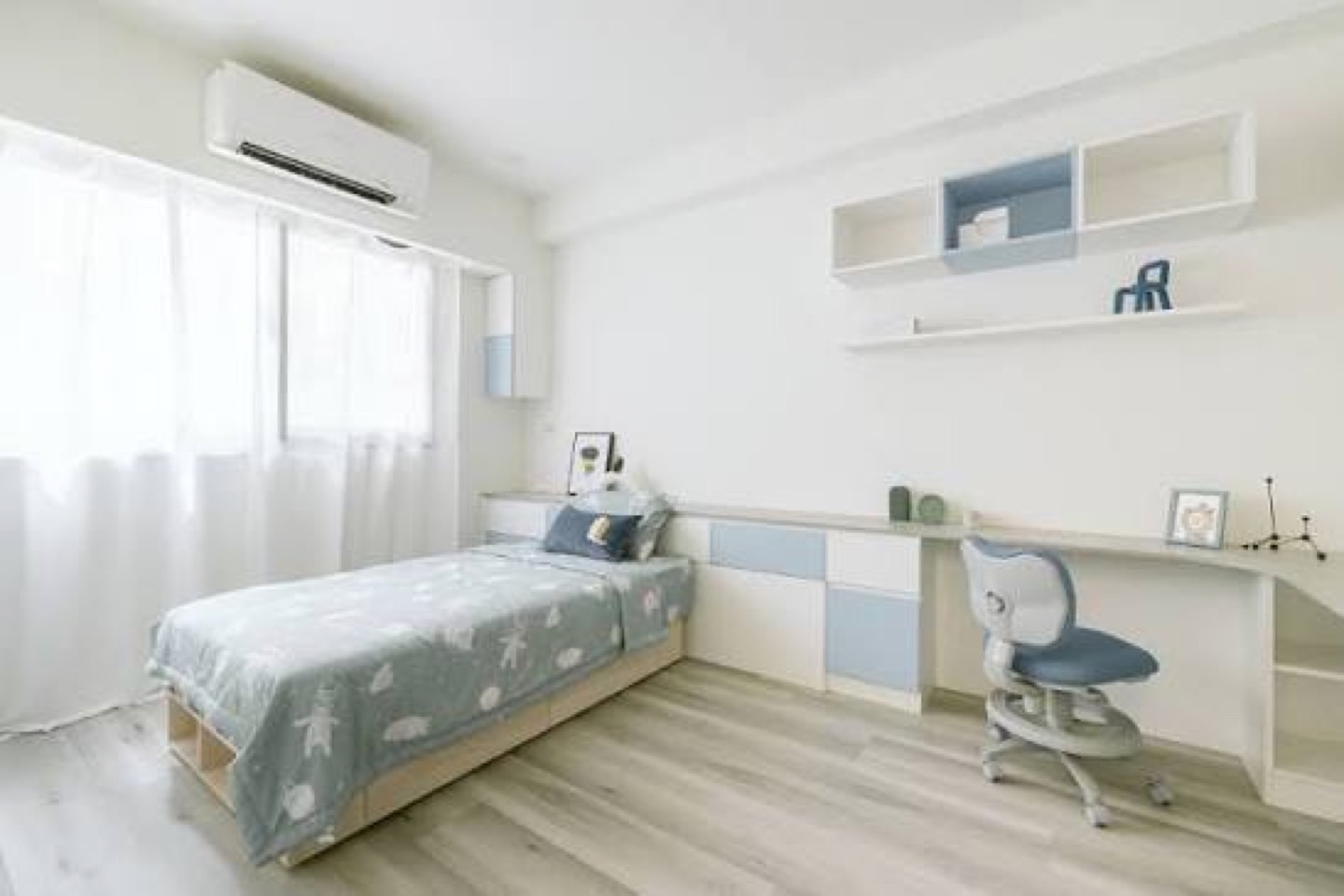
French, in a kids’ room. A cream bed with a scalloped headboard, a blue floral rug, a cream desk chair, a round pouf, a basket and a gold-framed print replace the original furniture. The blue desk drawers stayed blue.
This one drifted. The window began as a wide sliding window on the left wall and came back as a taller window with a grid of panes, and the camera angle changed. The tool is told to keep both, and here it did not. We kept the result as it came out.
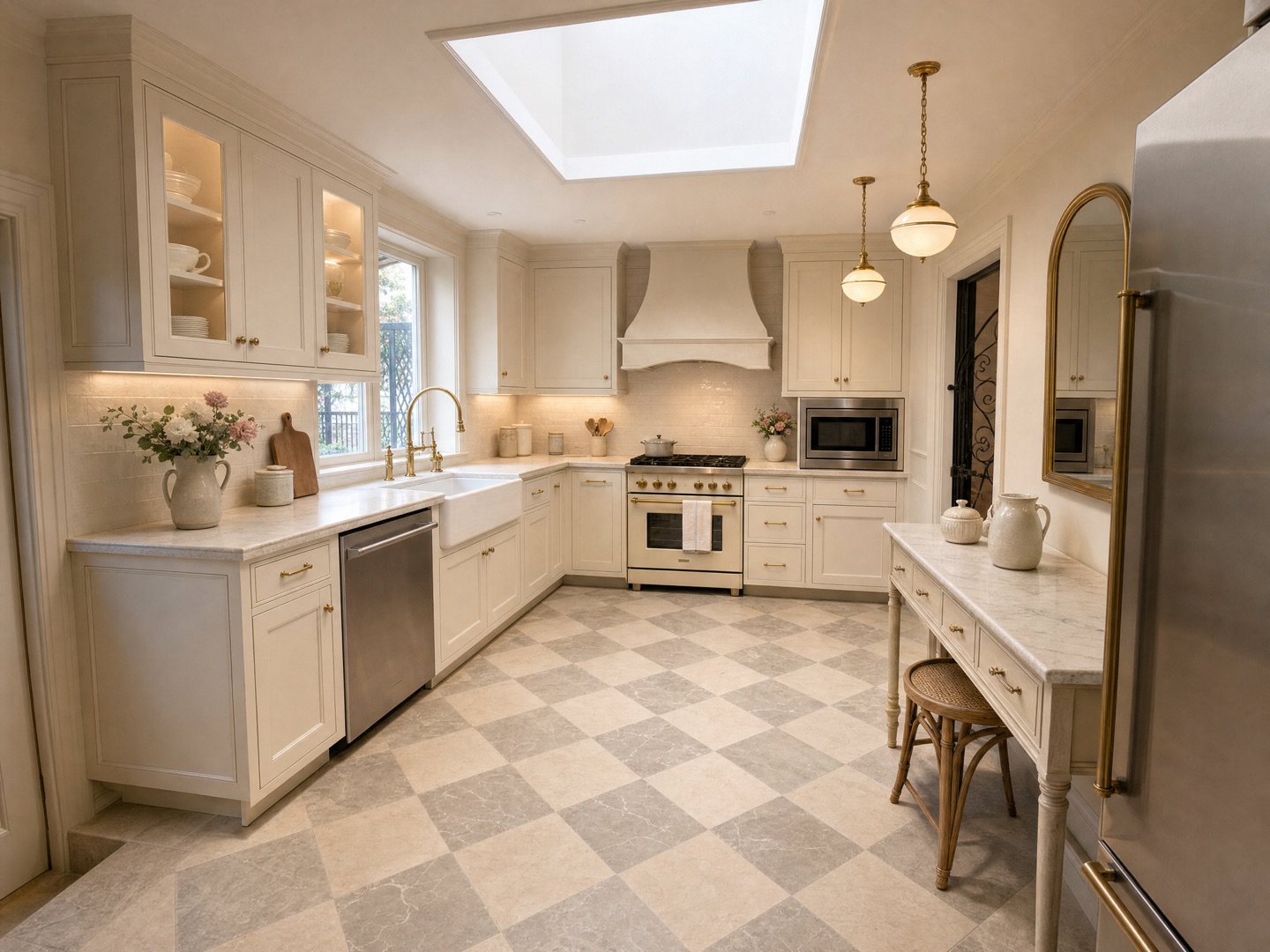
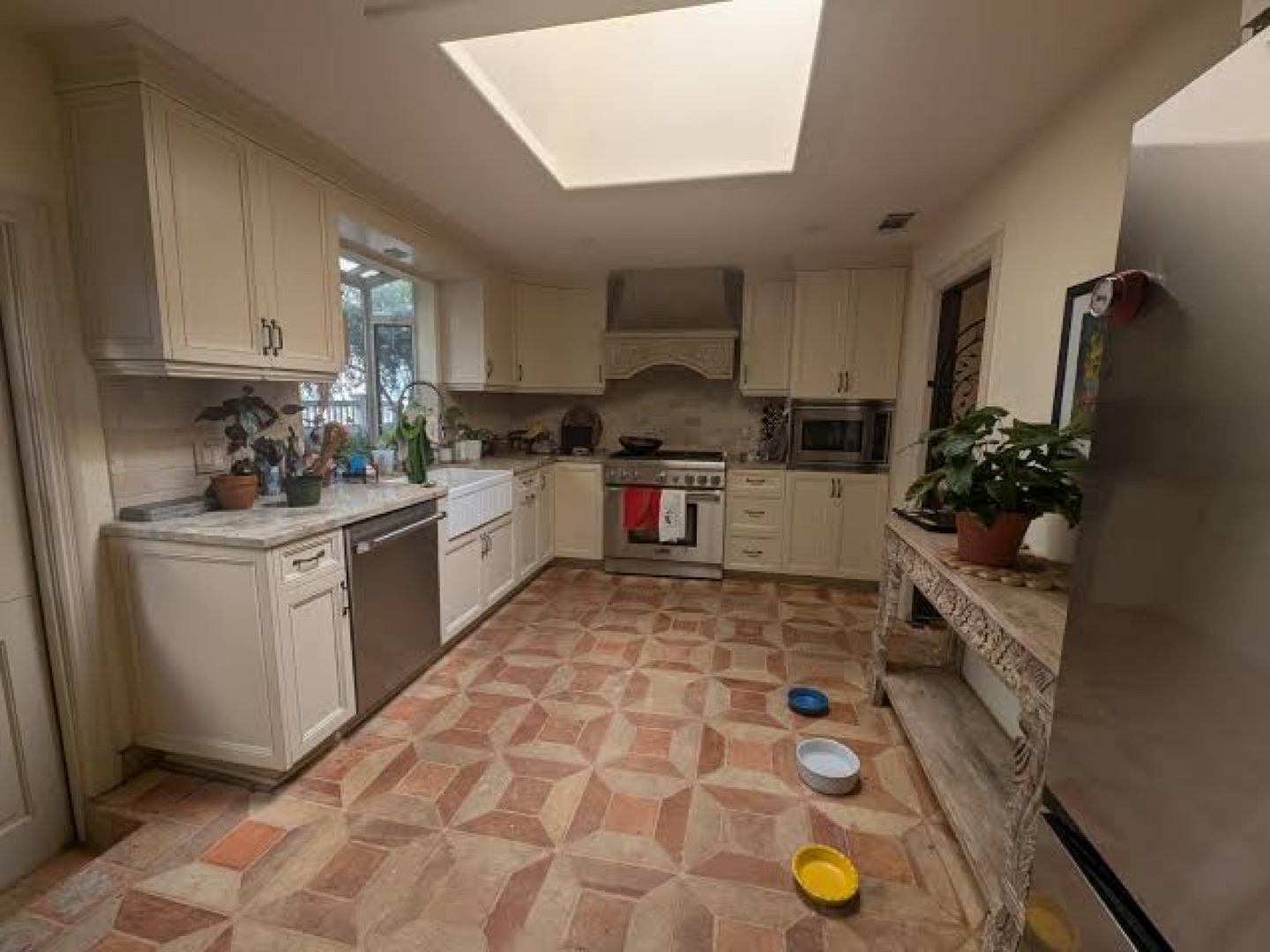
French, in a kitchen. Brass pendant lamps, a gold-framed mirror, glass-front upper cabinets, flowers and a marble-topped console replace the clutter. The pet bowls and the red towel are gone.
This run changed more than furnishing. The terracotta floor became grey-and-cream checkered tile, and the window, the range hood and the cabinet doors look different. Read it as a redesign concept, not a restyle of what was there. A furnished room is meant to keep its floor and cabinets.
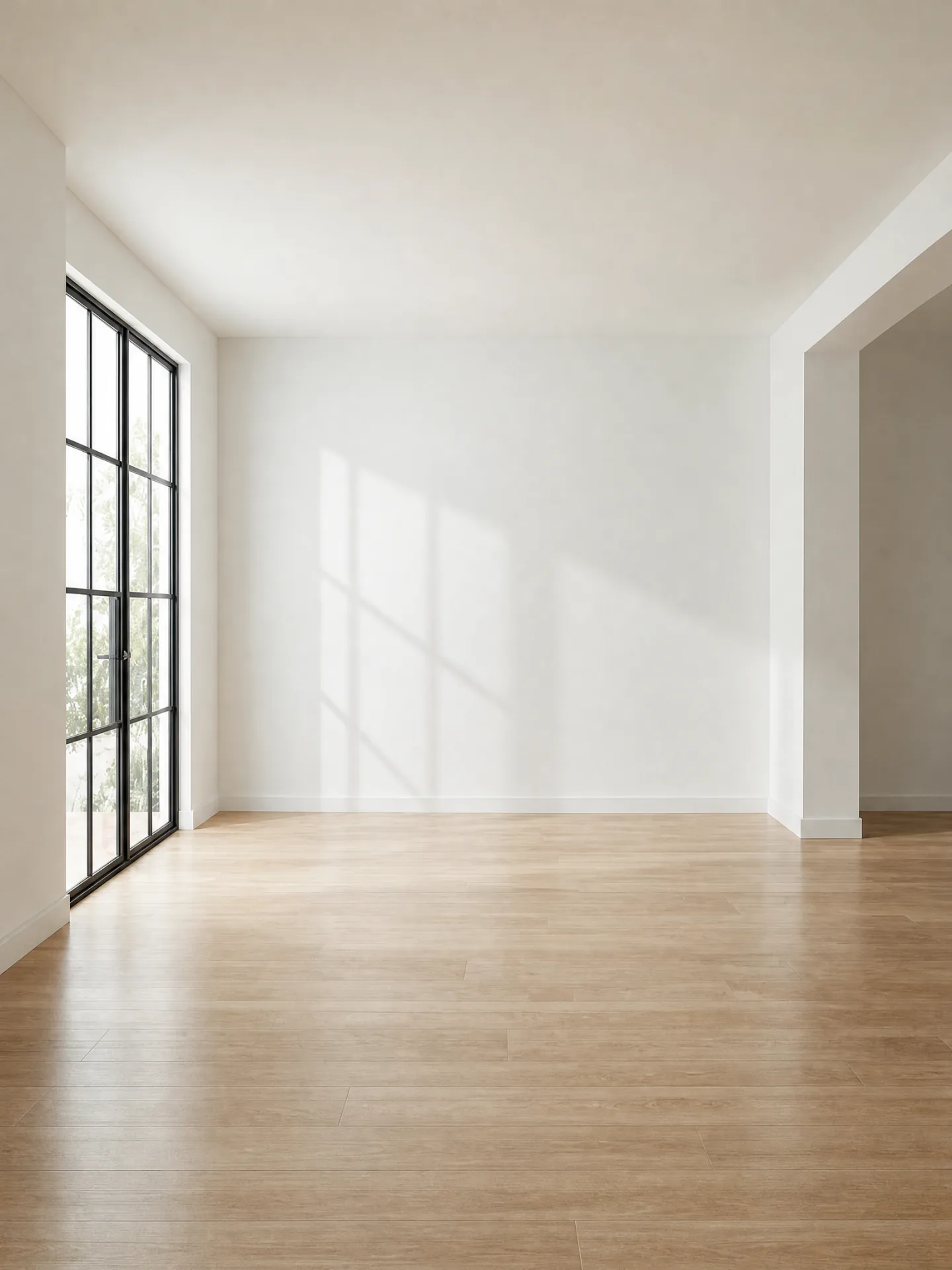
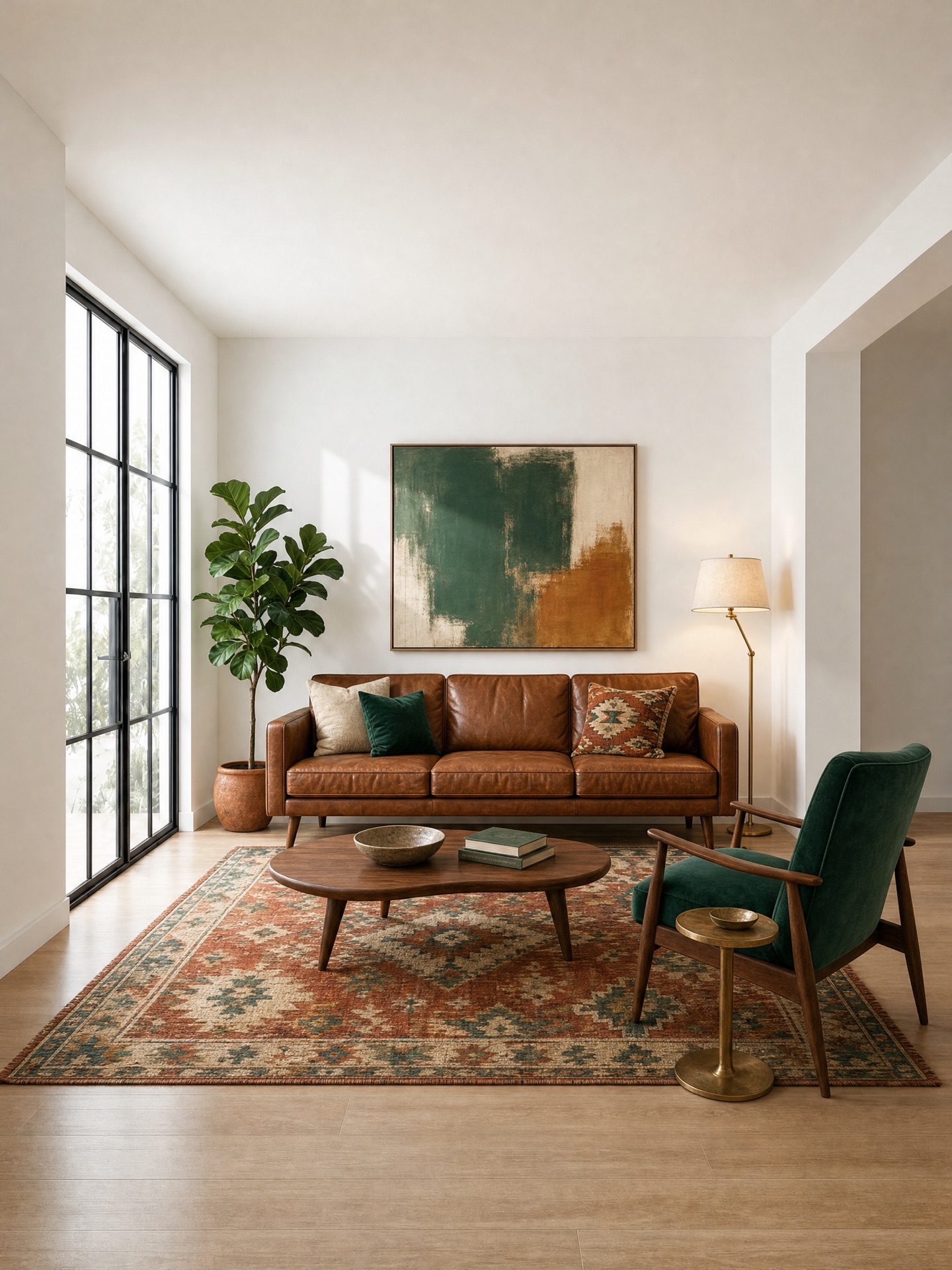
Mid-century Modern, from an empty room. Warm wood furniture, a caramel leather sofa, a kidney-shaped table and a geometric rug fill the room.
The window, the doorway, the floor and the angle of the light are the same as in the empty photo.
How to narrow down your style
Pick a favorite by feel first, then check it against your real room. Four questions do most of the work.
- What mood do you want? Calm: Japandi, Scandinavian Light, Minimalist or Japanese. Warm: Natural wood, Cream, American or Coastal. Bold: Mid-century Modern, Retro, Eclectic or Industrial. Polished: French or Contemporary. Pick the mood before the label.
- What does the room already have? Look at the window light, the floor color and how much open wall you have. Our test room has a tall black-framed window on the left and a light oak floor, and every style below had to live with both.
- What can’t you give up? Most styles are held up by one thing. Mid-century is a shape (tapered legs). Coastal is a color (white and blue). Cream is a texture (soft and layered).
- Does it survive your own photo? A style that looks great in someone else’s room tells you little about yours. Try it on your own empty room before you buy anything.
The same living room in 14 styles
We took one empty living room photo and ran it through our room design tool once per style, with the settings left alone: one style and the living room picked, the aspect ratio on “match original”, no extra instructions. The window, the doorway, the floor, the direction of the daylight and the camera angle never change. Furniture, rugs, lamps and art do. None of the images are retouched, and each style has one image. (Mid-century Modern was run twice because the first result framed the room more tightly than the rest, which would have made the comparison unfair.)
Mid-century Modern
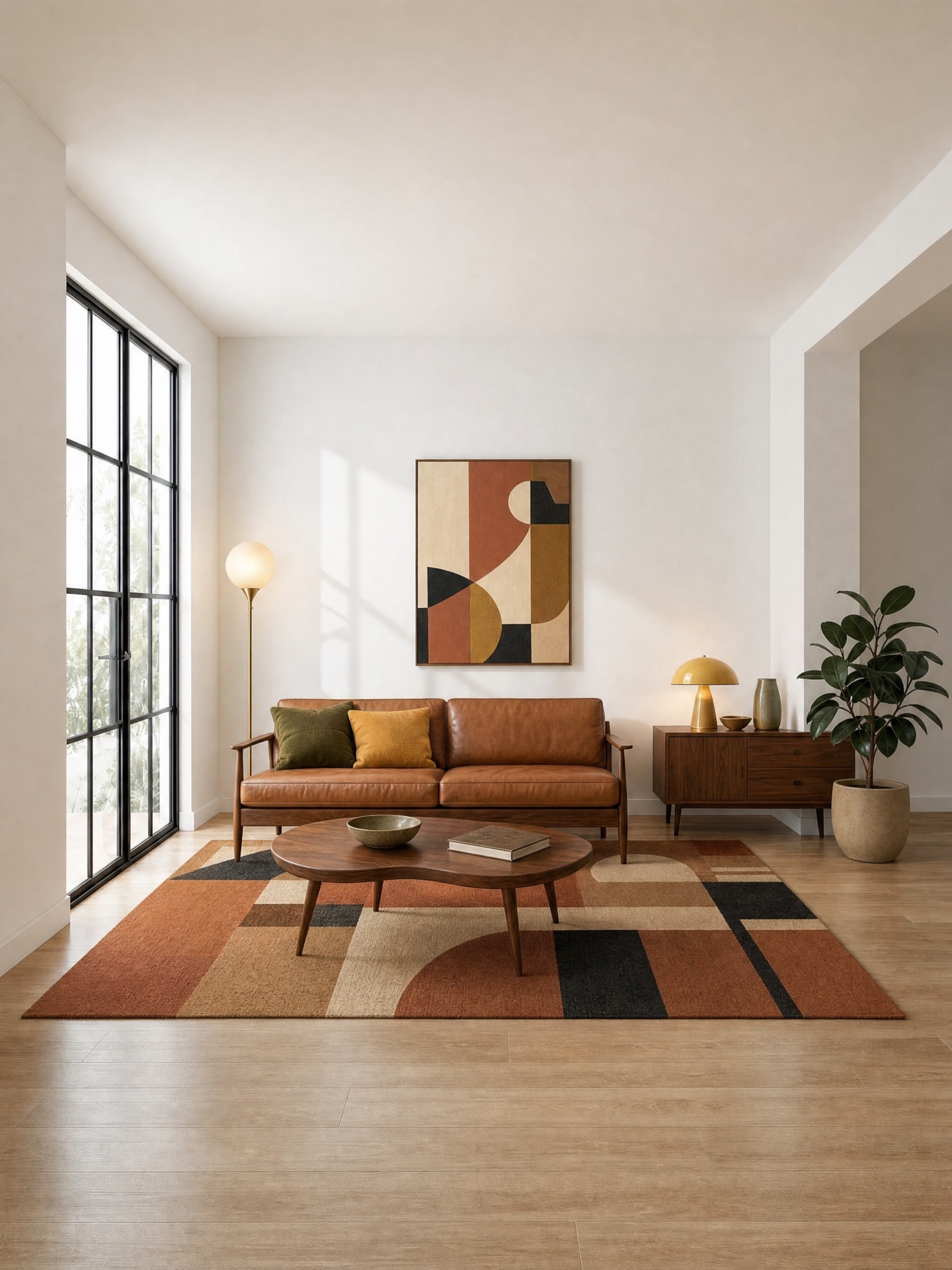
A 1950s and 60s look built on walnut or teak, tapered legs and organic shapes. Rooms stay uncluttered, with a bit of graphic pattern.
Warm wood, a caramel leather sofa, a kidney-shaped coffee table and a brass globe lamp. Mustard and olive stay on cushions and small objects; the geometric pattern lives on the rug and the art.
In a kitchen or bathroom: Flat walnut or teak doors with no frame, brass or black pulls, terracotta or cream square tile, and a floating walnut vanity in the bathroom.
Often mistaken for: 70s Retro. Mid-century is lighter and more wooden; Retro is rounder and more saturated.
Watch out for: Big curvy bouclé sofas, glass geometric tables, traditional plaster moldings.
Japandi / Wabi-sabi
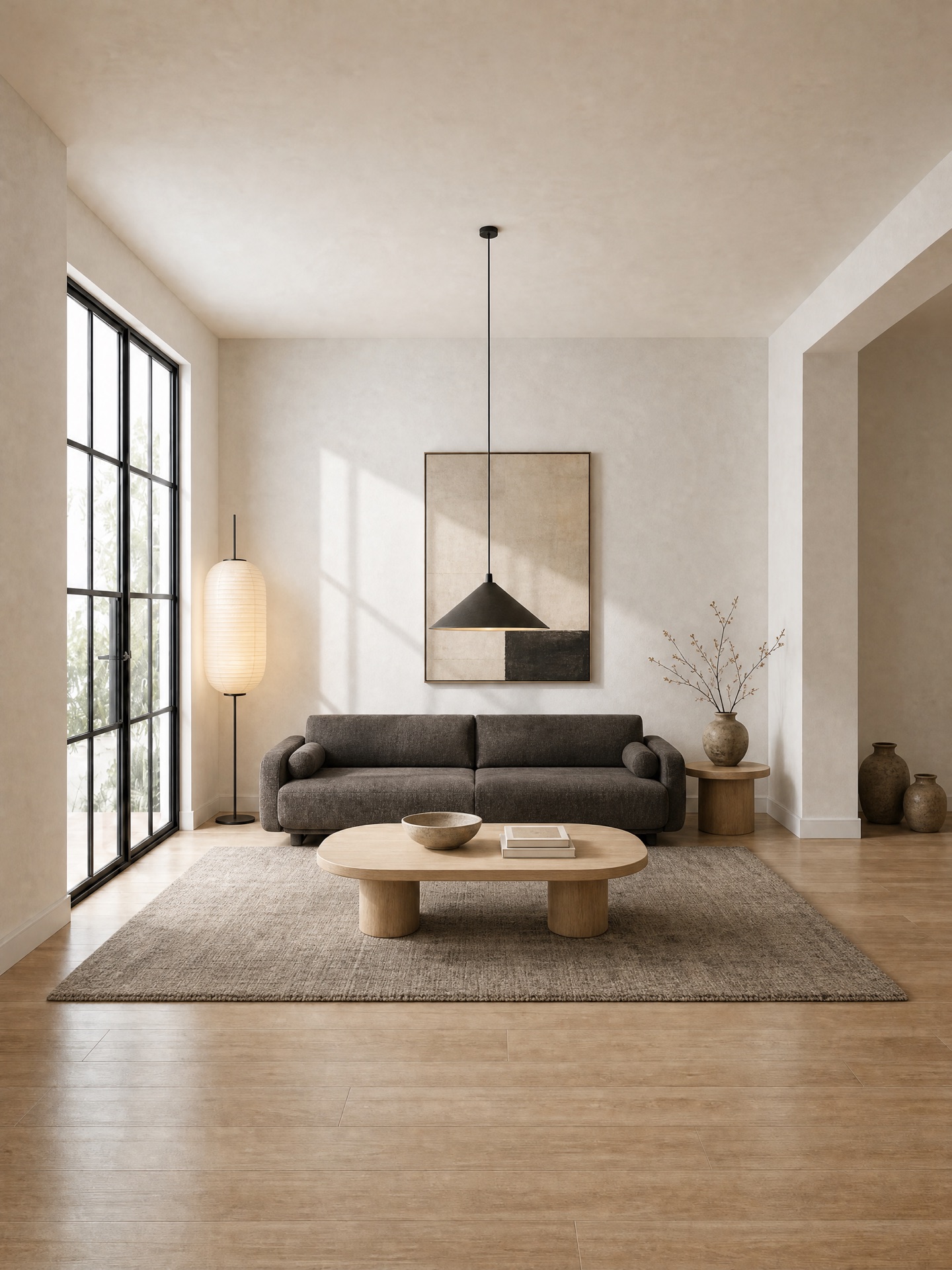
Japanese minimalism meets Scandinavian function: matte, restrained, low to the ground, with a lot of quiet wall.
Greige, charcoal and oatmeal. A low dark sofa with round bolsters, an oak coffee table on cylinder legs, handmade ceramics. Ask for wabi-sabi (or write “rough, handmade”) and you get the rougher branch: plaster grain on the wall and pieces that aren’t placed symmetrically.
In a kitchen or bathroom: Matte greige or light oak flat doors with hidden handles, a hood in the same color as the cabinets, and a microcement-look backsplash.
Often mistaken for: Japanese style (that one keeps traditional elements like lattice and paper lamps) and Minimalist (Japandi keeps natural texture and handwork).
Watch out for: High saturation, shiny metal, busy patterns.
연안
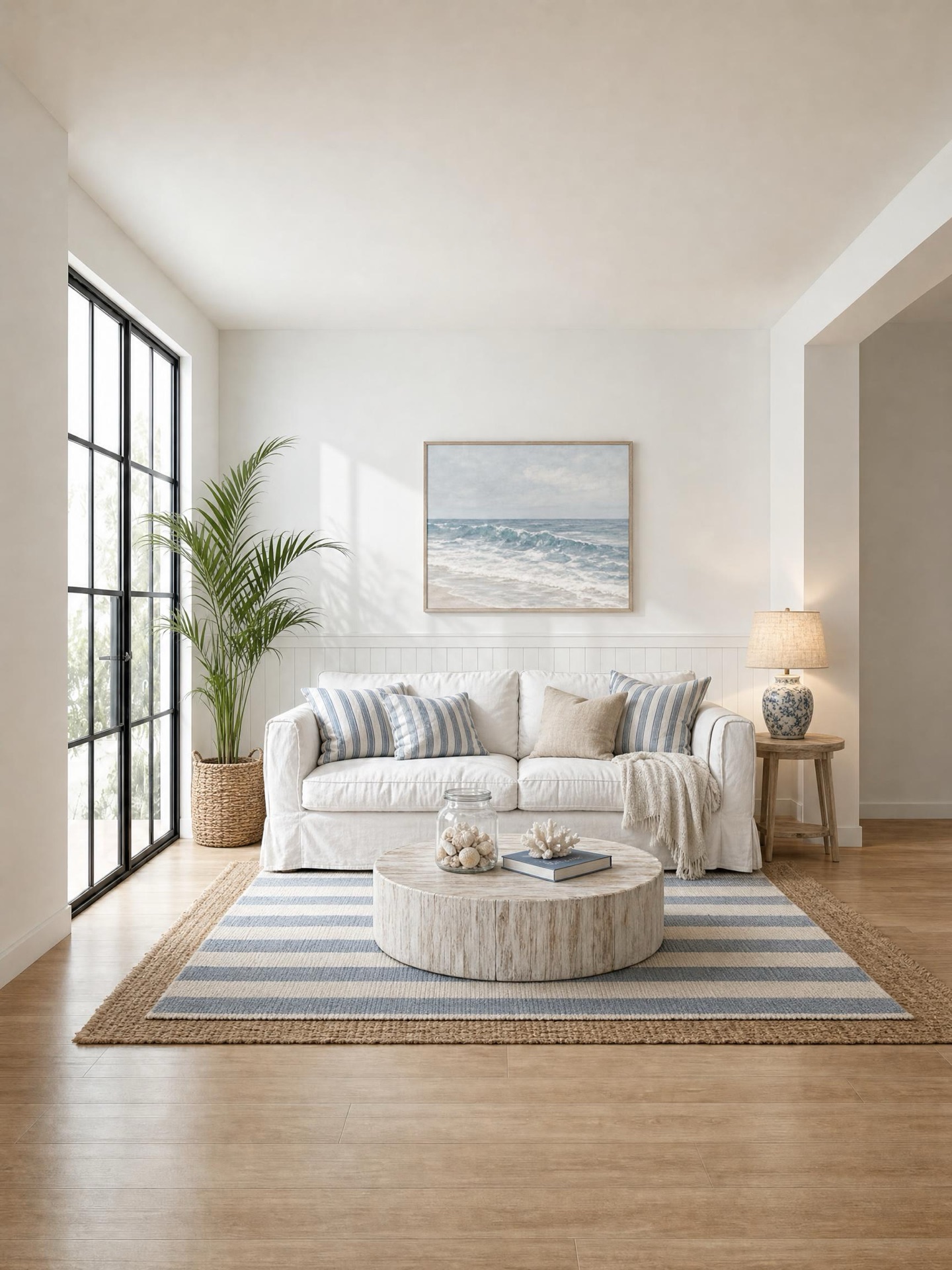
White and ocean blue, light and relaxed. Surfaces look whitewashed, floors are bare wood, and furniture is built for lounging.
A loose slipcovered sofa, rattan or seagrass, blue-and-white stripes layered over a jute rug, and a sea print on the wall. Blue shows up on a cabinet front or small objects, not everywhere.
In a kitchen or bathroom: White or pale blue inset doors with thin frames, nickel or brushed brass pulls, white handmade-look tile; in the bathroom, a paneled vanity and a striped shower curtain.
Often mistaken for: Scandinavian Light. Coastal has the stripes, rattan and sea references; Scandinavian Light doesn’t.
Watch out for: Dark wood, heavy fabric, cold metal, and a plain beige “wood” room with a blue pillow.
Scandinavian Light
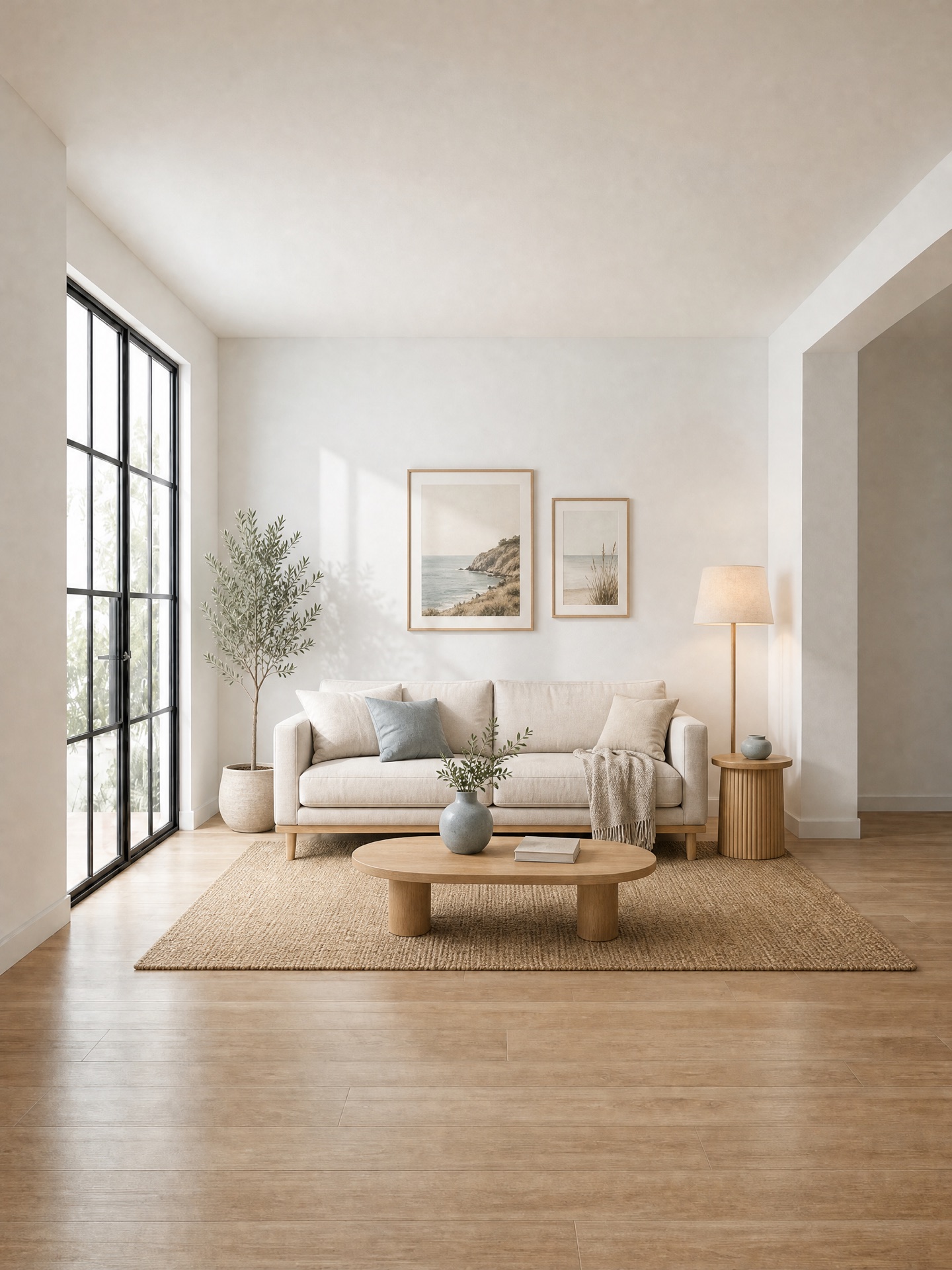
Light oak and ivory: bright, simple, low saturation. Clean without feeling empty, and happy with natural materials.
An ivory linen sofa, a pill-shaped oak coffee table, a jute rug and an olive tree. Pale grey-blue is allowed on small things only. One classic-shaped chair is fine.
In a kitchen or bathroom: Ivory or light oak flat doors, thin hidden pulls, white square tile; in the bathroom, a light oak vanity against fog-blue vertical glazed tile.
Often mistaken for: Natural wood. Scandinavian Light is lighter, cooler and simpler; Natural wood is warmer, heavier and shows more grain.
Watch out for: Dark wood, saturated accents, complicated patterns.
Natural wood
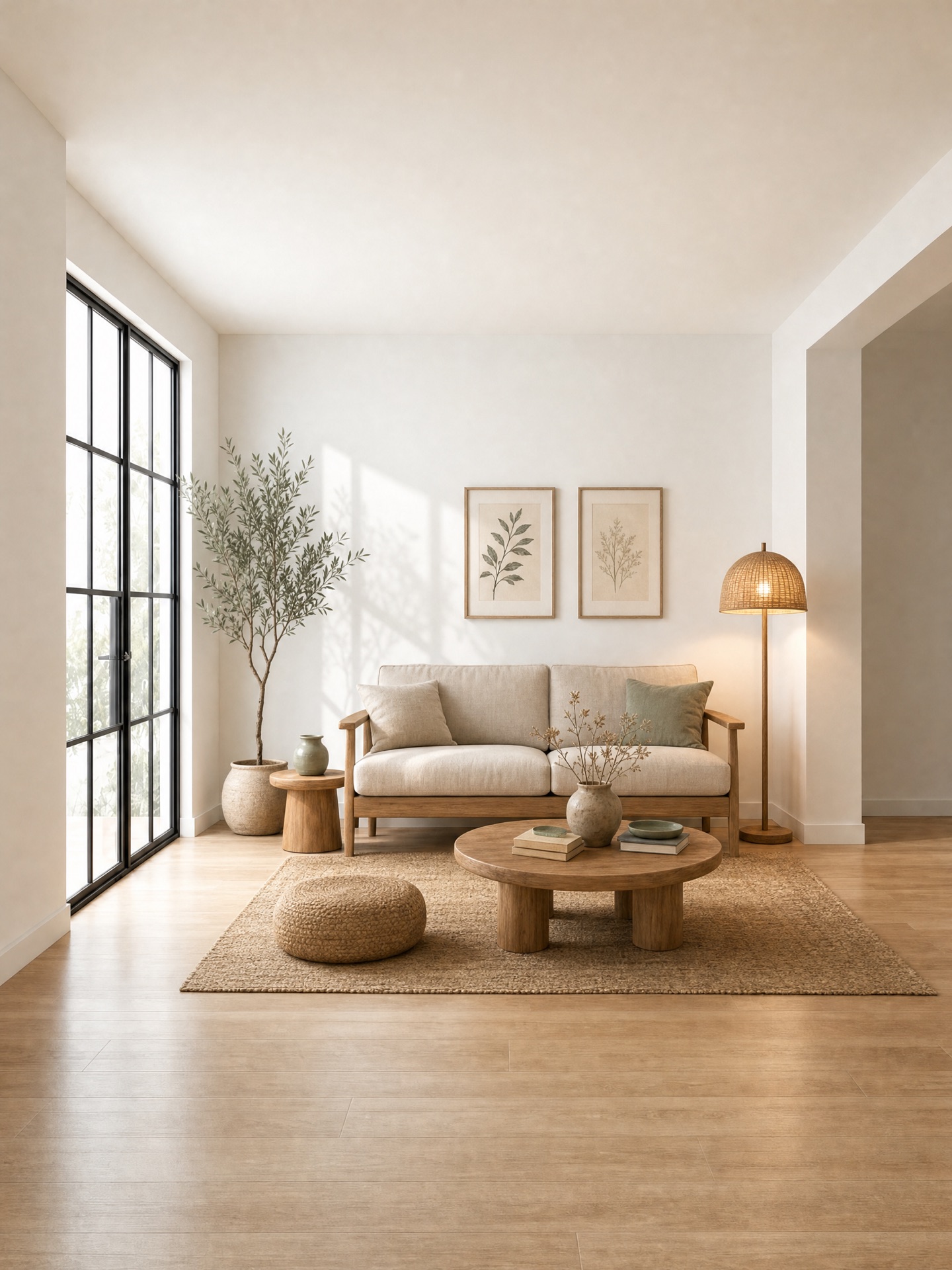
Wood does the talking, warm and honest. The grain should be easy to see.
A wood-framed sofa, a round wooden coffee table, a woven pouf, linen and a few plants. The palette is wood, off-white and a soft sage that appears only on plants and small objects.
In a kitchen or bathroom: Wood-veneer doors with visible grain, round wood or black pulls, a hood wrapped in wood or painted off-white, and a solid wood island with wooden stools.
Often mistaken for: Scandinavian Light (see above). More rattan, more plants, warmer and heavier wood.
Watch out for: Several wood tones fighting each other, a room that is wood from floor to ceiling and feels heavy.
미니멀리스트
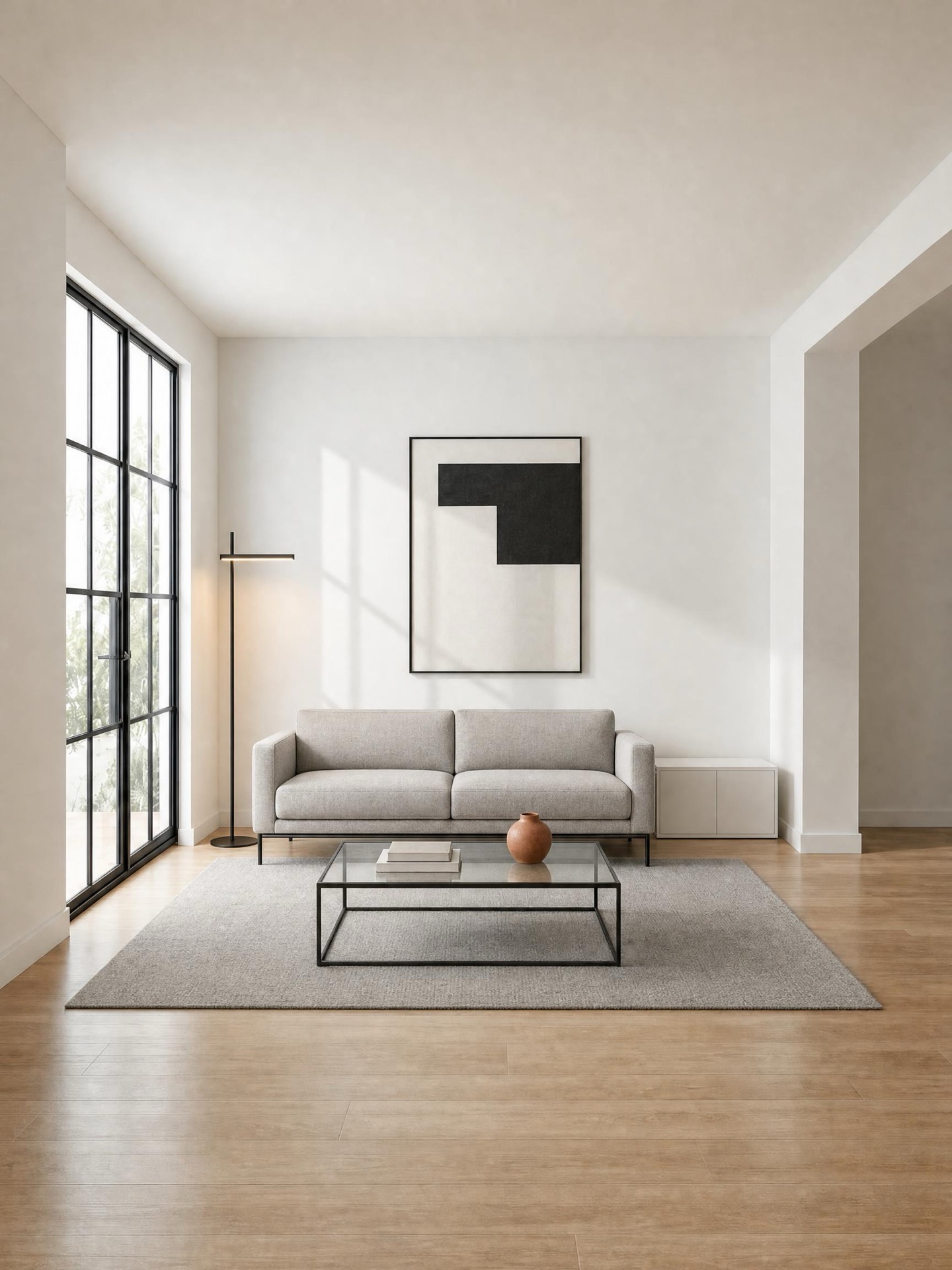
Take things away until what’s left is volume and wall: straight lines, white, light grey and black, one small accent.
A clean low sofa, a thin-framed glass or metal coffee table, a single graphic print and almost nothing else. Fewer objects, chosen carefully.
In a kitchen or bathroom: Handleless white or grey flat doors, a quartz counter and backsplash in the same color, appliances recessed flush; a floating vanity and frameless glass in the bathroom.
Often mistaken for: Cream (round and warm white versus straight and cool) and Contemporary (which has comfortable soft furnishings and some art).
Watch out for: Busy patterns, lots of objects, anything stacked.
현대의
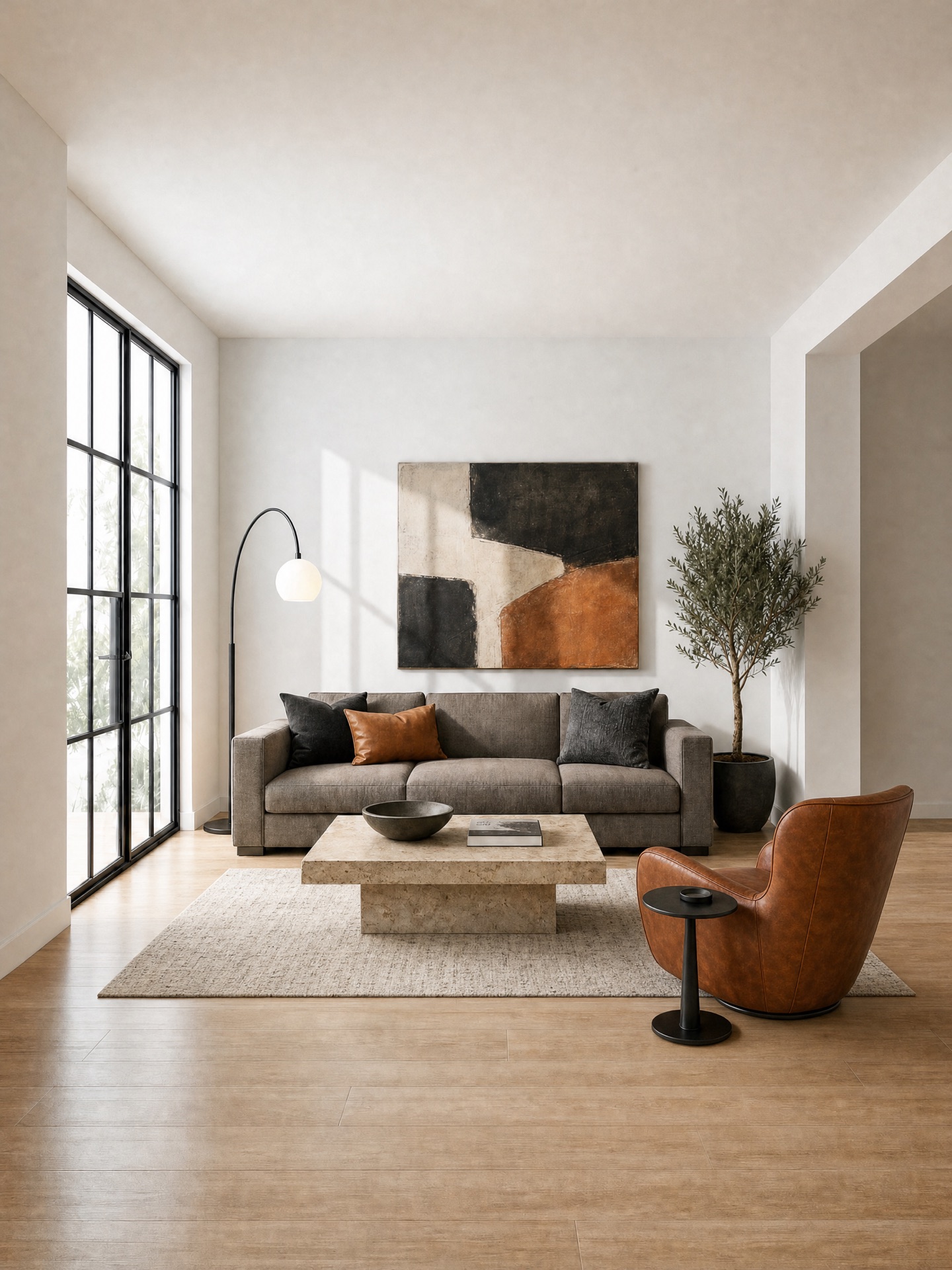
Design of the moment: simple and modern but properly furnished. Clear volumes, sculptural pieces, open space, a little decoration.
A neutral base of grey, beige, white or charcoal with one or two accents. Smooth surfaces such as stone, metal, glass and wood. A big comfortable sofa, a sculptural chair, a large artwork.
In a kitchen or bathroom: Frameless flat doors in two contrasting tones, simple visible pulls, a full-height backsplash, a clean rectangular island and a pendant with some shape to it.
Often mistaken for: Minimalist (Contemporary has real soft furnishings and some art), Scandinavian Light (less hand-made oak) and Cream (straight lines, not rounded).
Watch out for: Ornate decoration, traditional moldings, a room so bare it looks unfinished.
프랑스 국민
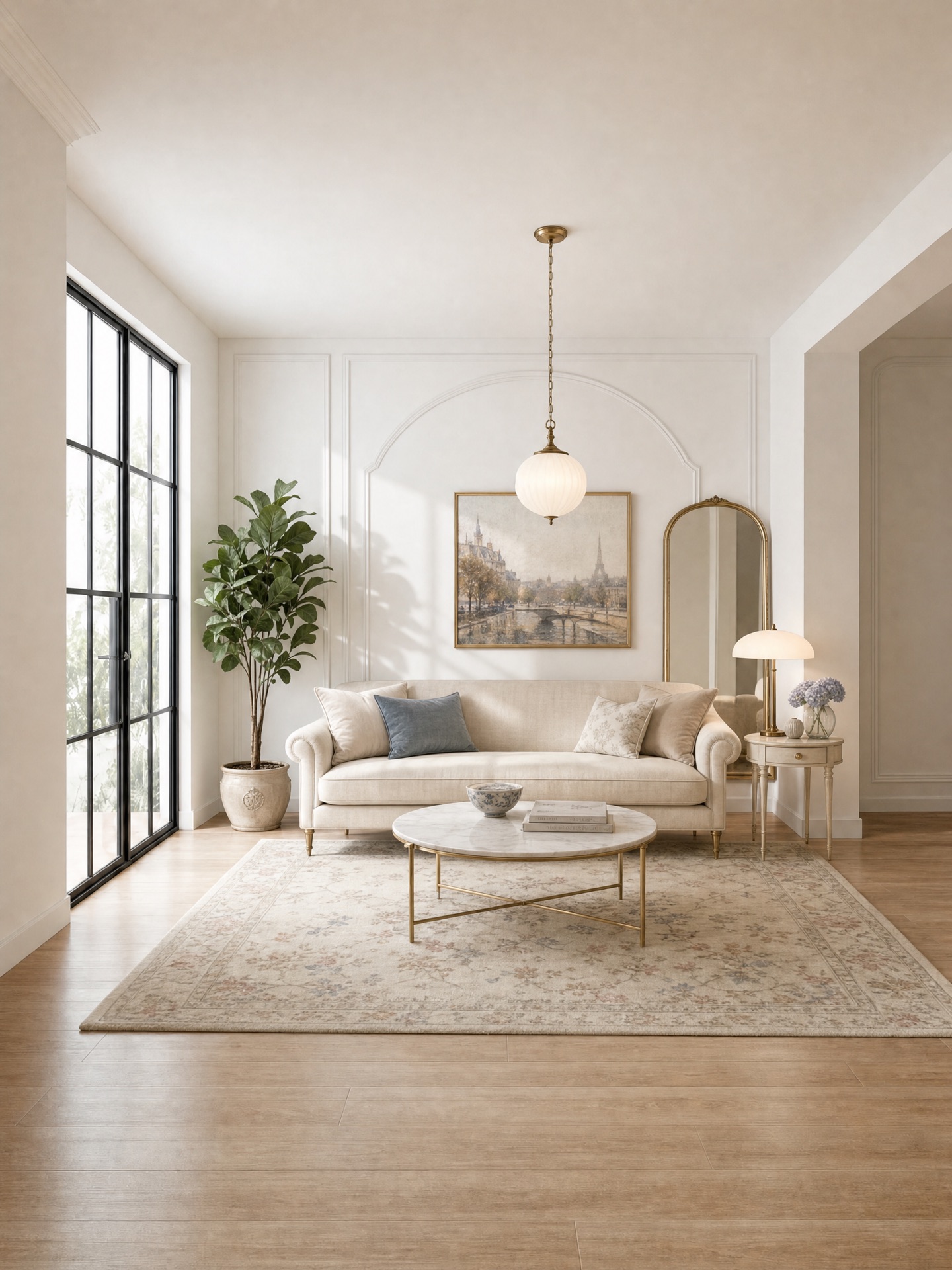
Modern Parisian French: refined classic detail with restraint. It is not a palace.
Cream, ivory and soft gold with brushed brass; a few pieces with real curves, thin wall molding, an arched line. Pink or blue alone doesn’t make a room French. Door lines, plaster details and furniture curves do.
In a kitchen or bathroom: Cream matte inset doors with a narrow frame, brushed brass knobs and a plaster-look hood with a soft curve and a thin cornice. Two branches exist: ask for fresh cottage (floral, sage and cream) or dark vintage (deep fog-blue on one wall or cabinet).
Often mistaken for: American. French uses narrow-frame inset doors and a plaster hood; American uses Shaker doors.
Watch out for: Ornate palace carving, heavy gilding, huge crystal chandeliers, large areas of pink or blue.
일본어
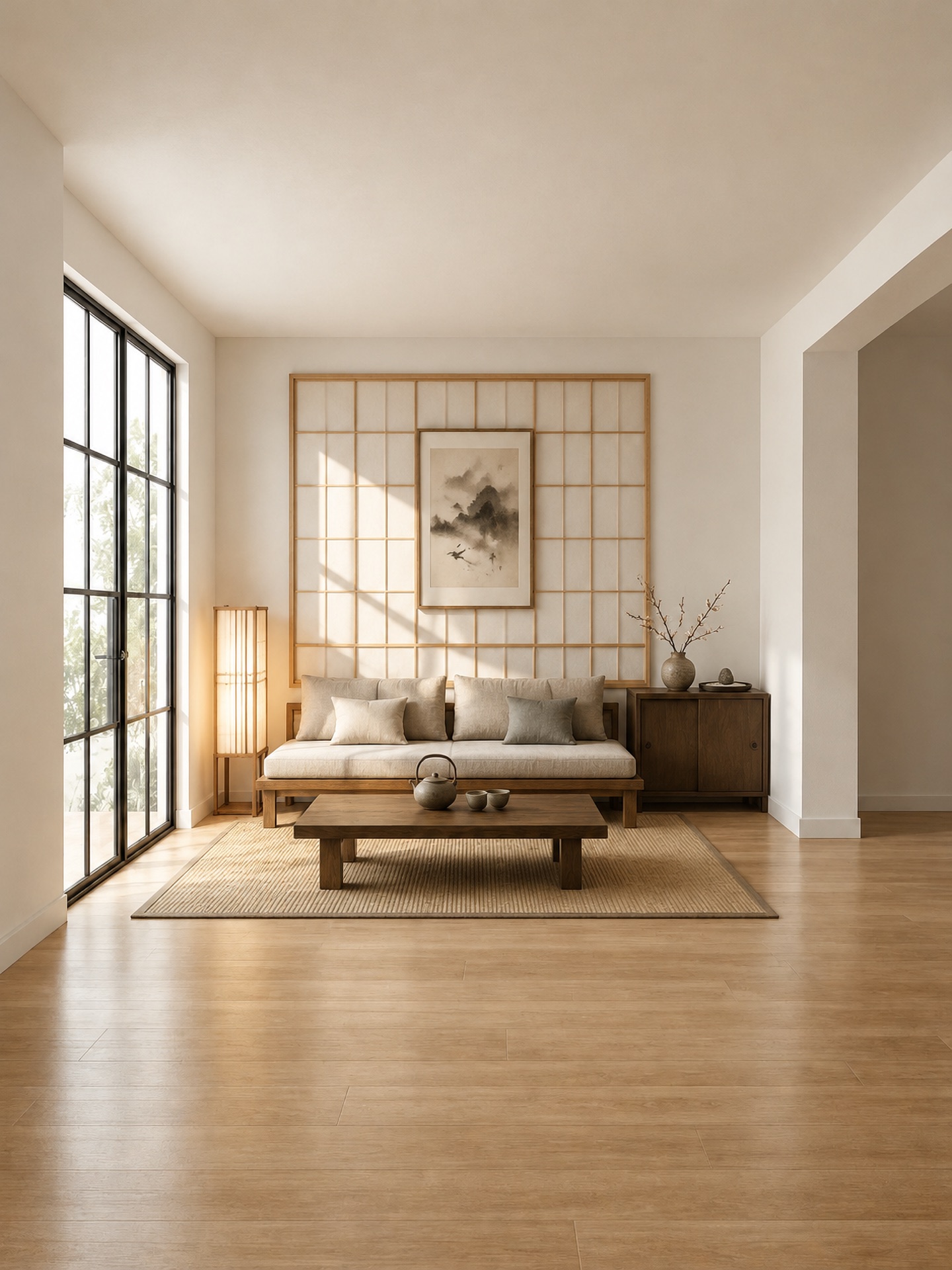
Traditional Japanese elements: simple, natural and close to the floor. Wood lattice, screen textures and low furniture.
Natural wood, beige, light grey and dark wood, all matte. A low platform seat, a low table, paper lamps and a woven rug. The lattice behind the sofa in our image is the tell.
In a kitchen or bathroom: Natural wood flat doors, sometimes frosted or washi-look glass, bamboo or wood pulls, and a low wooden dining table where other styles would put an island.
Often mistaken for: Japandi. Japanese keeps lattice, low tables and paper lamps; Japandi is more modern with greige and rounded lines.
Watch out for: Ornate decoration, saturated color, too much furniture.
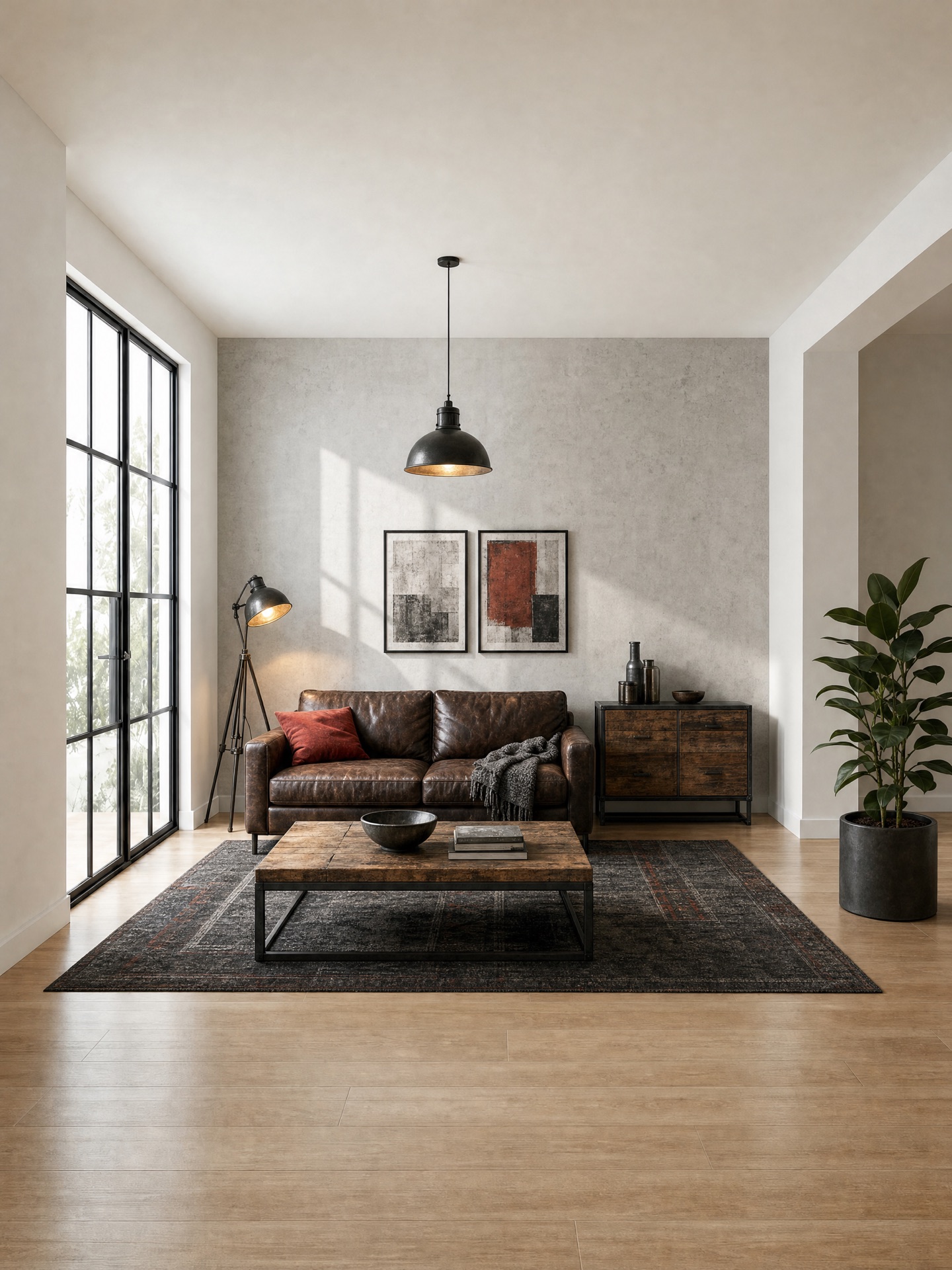
산업
Raw metal and concrete, practical solid furniture and open space in neutral colors.
A dark leather sofa, a black iron and wood coffee table, aged wood, grey and black with brick red on one patch of wall or a small object. Metal and open space run cold, so warm wood, leather and plants do the balancing.
In a kitchen or bathroom: Dark grey or black flat doors with metal pulls, a black or steel hood, concrete-look or dark stone counters, brick-look or black subway tile and open metal shelves.
Often mistaken for: Retro. Industrial is cold metal and concrete; Retro is warm wood, orange and olive.
Watch out for: A room that is cold and hard all over, too many rough elements piled up.
Cream
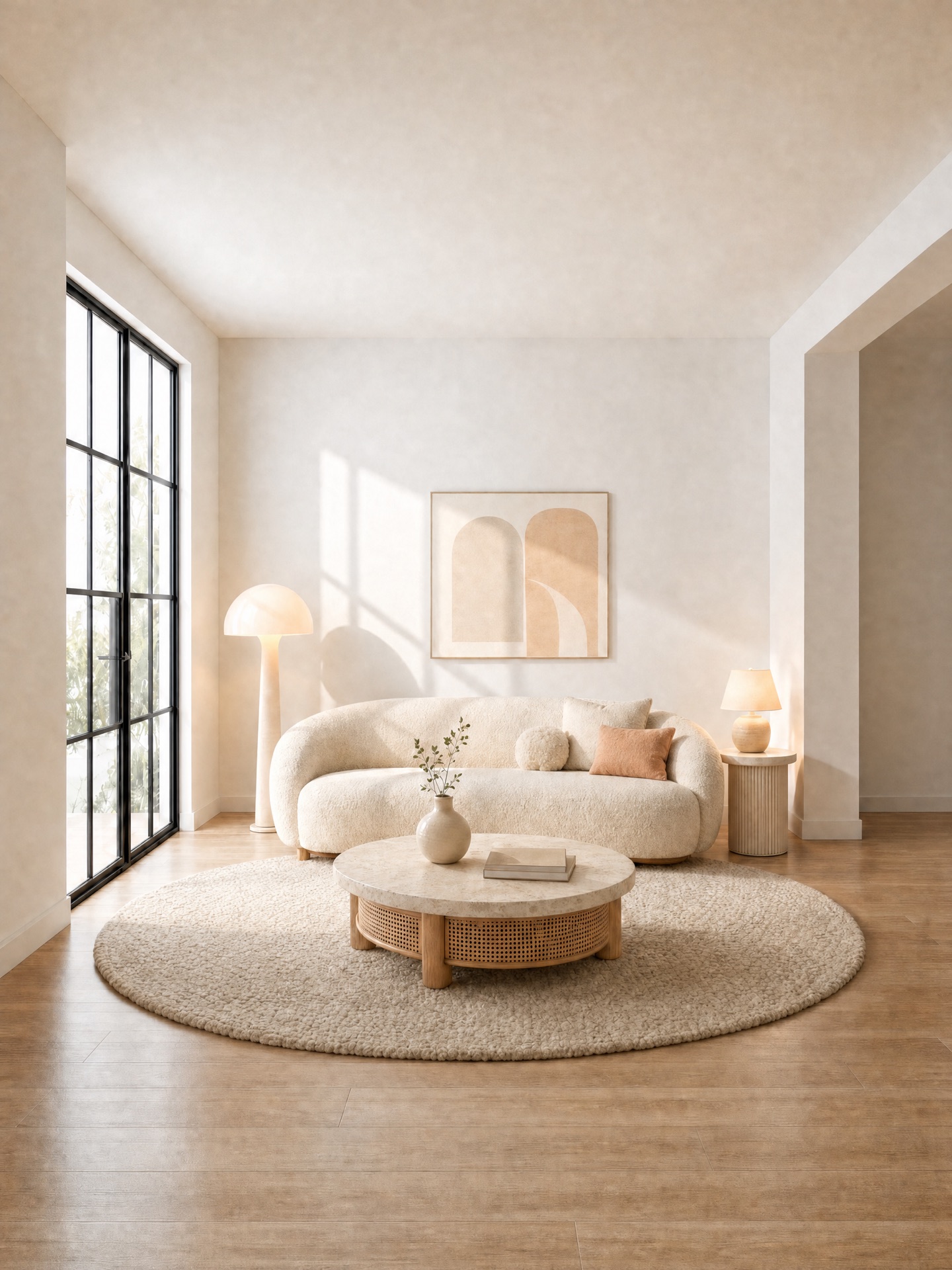
Rounded corners and warm white: soft, bright, a little squishy. The trick is layering textures so it doesn’t read flat.
Milk white, butter yellow, light apricot and warm grey. A curved bouclé or corduroy sofa, a round coffee table in rattan or stone, a round wool rug, mushroom lamps. Apricot stays on small things.
In a kitchen or bathroom: Cream round-cornered doors with round knobs or hidden handles, a rounded hood without moldings, a round island with round-back stools.
Often mistaken for: Minimalist. Cream is round and warm white; Minimalist is straight and cool.
Watch out for: All-white monotony, a single material, sharp right angles.
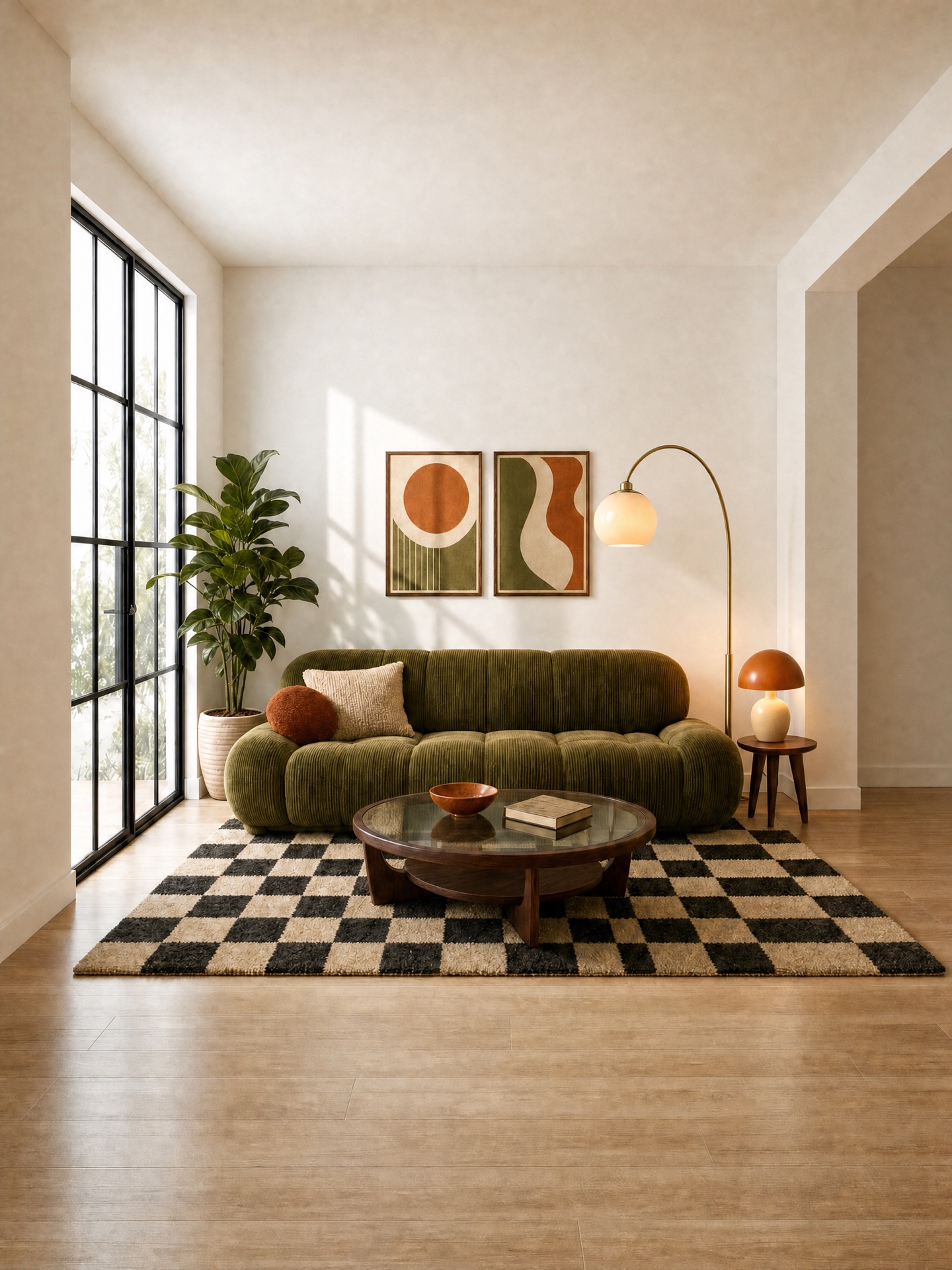
Retro (70s)
70s Retro: warm white walls and wood floors as a base, with orange, olive, wine or caramel as accents. Rounded, low furniture.
A low rounded sofa (corduroy, bouclé or leather), a glass or round dark-wood table, mushroom lamps, graphic posters, a big plant. Pick one or two accent colors and repeat them. Pattern goes in one place only, here the checkerboard rug.
In a kitchen or bathroom: Flat doors in a low-saturation grey-blue or sage, cream small square tile, a wine or ochre backsplash stripe, black round pulls and a continuous counter with rounded edges.
Often mistaken for: Mid-century (wood-led, tapered legs, lighter), American (no Shaker doors) and Industrial (warm, not cold metal).
Watch out for: Rooms that go too dark, Shaker doors, cold industrial metal, patterns in several places.
American
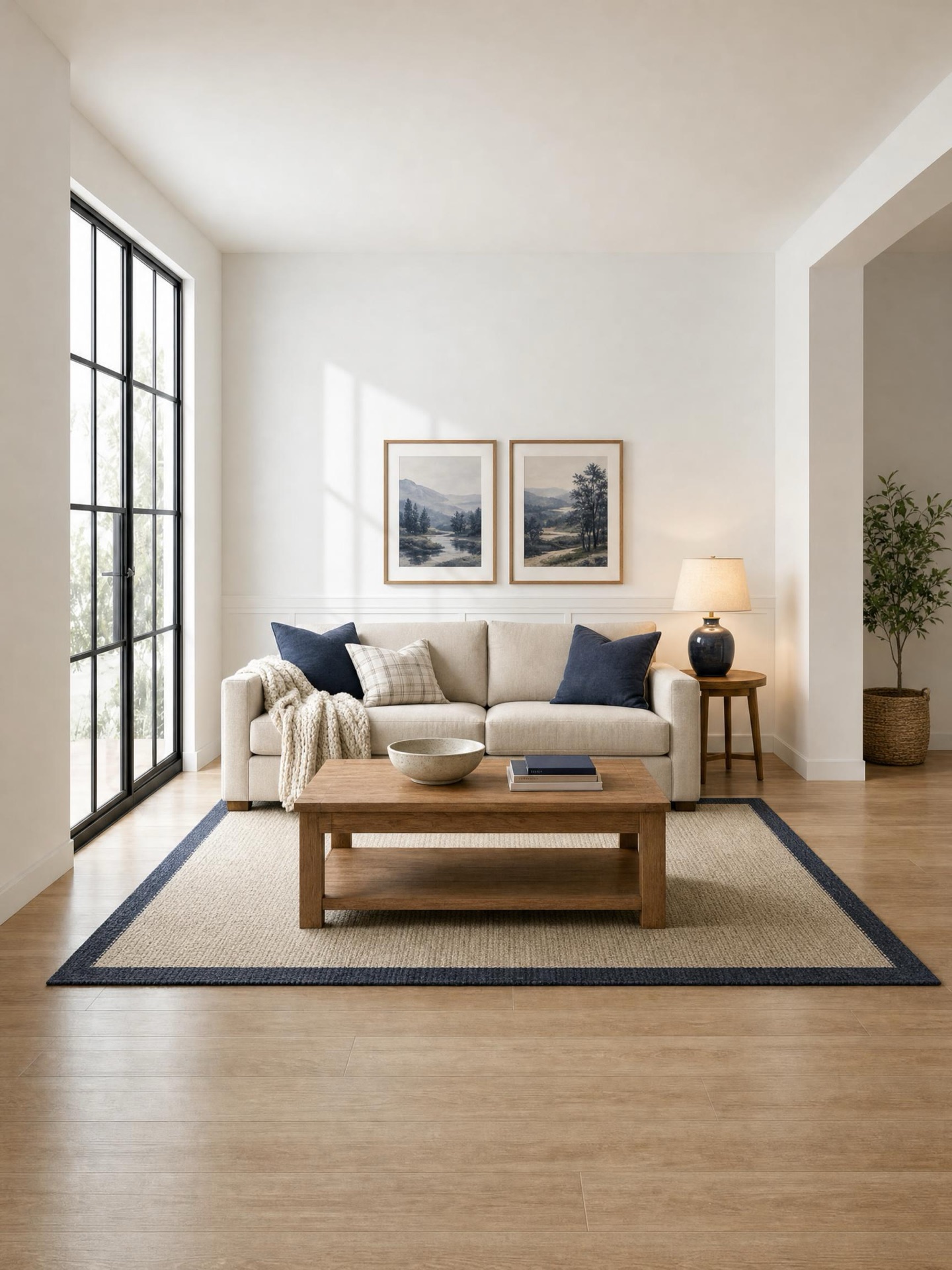
Modern American by default: wide, comfortable, simple lines. Shaker-panel furniture and doors, light or mid-tone wood, beige and warm white, navy as the single accent.
A wide light sofa, a wood coffee table, a woven rug and framed landscape prints. It is not the dark classic version: no dark walnut everywhere, no Persian rug, no dark green leather. Write “classic American” for that, or “country” for beams, framed doors and cotton and linen.
In a kitchen or bathroom: Shaker doors in light or mid-tone wood, nickel or bronze hardware, a simple hood, quartz or marble-look counters, subway tile and a wide island with sturdy stools.
Often mistaken for: French (Shaker doors, nickel or bronze hardware, no plaster curves) and Retro (American is about comfort, not an era).
Watch out for: Dark heavy classic unless you ask for it, furniture too big for the room, clutter.
Eclectic
Mixed on purpose. One thread ties it together, a main color or a main material, and everything else supports it. Two style elements at most.
One large main color, a second color and one accent that repeats. One or two pieces with a story. In our image the thread is leather and green with a kilim rug.
In a kitchen or bathroom: Cabinets and island in two different colors or materials, one metal for all hardware, a hood that matches one of the cabinet colors and a single statement pendant.
Often mistaken for: No close neighbor, but it is the easiest style to get wrong: without a thread it just looks messy.
Watch out for: No through-line, scattered colors, every piece shouting, more than three styles at once.
Look-alikes, side by side
Some styles share so many parts that the label is not enough. These three pairs cause the most confusion, using the same images from above.
Mid-century Modern vs Retro (70s)
Both love wood and warm color, so they get mixed up all the time. Mid-century is lighter on its feet: slim lines, tapered legs, wood leading. Retro is rounder and softer and pushes the colors harder, with orange, olive and wine. Look at the sofas. One sits on legs; the other sits on the floor like a pillow.
French vs American
Both can be cream and white, and both can have a wide sofa. The difference is in the details. French uses narrow-frame inset doors, thin molding and plaster-style hoods, with a few curves. American uses Shaker doors, nickel or bronze hardware and simple lines, and it cares about comfort more than polish. In our two images, French has the arch and the mirror, American has the navy-trimmed rug.
Japandi vs Minimalist
Both are quiet. Japandi keeps natural texture and a handmade feel: matte surfaces, ceramics, warm greige. Minimalist strips almost everything back to straight lines and cool white, grey and black. If the room still has a bowl you would like to hold, it is Japandi.
One more pair showed up in our own test. Natural wood and Scandinavian Light both lean on light wood, and in a thumbnail they can pass for each other. Look at the wood: Natural wood is warmer and heavier, with visible grain, and brings more rattan and plants. Scandinavian Light is paler and cooler with simpler lines.
Try these styles in your own room
Everything above came from one tool, so you can run the same comparison on your own photo. Here is the short version.
작동 원리
- Take a photo of your empty room from where you would normally stand, with the whole room in the frame.
- Upload it and pick a style. Add a room (living room, bedroom, kitchen, bathroom or study) if you want to be explicit; otherwise the tool reads it from the photo.
- Leave the aspect ratio on “match original” or choose another, then generate. In our runs each image took roughly one to four minutes.
- Change one thing at a time after that: “make the sofa lighter”, “remove the floor lamp”. The rest stays put.
What stays fixed, and what changes
Windows, doors, doorways, columns, the floor, the ceiling, the direction of the daylight and the camera angle are locked in the tool’s instructions, so they should stay as in your photo. They did in our living-room and bedroom runs, but not in every run (see the kids’ room and kitchen at the top), so check each result. Furniture, lamps, rugs, curtains, plants and art change, and so can a light wall finish when the style allows one (plaster-look walls for Japandi, white paneling for Coastal). If you pick an aspect ratio far from your photo’s own, such as 16:9 for a portrait photo, the tool warns you that the view may shift.
Who it helps, and how
Real estate and home-staging presenters. An empty listing photo is hard to read. A furnished concept next to it makes the space easier to picture. It is a concept image, not the furniture in the property, so label it as AI-generated and check your local listing and disclosure rules.
Interior designers and decorators. Show a client two or three style directions for the same room before you draw anything. You get directions to talk about, not measurements, drawings or specific products. For a one-off room redesign, our AI interior design page and our AI virtual staging page cover the same ground.
Home and decor content creators. A same-room, many-styles series is slow to shoot by hand. Fix one photo, run one style at a time, and check each result yourself. If you sell furniture or decor, our guide to AI product photography for furniture and home decor brands covers the product-shot side.
Homeowners and renters. Try three styles on your own room before you spend money. The layout is a concept, so confirm real sizes before you buy.
What it won’t do
It won’t give real dimensions, construction drawings or a shopping list of exact products. It is built not to move windows, doors or walls, though you should check each result because it can slip. In a kitchen or bathroom the fixtures it adds are a concept, not real plumbing or venting. And it produces one image per run, so you review each result yourself. The images in this article were made with GPT Image 2; our roundup of GPT Image 2 use cases for marketing, ecommerce and design shows what else that model does well.
Words that change the result
- “Wabi-sabi, rough” on Japandi: plaster grain, handmade ceramics, no forced symmetry.
- “Classic American” or “country farmhouse” on American: dark traditional, or beams and framed doors.
- “Fresh cottage, floral” or “dark, modern vintage” on French: the cottage branch or one deep fog-blue wall.
- “Add a TV” on any living room: a floating low cabinet with a clean wall above it. No TV unless you ask.
자주 묻는 질문
How many interior design styles can I try?
Fourteen: Mid-century Modern, Japandi / Wabi-sabi, Coastal, Scandinavian Light, Natural wood, Minimalist, Contemporary, French, Japanese, Industrial, Cream, Retro, American and Eclectic. Well-known labels such as Traditional, Bohemian or Art Deco are not on the list.
Do I need to upload a style reference image?
No. Pick a style by name and you are done. A reference image is optional, and when you add one the tool only borrows furniture, lamps, soft furnishings and colors from it. Windows, doors, fireplaces and moldings in the reference are never copied into your room.
Will it move my windows or doors?
It is built not to. Windows, doors, doorways, columns, the floor, the ceiling height, the direction of the window light and the camera angle are locked in the tool’s instructions, and only movable furniture, lamps, rugs, curtains, plants, art and decor change, plus light wall finishes that the chosen style allows. That held in all 14 living-room images and in the bedroom at the top of this page. It did not hold in two other runs we show there: the kids’ room window changed shape, and the kitchen came back with new floor tile. Compare each result with your photo, and ask for a redo if something structural moved.
Can I build the kitchen or bathroom it shows me?
Treat it as a concept. If your photo is an empty kitchen or bathroom, the tool adds a full set of fixtures so the room reads as a kitchen or bathroom. Those positions are not real plumbing, venting or drainage, and the image does not give real dimensions.
Which rooms does it work for?
The room picker offers living room, bedroom, kitchen, bathroom and study. A dining room is recognized from the photo. If the room you pick doesn’t match the photo, the photo wins and the tool says so.
How do I get the rough, handmade version of a style?
Say so in the additional requirements. “Wabi-sabi, rough” switches Japandi to its rougher branch. “Classic American” gives the dark traditional look, and “country” gives beams and framed doors. “Fresh cottage, floral” turns French into its cottage branch.
Pick one, then test it
A style name is a shortcut, and shortcuts blur. The fastest way to decide is to see two or three of them in a room you recognize. Start with the one you picked by mood, add the one you picked by color, and compare.
저자 소개