








OpenClaw has earned its 160,000+ GitHub stars for good reason. It’s powerful, flexible, and free. But “powerful” doesn’t always mean “right for you.”
After testing dozens of alternatives, we’ve narrowed it down to six tools that actually compete—not just in features, but in solving specific problems better than OpenClaw itself.
This isn’t a ranked list from best to worst. It’s organized by what you’re actually trying to do.
1. NanoClaw – The Security Champion
Best for: Privacy-conscious users who won’t compromise on data control
NanoClaw strips OpenClaw down to its essential bones and rebuilds it with security-first architecture. Every operation runs locally by default. No phone-home telemetry. No cloud dependencies you didn’t explicitly enable.
What makes it special:
- Zero-trust execution model
- Full audit logging for compliance environments
- Runs on minimal hardware (Raspberry Pi compatible)
The trade-off: Setup requires more technical know-how than OpenClaw. If you’re not comfortable with Docker and environment variables, budget extra time.
Verdict: When your data absolutely cannot leave your infrastructure, NanoClaw is the only serious option.
2. Nanobot – 99% Less Code, Same Core Function
Best for: Non-developers who want Agent capabilities without the complexity
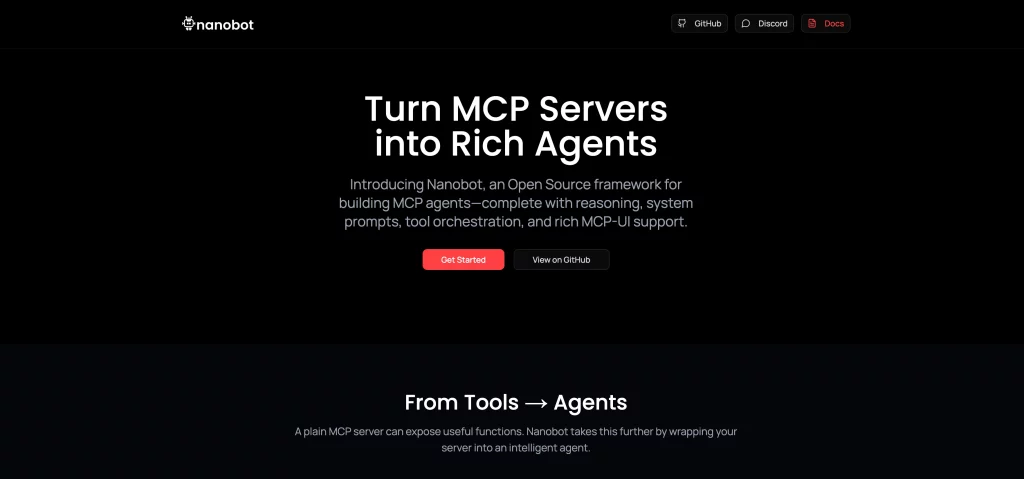
Nanobot takes OpenClaw’s core philosophy—AI agents that can actually do things—and removes nearly all the friction. You don’t write JSON configs or wrestle with Python dependencies. You describe what you want, and it handles the plumbing.
What makes it special:
- Natural language setup (“Monitor my email and summarize newsletters weekly”)
- Pre-built skill library for common tasks
- One-click deployment to cloud or local
The trade-off: Less flexible for edge cases. If your workflow is truly unique, you’ll hit walls.
Verdict: The closest thing to “OpenClaw for normal people.” If OpenClaw’s learning curve scared you off, start here.
3. OpenCode – The Open-Source Coding Agent
Best for: Developers who want AI pair programming without vendor lock-in
While Claude Code gets the headlines, OpenCode offers something increasingly rare: full transparency. Every suggestion, every tool call, every decision is inspectable and modifiable.
What makes it special:
- Native IDE integration (VS Code, JetBrains, Neovim)
- Context-aware across your entire codebase
- Self-hostable—your code never touches third-party servers
The trade-off: Smaller model ecosystem than commercial alternatives. You trade some capability for control.
Verdict: For developers who treat “open source” as a requirement, not a preference.
4. SuperAGI – The Multi-Agent Framework
Best for: Teams building complex, collaborative AI systems
SuperAGI doesn’t just run one agent—it orchestrates teams of them. Each agent has a role, memory, and the ability to delegate tasks to other agents. The result is workflows that would be impossible with a single LLM instance.
What makes it special:
- Agent-to-agent communication protocols
- Built-in task queue and resource management
- Scales from single-machine to distributed deployments
The trade-off: Overkill for simple automations. The learning curve rivals OpenClaw’s.
Verdict: When one agent isn’t enough—when you need a system that reasons, plans, and executes across multiple domains.
5. KimiClaw – The Conversational Generalist
Best for: Users who want a capable daily assistant without setup headaches
From Moonshot AI, KimiClaw prioritizes getting started over infinite customization. It works out of the box with sensible defaults, then gradually exposes more power as you need it.
What makes it special:
- Exceptional long-context handling (200K+ tokens)
- Strong multilingual performance
- Clean, distraction-free interface
The trade-off: Less extensible than OpenClaw. The plugin ecosystem is growing but immature.
Verdict: If OpenClaw felt like building a car from parts, KimiClaw is the turnkey alternative that still lets you pop the hood.
6. Ima Claw – For Content Creators Who Want Results, Not Config Files
Best for: Creators, marketers, and solo operators who need content—fast
Here’s the thing about every tool above: they’re generalists. They can do anything, which means they optimize for nothing.
Ima Claw is different. It doesn’t try to be everything. It focuses on one workflow and nails it: ideation → creation → publication.
What makes it special:
Multi-modal by default. Text, images, audio, video—switch between them mid-conversation. Generate a blog post, create the header image, produce a promo clip, all without leaving the thread.
Long-term memory that matters. It doesn’t just remember facts. It learns your brand voice, your visual preferences, which headlines performed last quarter. The more you use it, the less you repeat yourself.
Social-native publishing. Most agents stop at “here’s your content.” Ima Claw connects to your accounts and actually posts—scheduled, formatted, optimized per platform.
The trade-off: If you’re not creating content regularly, you’re not its target user. This is a specialized tool, not a Swiss Army knife.
Verdict: For creators, marketers, and anyone whose job is “make things that get attention,” Ima Claw is the only alternative that understands what that actually means.
The Decision Matrix
| If you need… | Choose |
|---|---|
| Maximum security | NanoClaw |
| Zero setup friction | Nanobot |
| Open-source coding assistant | OpenCode |
| Multi-agent orchestration | SuperAGI |
| Daily general-purpose help | KimiClaw |
| End-to-end content creation | Ima Claw |
Final Thoughts
OpenClaw remains the safe default—flexible, free, and community-supported. But “safe default” isn’t the same as “best choice.”
The tools above each sacrifice some of OpenClaw’s flexibility to excel at specific jobs. The question isn’t which is “better.” It’s: what are you actually trying to accomplish?
For most technical users, one of the first five will fit. But if your goal is creating content at scale—if you measure success in published pieces, not configured endpoints—there’s only one option built for that reality.
Last updated: March 2026
About The Author