








Intro
Recently, Tunisian filmmaker Zoubeir ElJlassi won the inaugural Google Global AI Film Award with his short film Lily, taking home the $1 million grand prize. 🤩
This was no low-profile competition.
Jointly launched by Google Gemini and the 1 Billion Followers Summit, the first edition attracted 3,500 submissions from 16 countries. In the end, only 5 films were shortlisted for final screening, with the winner announced at the Dubai Summit in January 2026.
With that level of competition, Lily’s win was clearly about more than good timing.
In this article, we’ll take a closer look at the film itself, the competition’s rules and judging criteria, and why Lily stood out.
We’ll also touch on what its success says about the current direction of AI filmmaking — and where you can watch more high-quality AI short films like this. 👀
🎥What Is Lily About?
The premise of Lily is straightforward. Built around the competition theme “The Secret Life of Everything,” the story begins with a hit-and-run accident. A truck driver leaves the scene, only to find himself haunted by a blood-stained doll hanging from the back of his vehicle — an image that keeps resurfacing in his daily life.

It quickly becomes clear that the film isn’t pushing this setup toward conventional horror. Instead, the doll functions as a persistent psychological presence, intertwined with guilt, memory, and self-reflection, slowly seeping into the protagonist’s inner world.
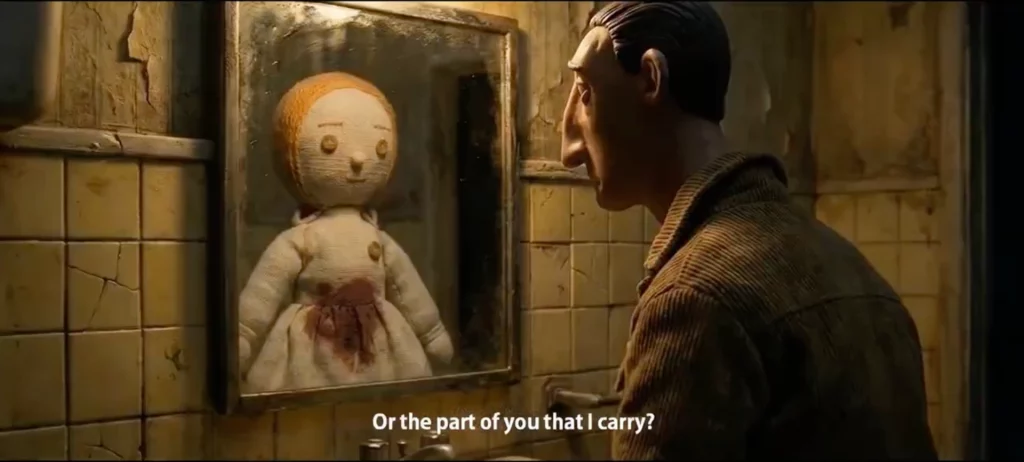
The film’s pacing is notably restrained. Even at moments of heightened emotional tension, it avoids cheap shocks. Through careful camera movement and scene transitions, suspense emerges naturally, drawing viewers into the character’s mental state rather than overwhelming them.

Structurally, the story follows a familiar arc: a man moves from avoidance to confrontation, ultimately facing the consequences of his actions. What makes Lily memorable is how this journey is told. Internal monologues alternate with real-world interactions, while the timeline shifts between present moments and fragments of memory, allowing the character’s transformation to unfold gradually.
Visually, the stop-motion–inspired style provides a consistent aesthetic foundation. With technical support ensuring stable motion and visual continuity, viewers are free to focus on the narrative itself without distraction.
🤔Why Did Lily Win?
Seen in the context of the competition’s rules, Lily’s strengths become clearer.
The Google Global AI Film Award set strict constraints: films had to run 7–10 minutes, with over 70% of the content generated using official Google AI tools, and all tools and assets fully disclosed.
Under these conditions, filmmakers needed to rely heavily on AI — while still delivering a film that worked as a complete story.
Within this framework, Zoubeir ElJlassi made deliberate choices about how technology was used. AI supports visual consistency, motion, and overall style, but the driving force of the film remains emotional expression and narrative structure. Technology amplifies the work; it doesn’t define it.
As a result, the film connects more easily with viewers on an emotional level. While watching, you’re drawn into the character’s experience rather than constantly reminded that the film was AI-generated.
That balance is difficult to achieve — and particularly valuable in a competition with such a high technical threshold.
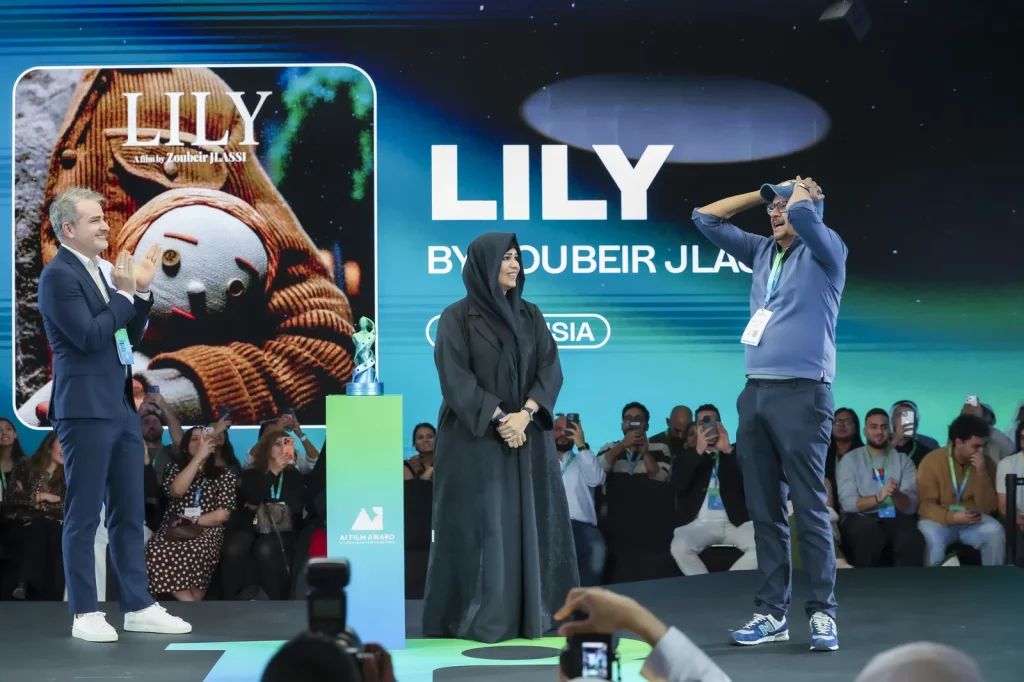
Source: https://blog.google/intl/en-mena/company-news/technology/lily-the-winner-of-the-global-ai-film-award/
🏆What Does This Award Really Value?
From a judging perspective, the Google Global AI Film Award isn’t simply about how much AI is used.
The evaluation criteria emphasize storytelling coherence, emotional impact, creative expression, and how well AI tools are integrated into the content. Technical sophistication matters — but so does whether the film is genuinely worth watching.
That Lily emerged as the winner among five finalists reflects this shift in emphasis. The judges placed real weight on the core of the work, treating creative substance and technical execution as equally important.
Against this backdrop, a broader trend in AI filmmaking is becoming visible: creative focus is returning to emotion, rhythm, and narrative experience, with AI tools serving as a foundation rather than the centerpiece.
▶️Where Can You Watch More AI Films Like Lily?
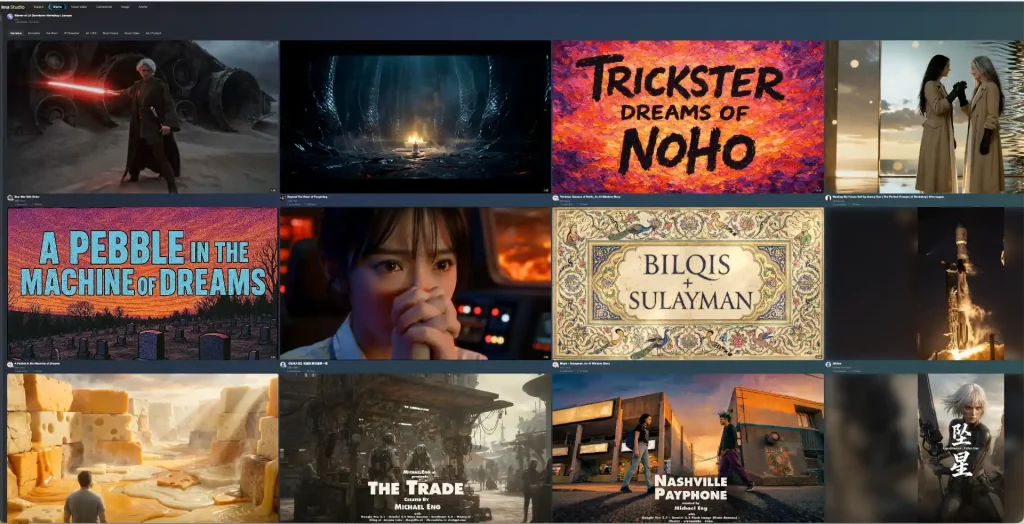
If what resonated with you in Lily was its pacing, emotional control, and storytelling approach, you’re already sensing this shift in AI-driven filmmaking. The focus is moving away from pure technical spectacle toward stories that feel intentional and human.
On Ima Studio, you can find a growing collection of high-quality AI short films built with a similar mindset.
These works prioritize narrative and creative intent, while maintaining clear boundaries between AI assistance and human authorship — using visual storytelling to deliver experiences that genuinely connect.
About The Author