





The best AI avatar generator depends on what you want to create. A profile picture tool, a talking avatar video platform, and a product ad generator may all use the same keyword, but they solve very different creative problems.
If you need a personal avatar for a social profile, a static image tool may be enough. If you need a presenter who can speak in a video, you need a talking avatar generator. If you are making ecommerce ads, UGC-style product videos, or paid social variations, you need something more specific: an AI avatar workflow that keeps the product accurate while turning it into usable campaign creative.
Quick Answer: Best AI Avatar Generator by Use Case
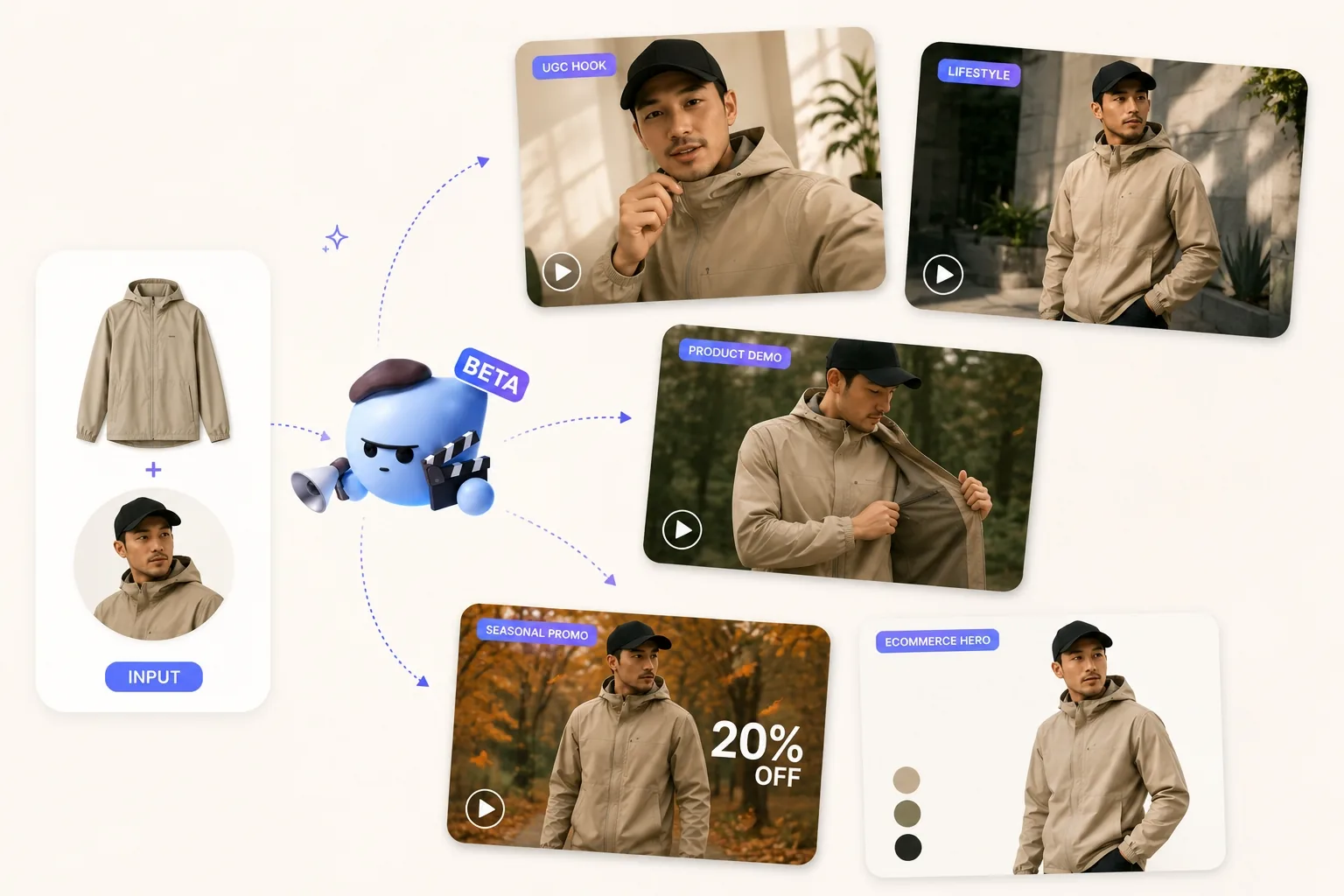
For ecommerce teams, performance marketers, and product brands, ImaStudio’s AI Avatar Video Generator is built around product-first AI avatar ads. It turns a product photo into avatar-led videos, UGC-style creative, spokesperson videos, product demos, and campaign variations.
For personal avatars and profile images, tools such as Canva, Fotor, and Monica are better suited to quick image creation, avatar styles, and social profile visuals. For corporate videos, training, localization, and presenter-led scripts, tools such as Synthesia, HeyGen, ElevenLabs, Adobe Firefly, InVideo, DeeVid AI, and Creatify focus more on video avatars, digital presenters, and talking avatar workflows.
| Use Case | Best Fit | What to Look For |
|---|---|---|
| Product ads and ecommerce UGC | ImaStudio, Creatify, InVideo | Product image upload, UGC hooks, ad formats, product accuracy, campaign variations |
| Talking avatar videos | HeyGen, Synthesia, ElevenLabs, Adobe Firefly, DeeVid AI | Script-to-video, voice control, realistic avatars, languages, export quality |
| Static profile avatars | Canva, Fotor, Monica | Templates, portrait styles, image-to-avatar generation, social media use |
| Training and business communication | Synthesia, HeyGen, Adobe Firefly, ElevenLabs | Consistent presenters, localization, brand control, commercial usage |
Why Search Results for AI Avatar Generator Feel So Different
Top-ranking AI avatar generator pages usually fall into two groups.
The first group is image-first. Canva, Fotor, and Monica focus on personal avatars, profile pictures, social media visuals, stylized portraits, and design templates. These tools are useful when the output is a still image or an identity graphic.
The second group is video-first. InVideo, ElevenLabs, Synthesia, HeyGen, Adobe Firefly, DeeVid AI, and Creatify focus on talking avatars, digital humans, UGC-style ads, explainers, product demos, training videos, and multilingual presenter content. These tools are more relevant when the avatar needs to move, speak, explain, or sell.
That distinction matters. A brand looking for the best AI avatar generator for TikTok ads should not evaluate tools the same way as someone making a gaming profile picture. The output, input, workflow, and quality bar are completely different.
Comparison: Top AI Avatar Generator Pages
| Tool | Best For | Core Direction | Limit to Check |
|---|---|---|---|
| ImaStudio | Product-first avatar ads and UGC-style ecommerce videos | Turn product photos into AI avatar videos, spokesperson ads, demos, and campaign variations | Best for ad creative workflows rather than generic profile avatar design |
| InVideo | Avatar videos for explainers, demos, corporate videos, and ads | Video creation with AI avatars and script-led workflows | Check how much control you need over product accuracy and ad testing variations |
| Canva | Static avatars, templates, social profiles, and design assets | Easy avatar design with templates and design editing | Not primarily built as a deep talking-avatar ad production platform |
| ElevenLabs | Voice-first talking avatar videos | Studio-style videos built from script, voice, and avatar together | Best when voice realism is central to the project |
| Adobe Firefly | Commercially safe avatar video inside a broader creative ecosystem | Text-to-avatar videos for business, education, social media, and training | May fit best for teams already using Adobe creative workflows |
| Monica | Fast personal avatar and portrait generation | Image-style avatars with multiple looks and simple photo-based creation | Application depth is lighter for commercial video ad production |
| Synthesia | Business videos, training, marketing, and sales communication | Realistic talking avatars, customization, localization, and enterprise use | More corporate-video oriented than ecommerce UGC by default |
| HeyGen | Custom avatars, stock avatars, multilingual talking videos | Text, image, and audio-to-video style workflows with many avatar options | Strong general avatar video platform; ad-specific workflows still need planning |
| Fotor | Image-to-avatar portraits and style variations | Convert photos into AI avatars for personal, profile, and social use | Less suited to talking presenter videos or product ad testing |
| DeeVid AI | Simple talking avatars for videos, presentations, and ads | Realistic customizable avatars that can speak from a script | Check whether it has enough creative controls for brand-scale ad systems |
| Creatify | AI avatar ads and advertiser-focused video creative | Large avatar library, talking avatar videos, languages, and ad production workflows | Best fit if your main goal is ad creative, not casual avatar images |
1. ImaStudio: Best AI Avatar Generator for Product Ads
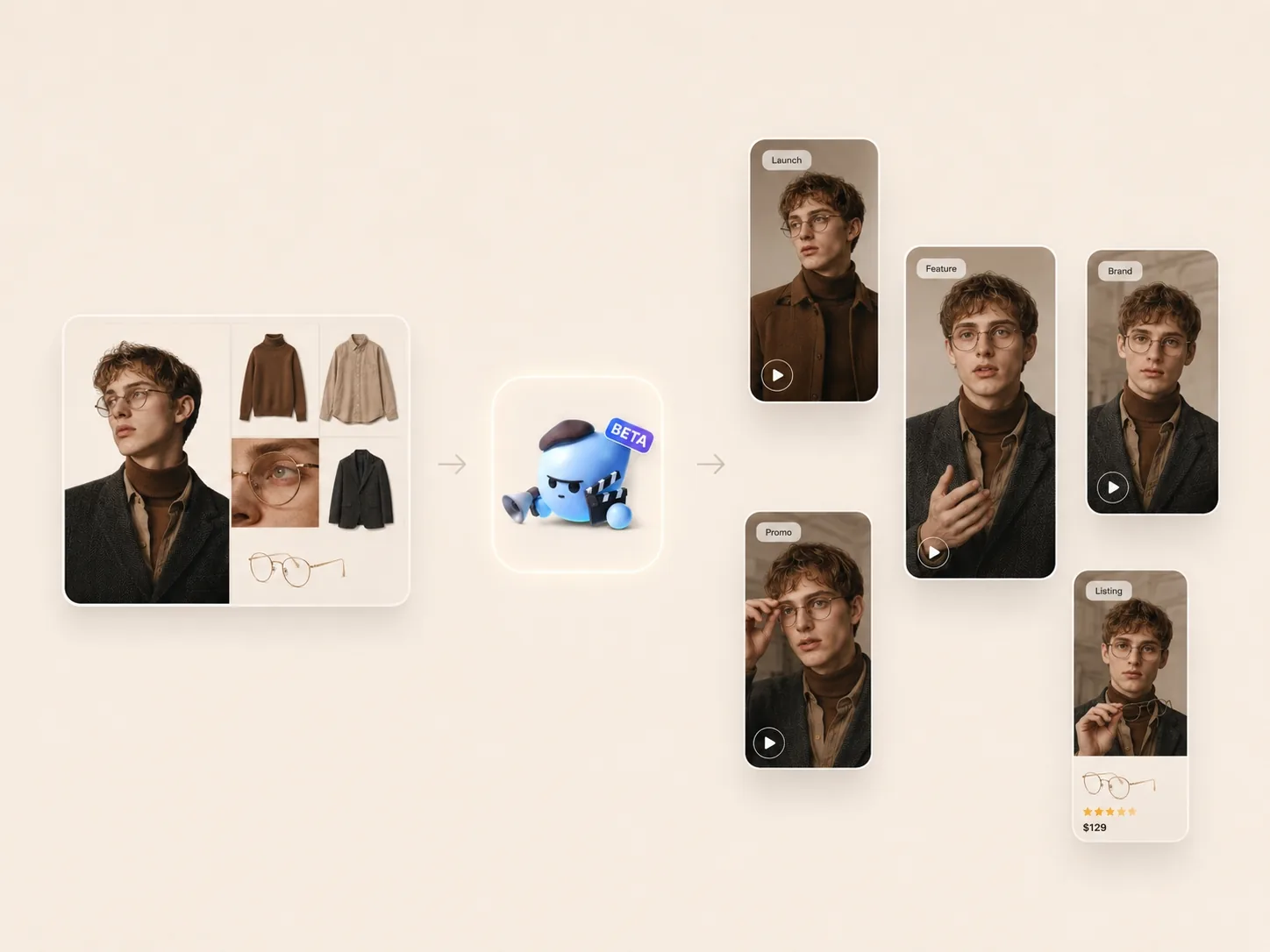
ImaStudio is the strongest fit when the product is the hero. Instead of only creating a face or a generic presenter, the workflow starts from a product image and turns it into product-first avatar creative.
This is important for ecommerce teams because the product must stay accurate. Packaging, color, logo, material, and size all affect buyer trust. A good AI avatar ad should make the product easier to understand, not replace it with a fantasy version.
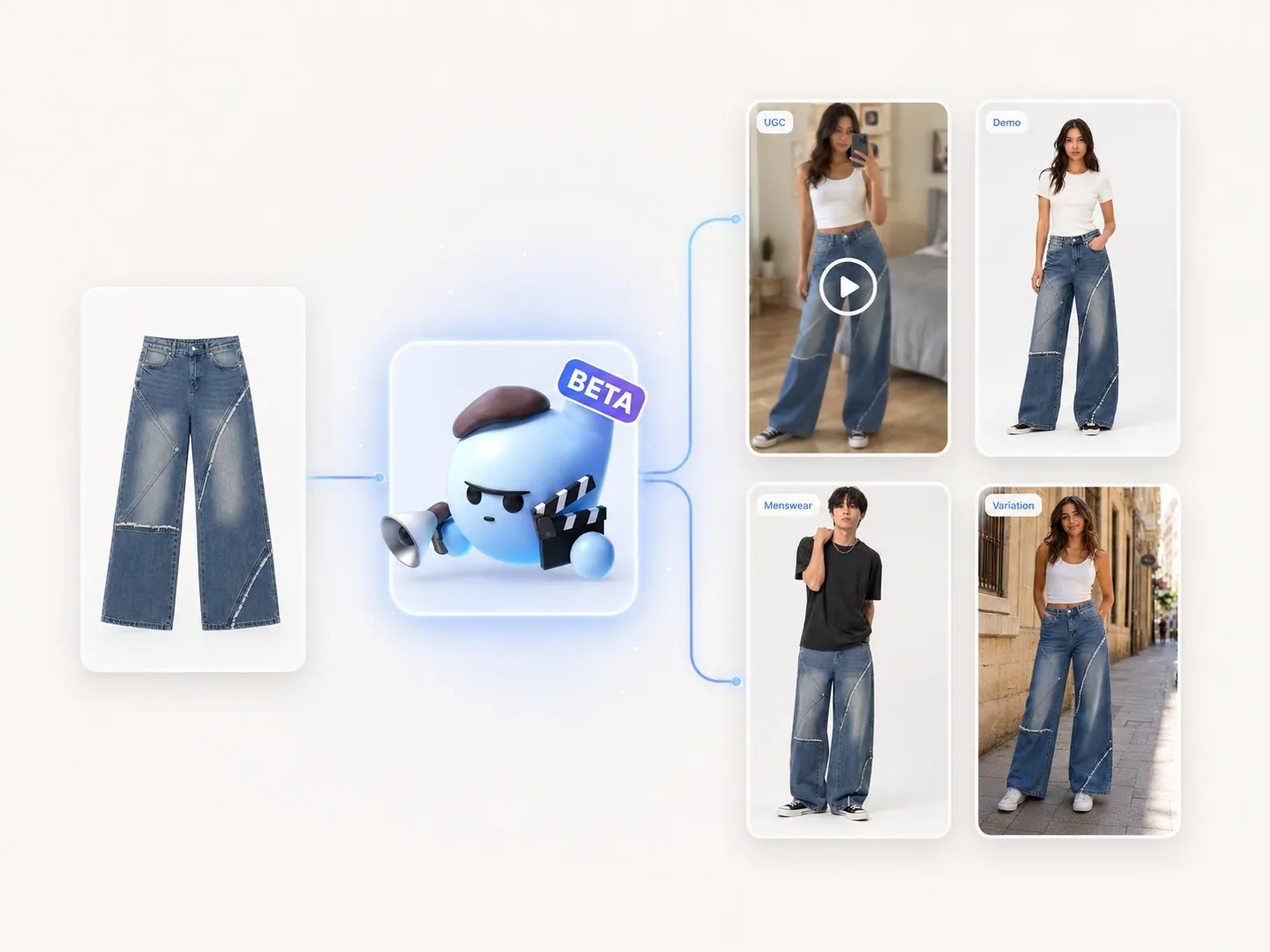
Use ImaStudio when you need:
- AI avatar product videos from a product photo.
- UGC-style avatar ads for TikTok, Reels, Shorts, and Meta.
- Product demos, benefit explainers, and spokesperson videos.
- Multiple campaign variations from one product image.
- Creative testing across hooks, avatar types, offers, and formats.
Best for: ecommerce brands, paid social teams, product marketers, Shopify sellers, Amazon sellers, and agencies creating repeatable ad variations.
2. InVideo: Best for Fast Avatar Video Creation
InVideo’s AI avatar generator page is clearly positioned around video creation. It connects avatars with learning and development videos, explainers, product demos, corporate videos, and similar presenter-led formats.
This makes InVideo a good option when you want a broad AI video creation workflow and a quick path from idea to avatar video. It is especially useful when the final asset is an explainer, product demo, or branded short video rather than a static profile avatar.
Best for: fast avatar videos, explainers, product demos, and teams that want general AI video creation.
3. Canva: Best for Static Avatars and Social Profile Design
Canva is strongest when the output is a designed avatar image, profile visual, or social media identity asset. Its advantage is the surrounding design editor and template library. That matters when you need a polished static avatar that can be reused in profiles, banners, thumbnails, stickers, business cards, or social posts.
Canva is not the first choice if your priority is a realistic talking avatar ad with product accuracy, script testing, and multiple paid media formats. But for personal avatars and template-based designs, it is accessible and familiar.
Best for: personal avatars, profile photos, creator graphics, character-style visuals, and template-based designs.
4. ElevenLabs: Best for Voice-First Talking Avatars
ElevenLabs approaches AI avatars from a voice-first position. Its avatar page connects script, voice, and avatar generation in one workflow, which makes sense for creators and teams that care deeply about spoken delivery.
If the voice has to sound natural, branded, localized, or emotionally precise, ElevenLabs belongs on the shortlist. It is especially relevant for narration-led videos, education, social content, and presenter-style explainers.
Best for: voice-led avatar videos, scripts, narration, and content where audio quality is central.
5. Adobe Firefly: Best for Commercially Safe Creative Workflows
Adobe Firefly’s avatar generator page focuses on Text to Avatar and positions the feature for business, education, social media, training, and polished video creation. Its broader value is the Adobe creative ecosystem and the emphasis on commercial-safe use.
This makes Adobe Firefly a good fit for teams that already use Adobe tools and want AI avatars as part of a larger creative process that may include images, video, sound, backgrounds, and brand assets.
Best for: brand-conscious creators, corporate teams, educators, and Adobe-first workflows.
6. Monica: Best for Quick Personal Avatar Styles
Monica’s AI avatar generator is more image-first. It is useful for quickly turning photos into personalized avatars and experimenting with different styles.
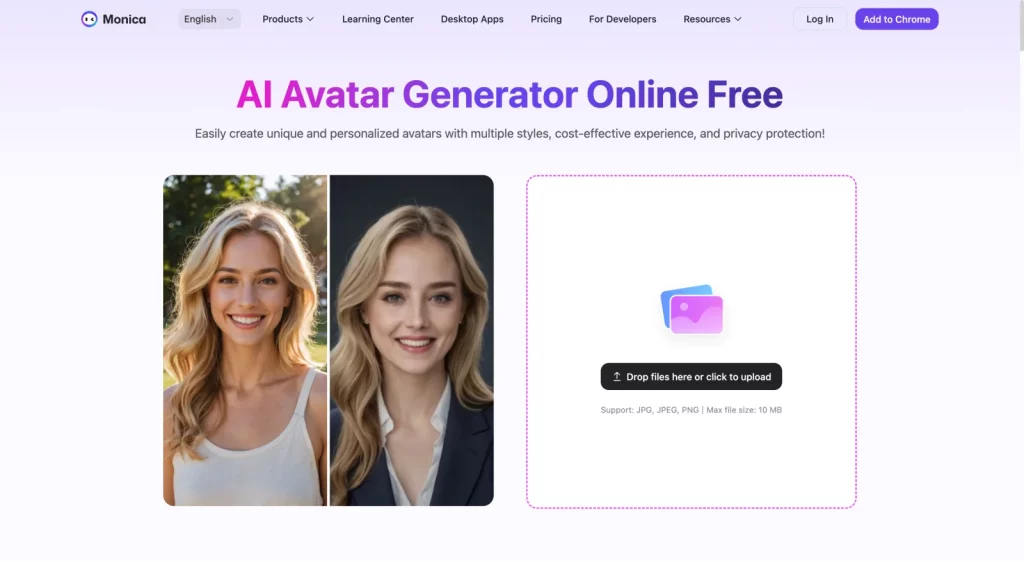
For users who want an avatar image without building a full video campaign, this can be enough. For brands that need talking videos, product demonstrations, ad hooks, platform formats, and creative testing depth, it is a lighter option.
Best for: quick personal avatars, profile visuals, and simple image-style transformations.
7. Synthesia: Best for Business and Training Videos
Synthesia is one of the most mature talking avatar platforms for business communication. Its avatar page focuses on realistic AI avatars, customization, training, marketing, sales, localization, ethics, and security.
This makes Synthesia a strong option for companies creating internal training, onboarding, sales enablement, product education, or repeatable corporate video content. It is less casual than profile avatar tools and more structured than many simple talking-avatar generators.
Best for: enterprise training, marketing videos, sales content, localization, and secure business workflows.
8. HeyGen: Best for Large Avatar Choice and Localization
HeyGen’s avatar page emphasizes a large avatar library, custom avatars, digital twins, and bringing avatars to life with voice and sound. It is built for users who want many presenter choices and a broad AI video workflow.
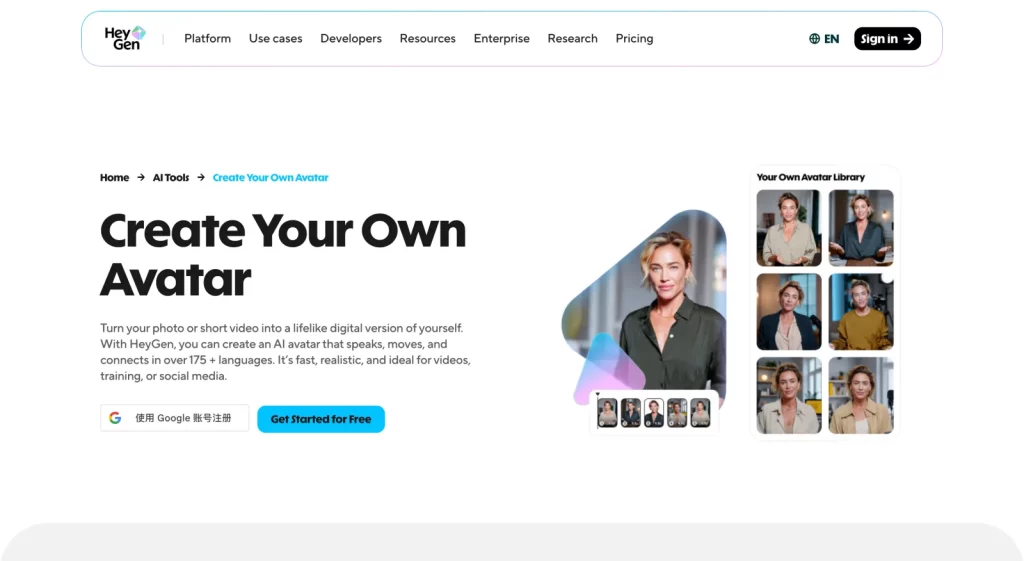
HeyGen is useful for marketing, education, social content, and multilingual video creation. For ecommerce ads, it can be powerful, but the creative strategy still needs to specify product accuracy, hook structure, platform crop, and campaign variants.
Best for: stock avatars, custom avatars, localization, and general talking-avatar video creation.
9. Fotor: Best for Photo-to-Avatar Portraits
Fotor is strongest as a photo-to-avatar and portrait-style tool. It focuses on converting images into avatar styles and making the process simple for users who want quick visual identity assets.
That makes it practical for profile pictures, stylized portraits, creator accounts, and social media images. It is not designed as deeply for AI spokesperson videos, UGC hooks, product demos, or paid ad testing.
Best for: avatar portraits, photo-based styles, profile images, and casual visual identity creation.
10. DeeVid AI: Best for Simple Talking Avatar Videos
DeeVid AI positions its avatar tool around talking avatars for videos, presentations, and ads. It is a useful category fit for creators who want a straightforward way to produce a speaking virtual presenter.
For simple scripts and presentation-style videos, this can be effective. For larger ad systems, check how much control the tool gives you over product framing, avatar behavior, scene variation, voice, format, and export workflow.
Best for: simple talking avatar videos, presentations, quick explainers, and lightweight ad concepts.
11. Creatify: Best for Advertiser-Focused Avatar Videos
Creatify is one of the more ad-focused AI avatar generator pages. It emphasizes realistic talking avatars, multiple languages, studio-quality output, and advertiser use cases.
This makes it a strong option for teams focused on performance creative, especially when they want avatar ads at scale. As with any ad workflow, the key is to test multiple hooks, offers, and formats instead of relying on one polished video.
Best for: AI avatar ads, paid social creative, talking avatar videos, and advertiser workflows.
How to Choose the Best AI Avatar Generator
Before choosing a tool, define the output. This single decision will narrow the field quickly.
If You Need a Static Avatar
Choose an image-first tool. Look for photo upload, multiple styles, template editing, background customization, and easy download. Canva, Fotor, and Monica are useful in this category.
If You Need a Talking Avatar
Choose a video-first tool. Look for realistic mouth movement, voice quality, script editing, avatar variety, language support, captions, aspect ratios, and export options. HeyGen, Synthesia, ElevenLabs, Adobe Firefly, DeeVid AI, InVideo, and Creatify are relevant here.
If You Need Product Ads
Choose a product-first workflow. Look for product image upload, product consistency, UGC hooks, avatar styles, product demonstrations, offer variations, and platform resizing. This is where ImaStudio is especially useful because the creative starts with the product, not only the avatar.
What Makes an AI Avatar Generator Good?
A strong AI avatar generator should offer more than a realistic face. For professional use, evaluate the whole workflow:
- Input flexibility: Can you start from text, image, audio, a product photo, or an existing script?
- Avatar quality: Does the presenter look natural enough for your audience and brand?
- Voice quality: Does the voice match the message, language, emotion, and pacing?
- Use-case depth: Does the tool support training, social, ads, product demos, UGC, or profile design?
- Brand control: Can you keep visuals, colors, product details, captions, and CTA consistent?
- Localization: Can the same idea be adapted across languages or markets?
- Ad testing: Can you generate multiple hooks, scenes, avatars, formats, and offers?
- Commercial usage: Are the rights, safety settings, and usage terms clear for your business?
Best AI Avatar Generator for Ecommerce Ads
For ecommerce, the best AI avatar generator is not simply the one with the largest avatar library. It is the one that can help you turn a real product into accurate, persuasive, platform-ready creative.
A good ecommerce avatar ad should answer three questions quickly:
- What is the product?
- Why should the viewer care?
- What should the viewer do next?
That is why product-first generation matters. If the product label changes, the packaging becomes unclear, or the avatar blocks the product, the creative may look impressive but perform poorly. For ecommerce, accuracy is part of conversion.
Best AI Avatar Generator for UGC-Style Videos
UGC-style avatar videos need a different creative rhythm than formal corporate videos. The first line should feel like a natural hook, not a scripted presentation. The avatar should look like a real person explaining, testing, recommending, or reacting to a product.
Useful UGC hooks include:
- “I did not expect this to work this well.”
- “This is the product I keep reaching for.”
- “If you are shopping for [category], this is worth a look.”
- “Here is why this product is all over my feed.”
- “I tested this for a week. Here is what stood out.”
The best workflow lets you test those hooks with different avatar types, product angles, backgrounds, offers, and CTAs. One AI avatar video is a draft. A structured set of variations is a campaign.
AI Avatar Generator Prompt Template
Use this prompt structure when creating product-first avatar ads:
Create a vertical 9:16 AI avatar ad using the uploaded product image.
Keep the product packaging, logo, color, shape, material, and size accurate.
Avatar style: friendly UGC presenter.
Campaign goal: explain one key product benefit.
Opening hook: "If you are shopping for [category], this is worth a look."
Scene: clean lifestyle setting with the product clearly visible.
Tone: natural, trustworthy, concise, and social-first.
CTA: "Create your first AI avatar product ad."
Final Recommendation
If you only need a profile avatar, choose a static avatar maker. If you need a talking presenter, choose a video avatar platform. If you need product ads, UGC-style videos, or ecommerce campaign variations, choose an AI avatar generator built around product-first creative.
For that product advertising use case, ImaStudio’s AI Avatar Video Generator gives marketers a direct path from one product image to multiple AI avatar ads, demos, spokesperson videos, and ready-to-test campaign formats.
Create your first AI avatar product ad
About The Author