








MiniMax H3 should not be read as just another AI video model release. It is a warning shot for the content production industry.
The old question was simple: can AI generate a good video from a prompt? The new question is more dangerous: can AI understand a creative task and execute the production pipeline?
That shift changes everything. AI video is moving from prompt generation to task execution. We are entering the AI Content Agent era.
MiniMax H3 Is Not Just a Better Video Generator
MiniMax describes H3 as a general-purpose omni-modal generation model. The important word is not “video.” The important word is “general-purpose.”
According to MiniMax’s official H3 page, H3 can understand multimodal contexts across text, images, video, and audio. It can generate video with native stereo audio, up to 2K resolution and 15 seconds in length. Those specifications matter, but they are not the real headline.
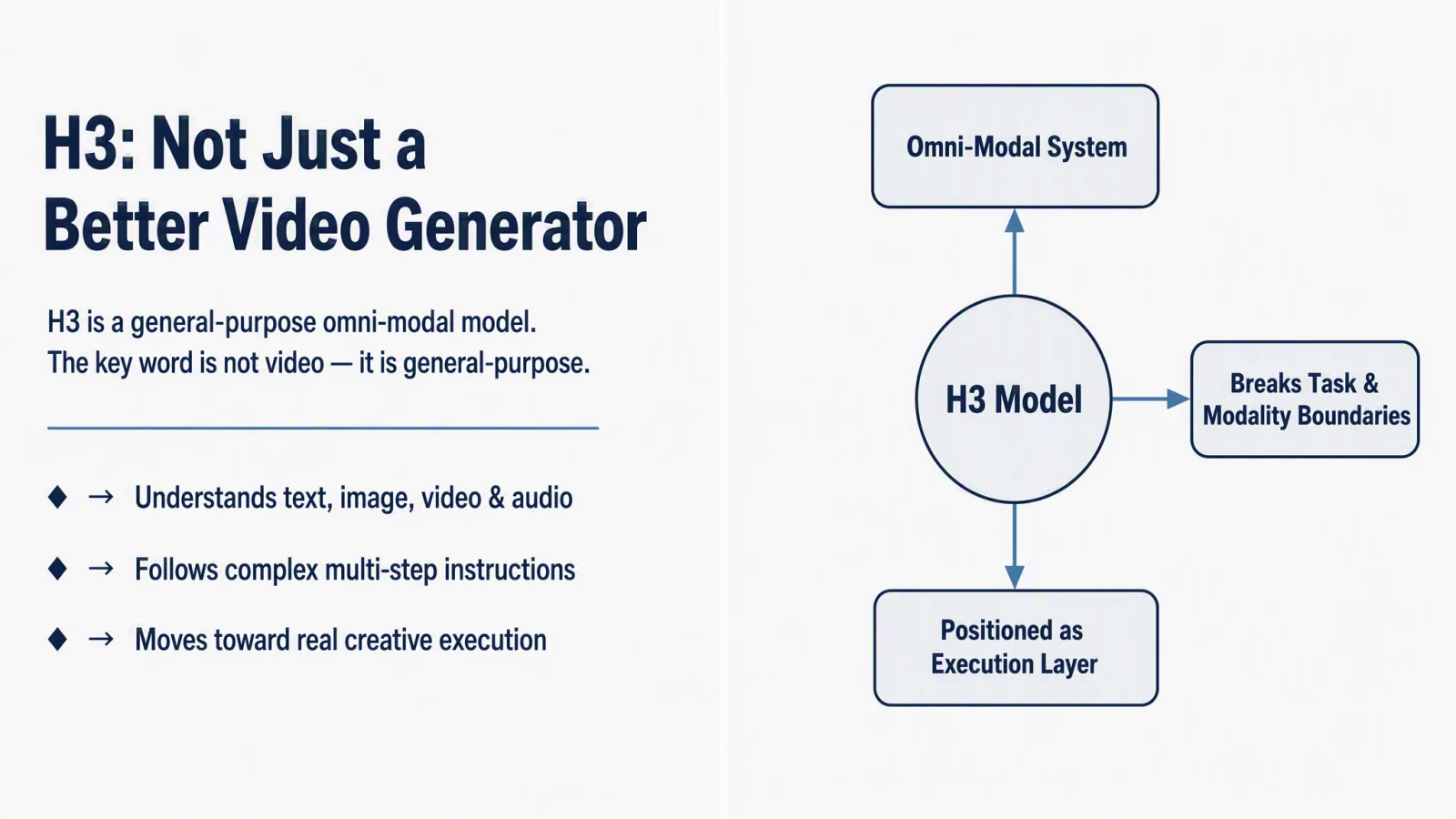
The bigger headline is structural: H3 is built around breaking the boundaries between tasks and modalities. It is not being positioned as a narrow prompt-to-video toy. It is being positioned as a system that can absorb more context, follow more complex instructions, and move closer to real creative execution.
That is why the most interesting sentence in the H3 story is not about pixels. It is about the application landscape. MiniMax says video models are moving from generating clips toward participating in the broader content production process. That is the actual rupture.
The Prompt Era Was the Demo Phase
The prompt era of AI video was necessary. It gave the market a clean demo: type a sentence, get a video. It made AI video understandable to everyone.
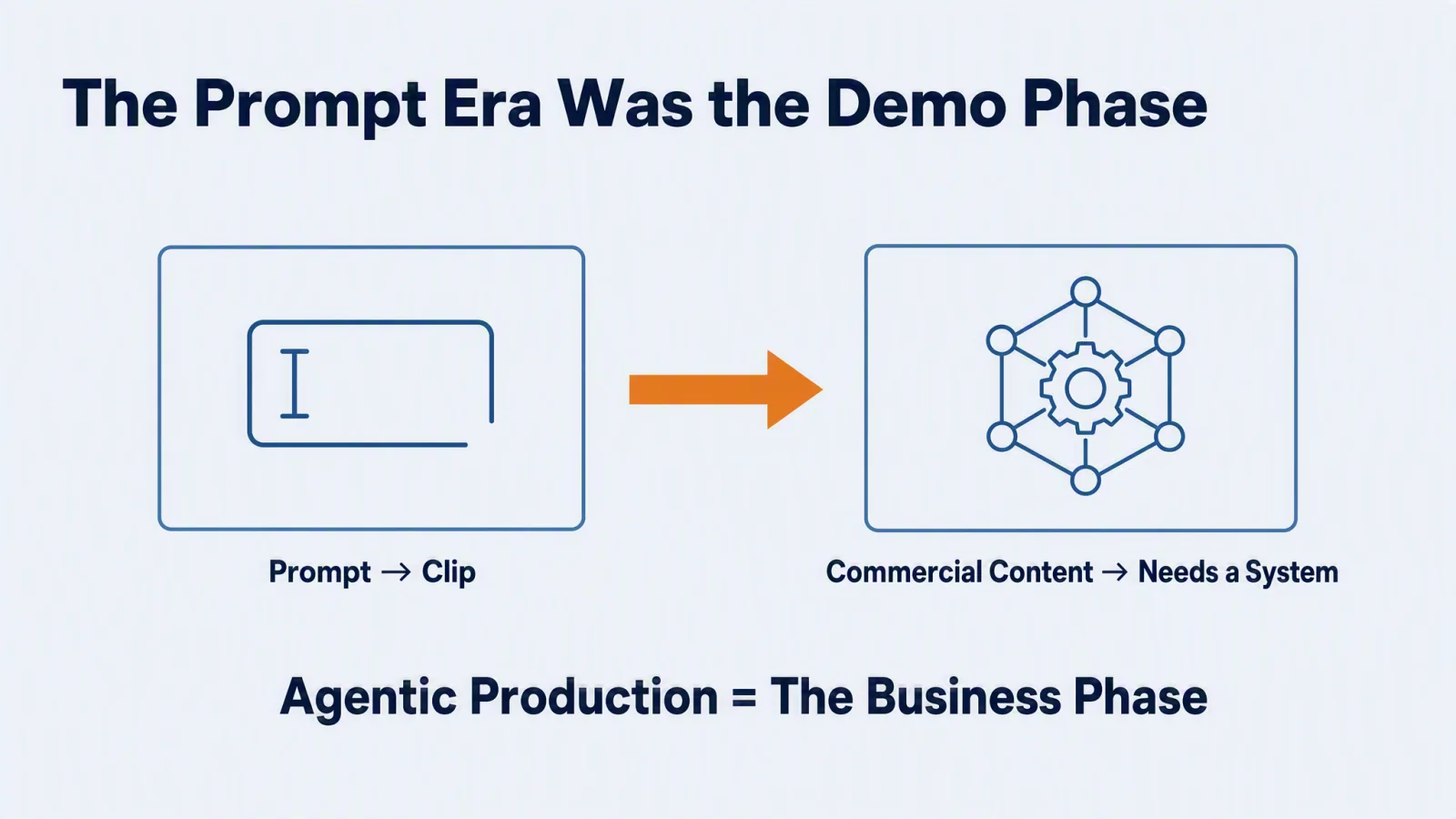
But prompt-to-video is not how serious commercial content works.
A brand does not only need “a woman holding a skincare bottle in a bright bathroom.” A brand needs the product label to remain accurate. It needs the tone to fit the audience. It needs the offer to be clear. It needs the hook to match a platform. It needs subtitles, voice, aspect ratios, scene logic, variants, review cycles, and performance testing.
Prompt-to-video can produce a clip. Advertising requires a system.
Prompt-to-video was the demo phase. Agentic production is the business phase.
MiniMax H3 points in that direction because it is not only improving generation. It is building around multimodal context, instruction following, reference and editing relationships, native audio, and task generalization. Those are production concepts, not just model showcase concepts.
AI Video Is Moving From Prompt Generation to Task Execution
The next generation of AI video will not be judged only by how cinematic a single output looks. It will be judged by how much of the creative task it can actually carry.
A task is larger than a prompt. A task includes inputs, constraints, context, goals, revisions, output formats, and business intent.
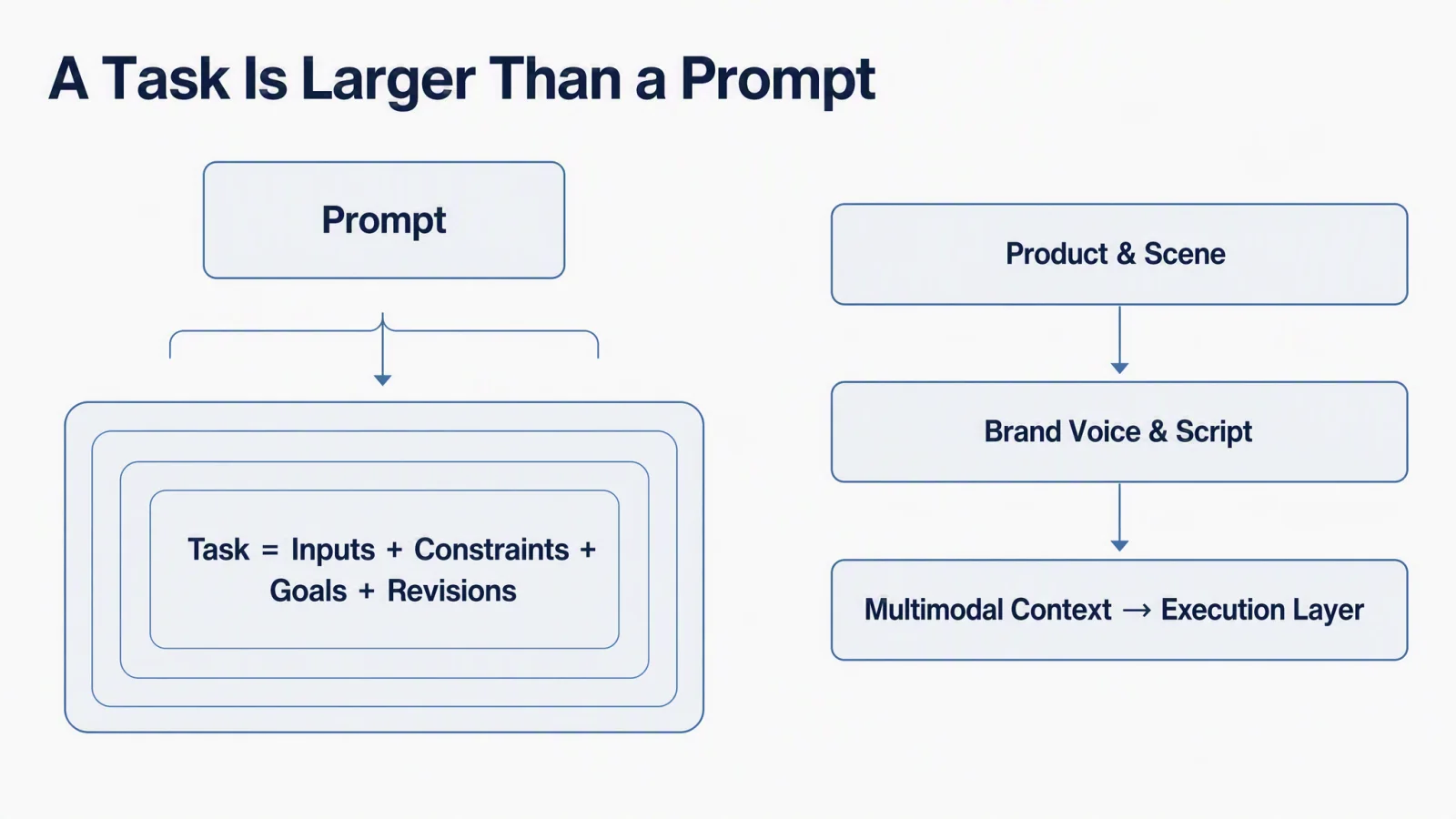
For AI video, this means the model has to understand more than a text description. It needs to understand relationships:
- the relationship between a product image and a campaign scene;
- the relationship between a brand voice and an avatar presenter;
- the relationship between a script and natural speech;
- the relationship between one shot and the next shot;
- the relationship between generated visuals and later edits;
- the relationship between a creative brief and a deliverable ad.
This is where H3’s emphasis on multimodal context matters. When text, image, video, and audio are treated as connected context instead of isolated assets, the system can begin to behave less like a generator and more like an execution layer.
That is the core of the AI Content Agent era: the user gives a creative task, and the system coordinates the work needed to produce the asset.
The Real Disruption Is Production, Not Video
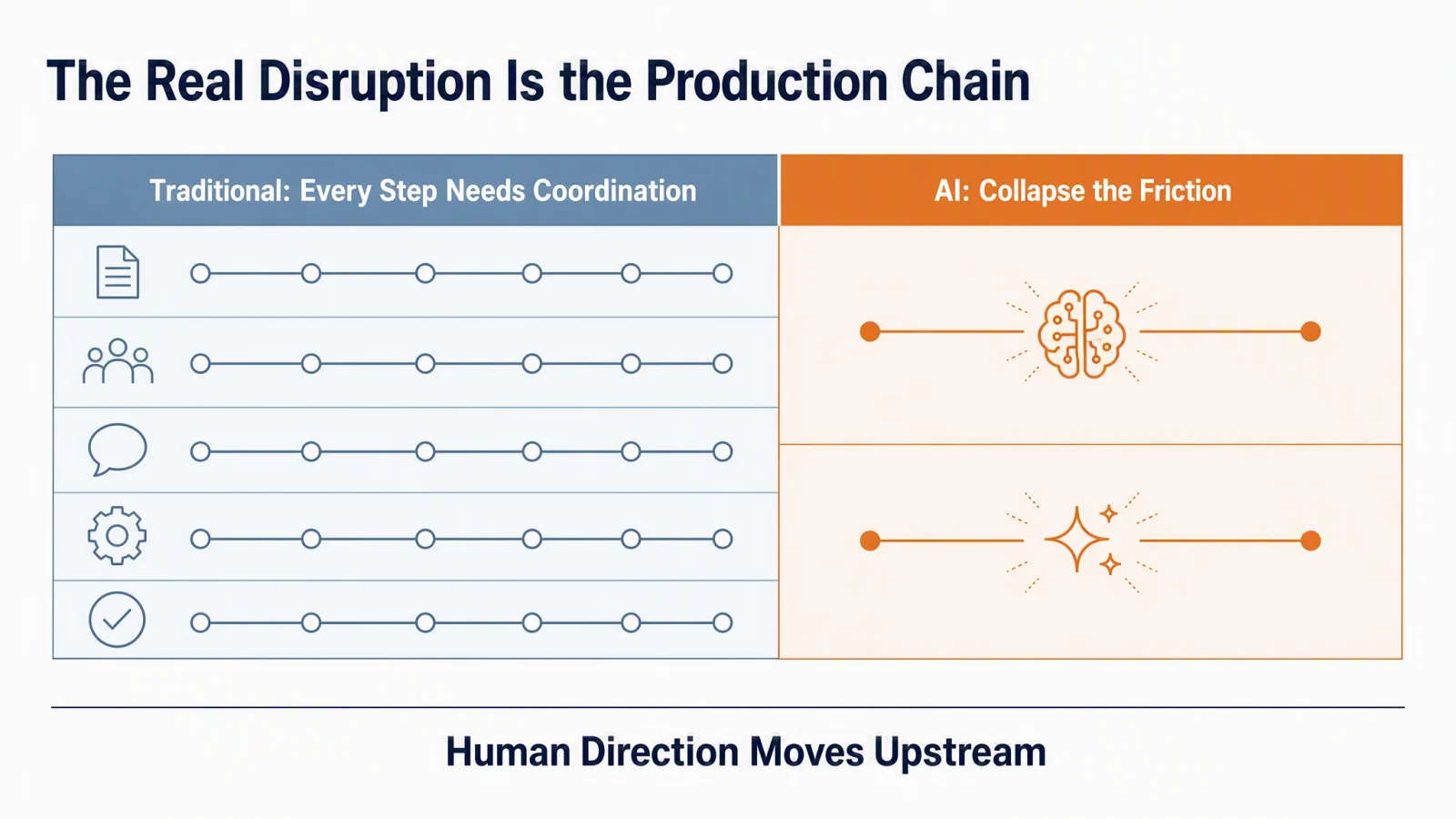
The advertising industry is not being disrupted because AI can generate videos. It is being disrupted because AI can collapse the production chain.
That distinction matters. A better-looking clip is impressive. A shorter production chain is economically violent.
Traditional ad production is expensive because every step requires coordination. A brief has to be interpreted. Strategy has to become a concept. The concept has to become a script. The script has to become a shoot. The shoot has to become edits. The edits have to go through review. Every change adds time, cost, and friction.
The strongest AI video systems attack that friction directly.
| Traditional Advertising Production | Agentic AI Video Production |
|---|---|
| Brief | Brief |
| Strategy | AI understands the task |
| Scriptwriting | AI maps brand, product, audience, and hook |
| Photoshoot or video shoot | AI builds scenes, avatar action, product context, and motion |
| Voiceover and sound design | AI generates or coordinates voice, sound, and native audio |
| Editing and resizing | AI creates platform-ready variants |
| Revision and delivery | AI regenerates, edits, and exports new versions |
This does not mean human creative direction disappears. It means human direction moves upstream. The valuable human role becomes deciding the offer, angle, audience, story, proof, and brand rules. The repetitive production labor gets compressed.
Better quality makes AI video impressive. Better production logic makes it economically dangerous.
H3’s Biggest Value Is Not Image Quality
Quality is the ticket to enter the market. It is not the final game.
Every serious AI video model will claim better motion, cleaner details, higher resolution, stronger prompt following, and more realistic output. Those improvements matter, but they quickly become table stakes.
H3’s more important value is the direction of the architecture: a model designed for broader task generalization across modalities. That matters because production is not one modality. Advertising production is a compound task.
A paid social ad might require:
- a product reference image;
- a brand tone;
- a spokesperson or avatar;
- a script with a strong hook;
- a believable product interaction;
- voice, music, and sound effects;
- vertical, square, and feed formats;
- multiple versions for testing.
A model that only makes one beautiful clip is useful. A system that can move through this entire stack is more than useful. It changes the operating model of creative teams.
MiniMax Video Agent Makes the Direction Even Clearer
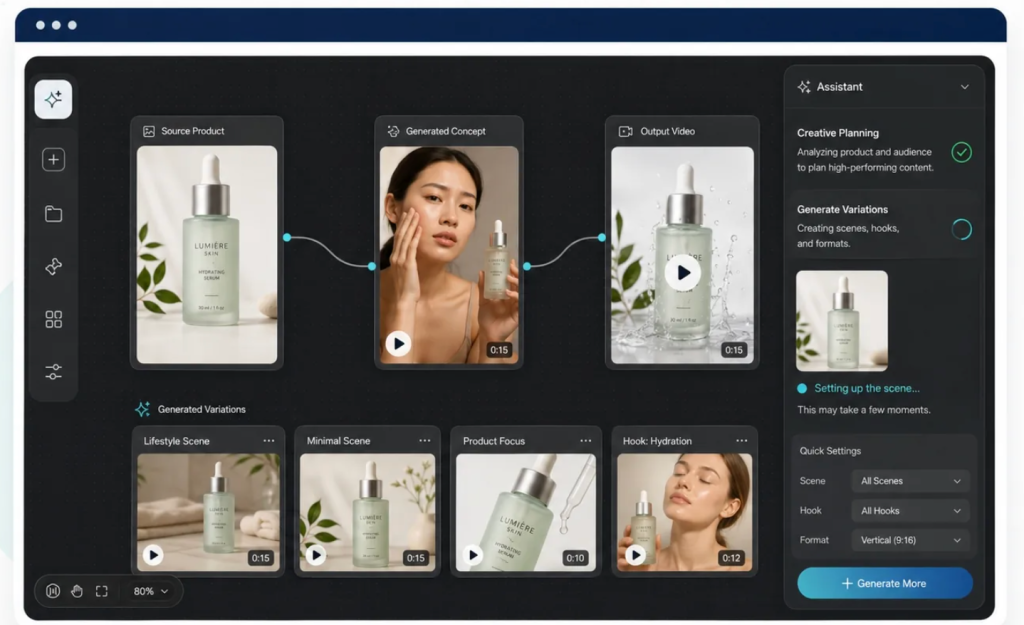
H3 is the model-level signal. Hailuo Video Agent is the workflow-level signal.
MiniMax’s Video Agent page frames the problem clearly: video generation has improved, but creating a high-quality video from scratch still involves brainstorming, scripting, asset generation, image-to-video work, voiceover, and editing. That is exactly the production problem.
The Video Agent direction is not “write a better prompt.” It is “remove the fragmented workflow.”
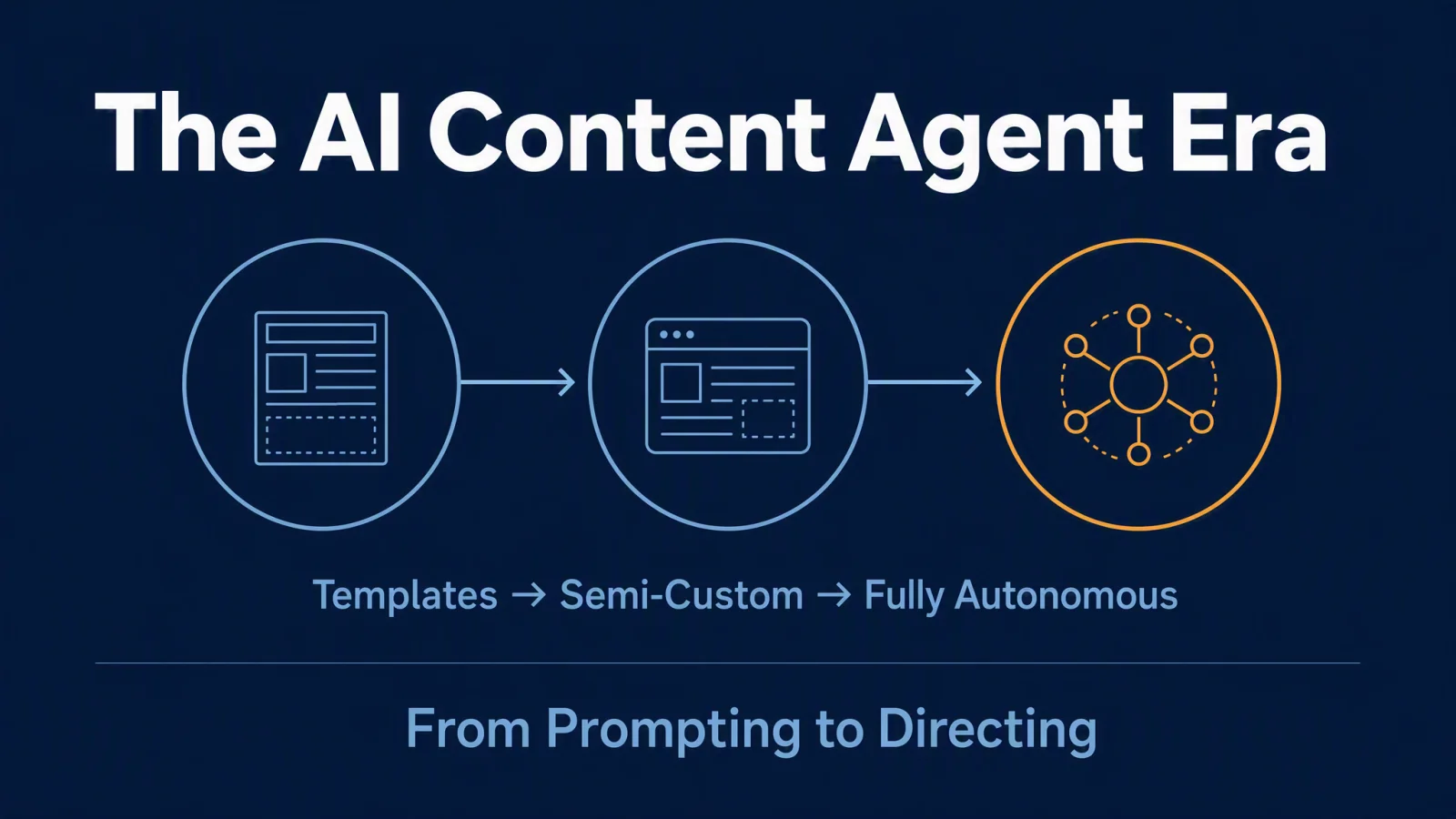
MiniMax describes a staged path toward an end-to-end video agent:
- prebuilt video agent templates;
- semi-customizable video agents where users can edit script, visuals, and voiceover;
- fully autonomous end-to-end video agents that turn creative input into a final-cut video with minimal manual effort.
That roadmap matters because it names the future of AI video correctly. The winning system is not the one that asks users to become prompt engineers forever. The winning system is the one that converts intent into a working production plan, then executes it.
From Prompting to Directing Is the Right Mental Model
MiniMax’s CUHK page uses the phrase “From Prompting to Directing.” That is the right mental model for this stage of AI video.
Prompting is input. Directing is control.
Prompting asks for an output. Directing manages intent, rhythm, shot logic, character consistency, scene continuity, lighting, sound, and emotional pacing. In traditional filmmaking, that difference is obvious. In AI video, the market is only beginning to understand it.
The next creative advantage will not come from writing longer prompts. It will come from building better direction systems:
- structured briefs instead of one-line prompts;
- product and brand context instead of isolated visual ideas;
- reference assets instead of generic scenes;
- revision loops instead of single generations;
- campaign variants instead of one final video;
- production agents instead of disconnected tools.
This is why AI video is entering the agent era. The model is becoming less like a camera and more like a production team compressed into software.
Why Advertising Will Feel the Impact First
Big cinema will move slowly because it has high artistic, legal, reputational, and distribution stakes. Advertising will move faster because it already runs on iteration.
Most paid social creative is not a masterpiece. It is a test. A brand needs twenty hooks, ten product angles, five offers, three avatars, and multiple platform formats. The bottleneck is not imagination. The bottleneck is production throughput.
That is why UGC ads, ecommerce product demos, influencer-style videos, product explainers, and avatar spokesperson creatives are the first real battlefield for AI video agents.
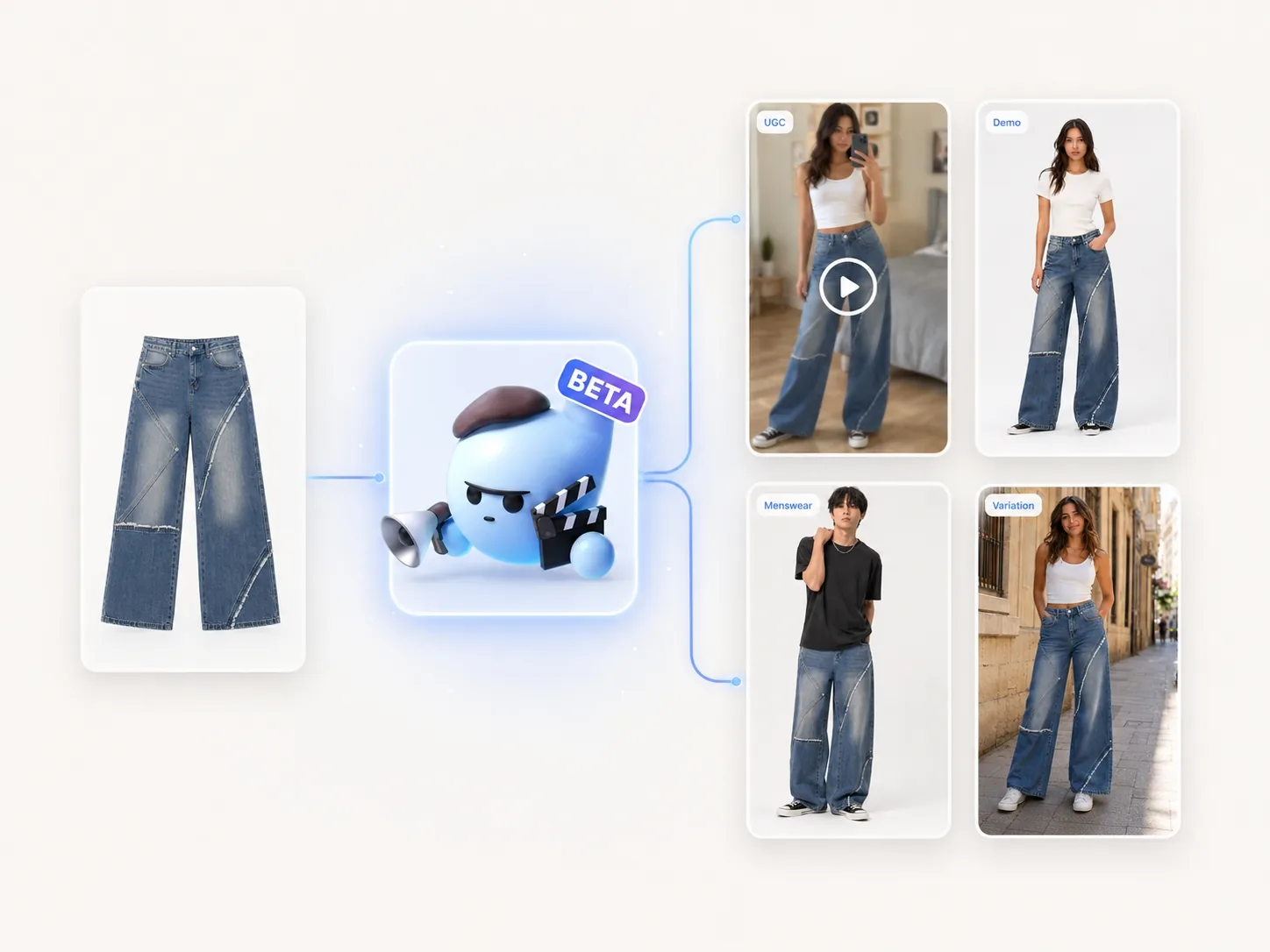
For ad teams, the question is not whether AI can make a video. That question is over.
The question is whether AI can make enough relevant variations fast enough to change how campaigns are planned, produced, and tested.
The New Ad Production Stack
The old production stack was built around teams and handoffs. The new production stack will be built around context and execution.
| Layer | What It Means in Agentic AI Video |
|---|---|
| Brief | The campaign goal, audience, product, offer, platform, and constraints. |
| Brand | Tone, visual style, claims, CTA language, and trust rules. |
| Product | Packaging, logo, shape, material, color, use case, and benefits. |
| Avatar | Presenter type, role, gesture, expression, voice, and audience fit. |
| Motion | Shot structure, camera movement, product interaction, and pacing. |
| Audio | Voiceover, sound effects, music, rhythm, and localization. |
| Output | Testable ads across TikTok, Reels, Shorts, Meta Feed, ecommerce pages, and email. |
This is the framework brands should use when evaluating AI video tools. Do not only ask whether the output looks good. Ask whether the system can carry the production logic.
What This Means for AI Avatar and Product Ads
AI avatar ads are one of the most practical expressions of this shift.
A product ad does not need perfect cinematic spectacle. It needs speed, clarity, product accuracy, platform fit, and enough variations to test. That is where an AI content agent mindset becomes immediately useful.
Instead of asking for a generic video, a product team can give the system a richer task:
Use this product image.
Keep the packaging, logo, color, and shape accurate.
Create a friendly UGC-style presenter.
Explain one key benefit in the first five seconds.
Generate three hooks for TikTok.
Create a 9:16 version and a 4:5 feed version.
Keep the tone trustworthy, direct, and conversion-focused.
That is no longer just prompting. That is task design.
For ecommerce teams, the practical next step is not waiting for perfect AI cinema. It is using AI avatar and product ad workflows that already convert product assets into campaign-ready variants. ImaStudio’s AI Avatar Video Generator is built for that exact production layer: turning one product photo into AI avatar videos, UGC-style product ads, spokesperson videos, and testable campaign variations.
MiniMax H3 Is a Signal, Not the Finish Line
The point is not that MiniMax H3 alone finishes the AI video race. It does not. The field is moving fast, and every model still has limits around consistency, control, realism, editing precision, rights, and production reliability.
The point is that H3 makes the direction hard to ignore.
AI video is leaving the prompt demo stage. The next stage is not just higher resolution or better motion. The next stage is agentic production: systems that understand creative intent, coordinate multimodal assets, preserve context, generate audio and video together, adapt outputs, and support iteration.
For advertising, that means the production chain gets shorter. The number of testable concepts gets larger. The distance between brief and finished creative gets smaller.
That is the real story of MiniMax H3.
Final Takeaway
The prompt era of AI video is ending because prompt generation is not enough for real commercial work. H3 points toward a more important future: AI video as a task-executing production system.
The winners in this market will not be the tools that make one beautiful clip. The winners will be the systems that understand the brief, preserve the brand, keep the product accurate, generate the right voice and motion, and output enough variations to move business results.
AI video is no longer just a generator category. It is becoming a production category.
Create your first AI avatar product ad
Sources
- MiniMax H3 official blog
- MiniMax Hailuo Video Agent official announcement
- MiniMax Hailuo AI CUHK article
- ImaStudio AI Avatar Video Generator
Related: 20 AI Camera Movement Prompts for Cinematic AI Video — copy-paste dolly, orbit, crane and drone moves, each with a sample clip.
About The Author