








Hey, I’m Lika Li — I build and grow the Ima Studio Community.
I spend most of my days talking to creators, filmmakers, and AI enthusiasts around the world, trying to make sure Ima Studio is more than just a product. For me, it’s a place where creativity meets collaboration: people share workflows, compare models in Ima Arena, and help each other push what’s possible with AI storytelling.
This post is a look inside one of those moments where everything came together in real life:
the Soulscape AI Film Micro-Sprint at FrontierTower in San Francisco.
Why this sprint mattered to us at Ima Studio
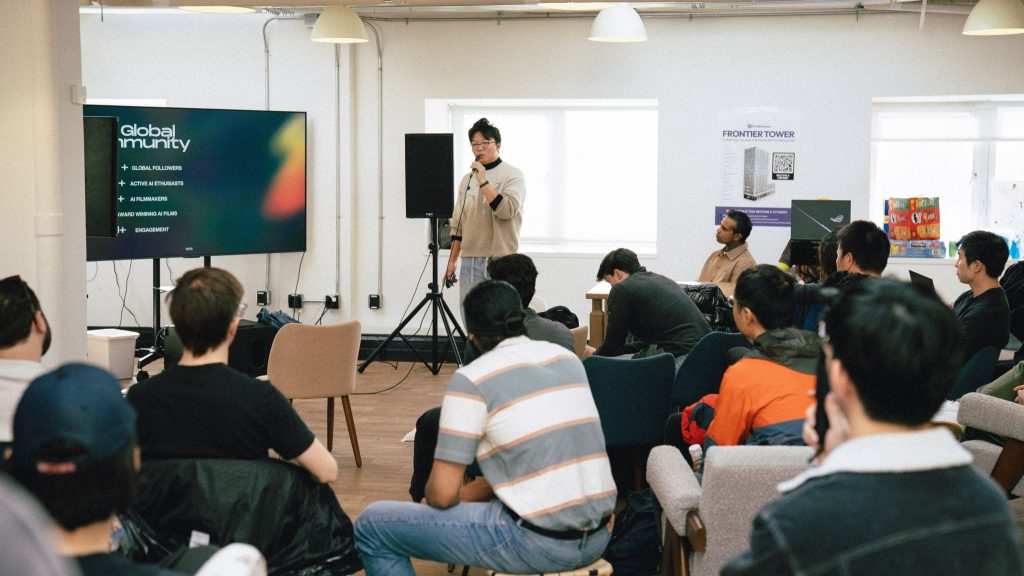
When Soulscape reached out about an AI Film Micro-Sprint in San Francisco, it immediately clicked with what we care about at Ima:
- Story first, tools second
- AI as a way to amplify the human voice, not replace it
- Real people, in a real room, building something together in a very short time
The format was simple and bold:
- 160+ registrations
- 4 hours in person at FrontierTower
- Teams formed on the spot
- Prompts turned into stories, storyboards, and film concepts
In Soulscape’s own words, this wasn’t just a workshop — it was proof that when you give storytellers the right tools and a shared mission, AI doesn’t replace the soul, it amplifies it.
For us at Ima Studio, that line could have been our own manifesto.
What a 4-hour AI film sprint actually feels like
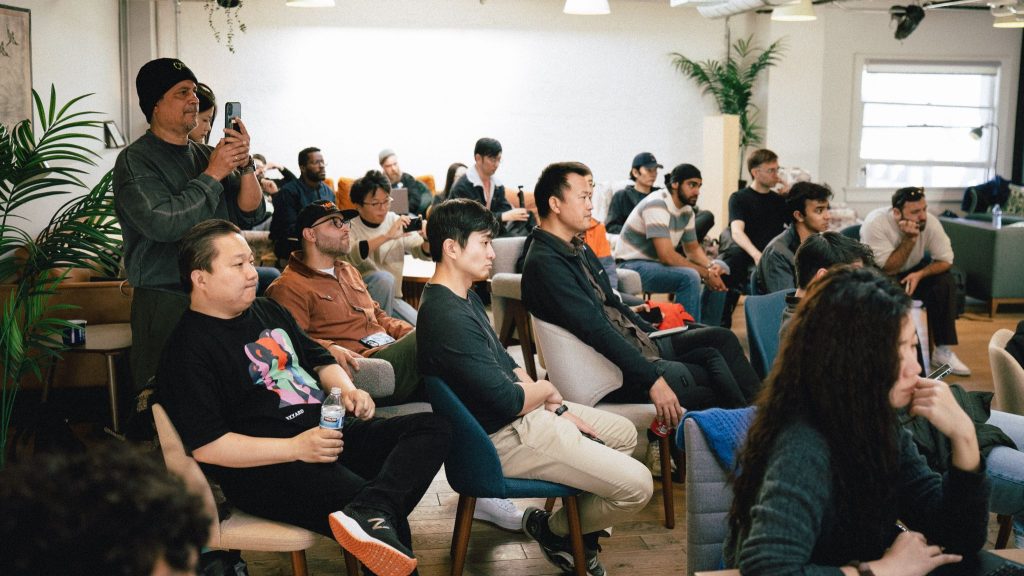
The room at FrontierTower felt “full” in the best way — laptops, notebooks, camera gear, coffee cups, and a low buzz of people figuring out who they were about to spend the next four hours with.
From my corner as the “community person,” here’s how it unfolded:
- Strangers became teams
People didn’t arrive as pre-made film crews. They came alone or with one friend, then quickly gravitated into groups around a shared vibe:- “We want to make something surreal and dreamlike.”
- “We’re here for sci-fi.”
- “We want something grounded and emotional.”
- Prompts turned into story seeds
Soulscape framed the sprint around story — not just “cool AI shots.” Each team spent time talking about:- Who is our main character?
- What are they trying to do?
- What does the world around them feel like?
- The clock started to matter
With only four hours, every decision counted. You could feel teams asking themselves: “What can we realistically build in this time — and how can AI help us get there faster without losing our voice?”
From my perspective, the best part was watching the pivot that constantly happens in events like this: people arrive thinking it’s “an AI event,” but within an hour, they’re talking about motivation, pacing, tone, and emotion.
The tools just become the way they move faster.
The tool stack behind the stories (and where Ima Studio fit in)
[Photo: Slide or poster showing partner logos – YouArt, Martini, Pixero, Atlas Cloud, Ima Studio]
This sprint wasn’t powered by a single tool. It was a stack — each piece doing what it does best.
Soulscape brought together:
- 🚀 YouArt (Creator’s Fuel) – supporting creators with resources and inspiration
- 🛠 Martini – for story and pipeline support
- 🛠 Pixero – helping with production and creative workflows
- 🛠 Atlas Cloud – supplying the infrastructure to keep everything running smoothly
- 🛠 Ima Studio – giving teams an AI playground to generate images, frames, and variations at sprint speed
How teams used Ima Studio in the sprint
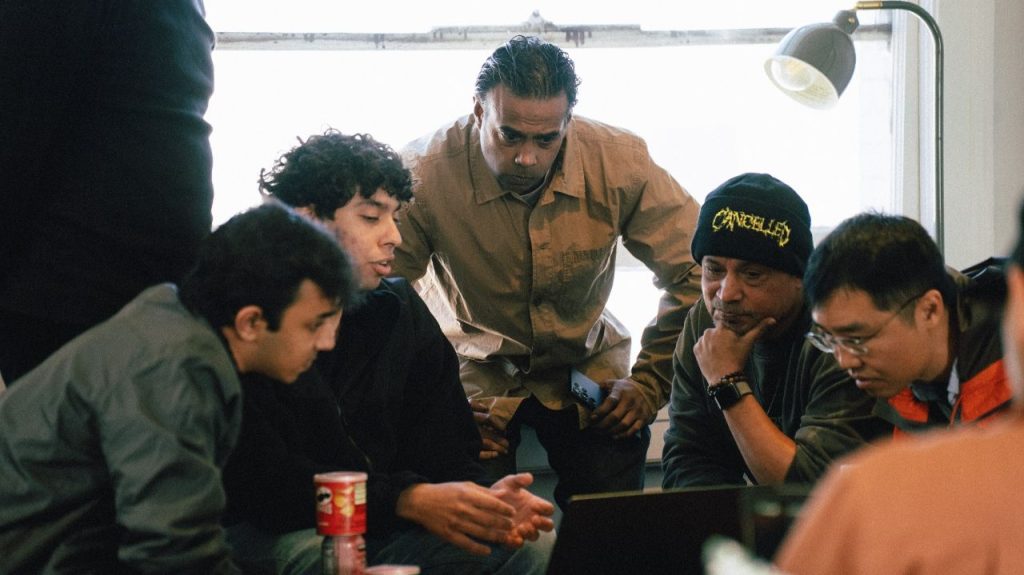
As the Ima Studio person in the room, I moved from table to table, watching how teams actually used the product in the wild. A few patterns showed up quickly:
- Concept and mood exploration One team started with nothing more than a line: “A city slowly remembering its own dreams.” They opened Ima Studio, dropped that line into chat, and began trying different image models side by side in Ima Arena — gritty vs. clean, realistic vs. painterly. Within 15–20 minutes, they had:
- A moodboard of 8–10 frames
- Agreement on a color palette and visual language
- A clearer sense of what “their city” actually looked like
- Character and world consistency Another group used Ima Studio to lock in the main character’s look. They iterated quickly between models, tweaking prompts until the images matched the personality they were talking about: tired but hopeful, a little disheveled, carrying the weight of a world that doesn’t believe in magic anymore. Once they found “the face,” they pinned it — and then used variations to place that character into different environments and lighting setups.
- Multi-model comparison as a creative decision, not a tech flex When we built Ima Arena, the goal was to let people pit models against each other and vote on what works best for their taste and their task. In the sprint, this played out in a very human way:
- A director would say, “I want something that feels like a graphic novel.”
- A teammate would run the same prompt through multiple models in the Arena.
- The team would literally point at the screen and say, “That one. This is our film.”
For me, that’s what success looked like: Ima Studio disappearing into the background as teams used it to align on vision faster, not to replace their instincts.
What I learned from watching 160 creators sprint with AI
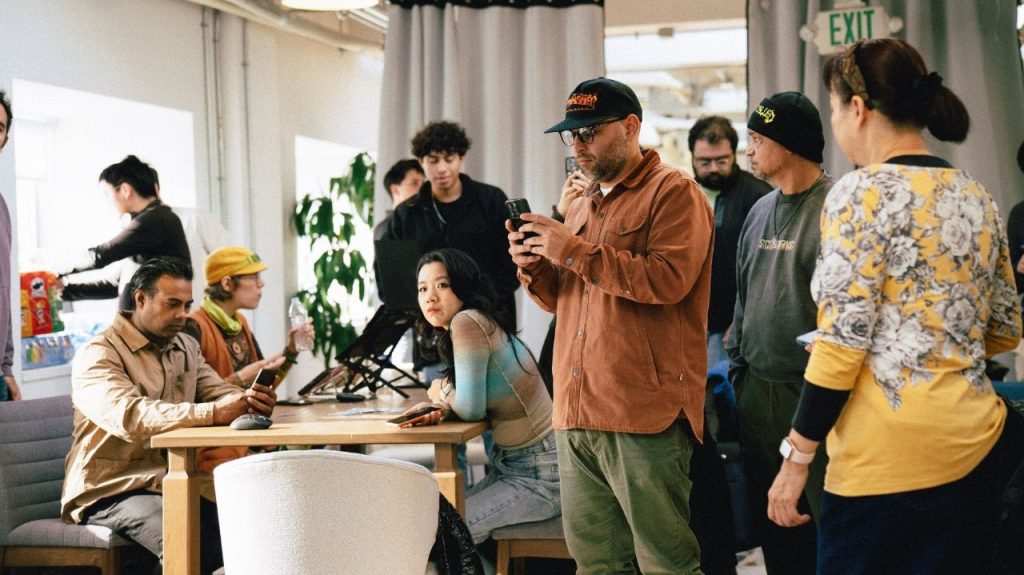
By the end of four hours, the room felt like it had lived through a week together. Here are a few things I walked away with:
1. People don’t want AI to write for them — they want it to keep up with them
No one sat down and said, “Let’s see what the AI comes up with.”
Instead, I heard:
- “We already know the feeling we want, let’s see if the tool can match it.”
- “Can we push this shot a little more surreal?”
- “What if the city feels like it’s underwater, but not literally underwater?”
AI was more like a fast sketch artist sitting at the table, helping them see their ideas sooner.
2. The best prompts came after the real conversations
Some teams opened their laptops too early — you could see them struggle with flat prompts and generic results.
The turning point always came when they closed the screens for a few minutes and asked:
- “Who is this really about?”
- “What’s the one image we want people to remember?”
After that, the prompts they typed into Ima Studio suddenly made sense — and the outputs did too.
3. Multi-model workflows change creative decisions
I’ve seen it online a lot, but seeing it live was different:
when teams could compare models directly in Ima Arena, they behaved differently.
Instead of:
“Let’s just use whatever is default.”
They said:
“This model is beautiful, but too polished for our story.”
“That one is rougher, but the mood is perfect. Let’s go with that.”
In a four-hour sprint, small decisions like that make the difference between a generic piece and something that genuinely feels like their film.
4. Offline energy feeds the online community
The part I loved most as a community builder: I watched people exchange Discord handles, add each other on LinkedIn, and say:
“Let’s share our workflows in the Ima Community after this.”
“Send me the prompt you used for that shot.”
Events like this don’t just create one afternoon of magic.
They create longer threads that keep running inside the community.
From FrontierTower to Soulscape 2026: this was just the warm-up
Soulscape called this micro-sprint a warm-up for the Soulscape 2026 Global Film Sprint, and it really did feel like the first chapter of something bigger.
For us at Ima Studio, it was a live reminder of why we build what we build:
- So a filmmaker can test five visual ideas in minutes, not days.
- So a first-time storyteller can see their idea on “screen” for the first time.
- So people who might never have met can walk out of a room with a shared project.
We’re excited to support what comes next — more cities, more stories, more experiments at the edge of AI and filmmaking.
If you:
- Want to follow Soulscape’s journey toward the 2026 Global Film Sprint, keep an eye on their updates.
- Want to explore the same kind of workflows we used in the room, or compare models in Ima Arena, you’re always welcome in the Ima Studio Community.
Credits & gratitude
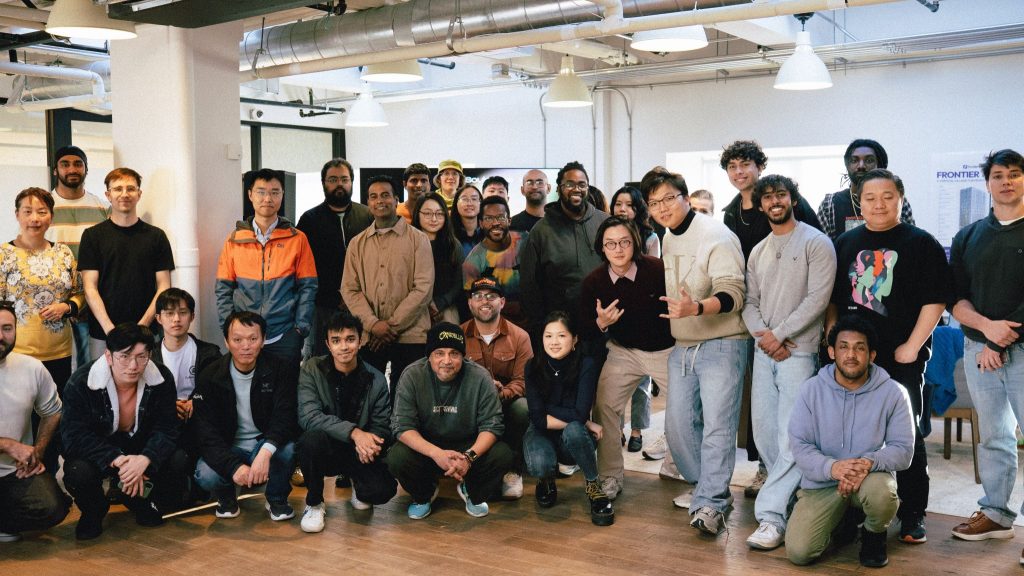
Huge thanks to the Soulscape team for bringing this vision to life and to FrontierTower in San Francisco for hosting such an electric Sunday.
Partners who powered the sprint:
- 🚀 YouArt (Creator’s Fuel)
- 🛠 Martini
- 🛠 Pixero
- 🛠 Atlas Cloud
- 🛠 Ima Studio
Special credit to:
- Rohit Nagotkar
- Keny Bastiany
- Justin Han
- 🎥 Photography by Leo Sagolla — thank you for capturing the magic.
And to all the creators who filled the room —
Aria Voron, Arpit Mittal, Nayeem An-noor, Abhay Rathi, Bianca Nepales, Ahmed Kamel, Lauren Lou, Jonathan Groberg, Kashyap Kompella, Mark Bosshard, Shuting Zhang, Tulga Galbadrakh, Mahdi Roohnikan, Elie Saad, Daniel (Jinhyung) K., Rashid Rifai, Jasjyot Singh, Vinny Sakarya, Amy Wilkinson, Nadav Shanun, Mannandeep Caur, Deepak M., Ashish Dogra, Mengdi H., Katherine Ruihong Liu, Yavuz Jason Aybasti, Jolie Ni, Aimee Yang, Nico M.,
and everyone whose name I haven’t listed here but who brought their energy and stories —
Thank you for building this movement with us. 💛
“160+ registrations. 4 hours. Pure creation. ⚡ We saw strangers become teams and prompts turn into resonant stories—all in just a few hours. This wasn’t just a workshop; it was proof that when you give storytellers the right tools and a shared mission, AI doesn’t replace the soul—it amplifies it.”
— Soulscape team, from the original recap on LinkedIn
About The Author