









How to Use Social Storytelling in an Image Card Series
Social storytelling is not a synonym for adding a dramatic illustration to every card. It is the deliberate ordering of a small story: a reason to continue, a situation or tension, a change, and a takeaway.
Social Card Series Creator (xhs-card-series-creator) can turn a story into a coherent image card series of 1–10 cards. The useful design decision happens before the style choice: define the story beats and give each card one narrative job. The Skill creates the images; it does not publish them.
Write the arc in plain language first
Start with four sentences:
- Here is the situation or hook.
- Here is the problem, tension, or failed assumption.
- Here is what changed.
- Here is the takeaway the reader can use.
If those sentences do not form a progression, a visual treatment will not repair the story. The parent repurposing guide covers the source-to-role step; this article narrows the role map to narrative movement.
Give the first card a reason to continue
The cover should establish a question, contrast, or promise. It does not need to explain the whole story. A strong cover creates orientation without spending the ending too early.
In the worked case, the opening phrase was “THE STORY CHANGED WHEN WE SLOWED DOWN.” The image introduces the creator and the act of reconsidering the material. It establishes a change without explaining every reason yet.
Give the reader a reason to continue before adding detail.
Make the problem visible
The second card should make the tension concrete. A reader should understand what was not working, not merely be told that “engagement was low.” Use the source’s actual situation and avoid inventing metrics or outcomes.
Here the problem is simple: “READERS LEFT BEFORE THE END.” It is a claim in the illustrative story, not a measured analytics result. That distinction matters. A visual example can demonstrate narrative structure without becoming evidence of real-world performance.
Use a turning point, not a list of tips
The turning point is where the story changes direction. It may be an experiment, a new constraint, a realization, or a decision. Phrase it so the reader can see the relationship between the problem and the change.
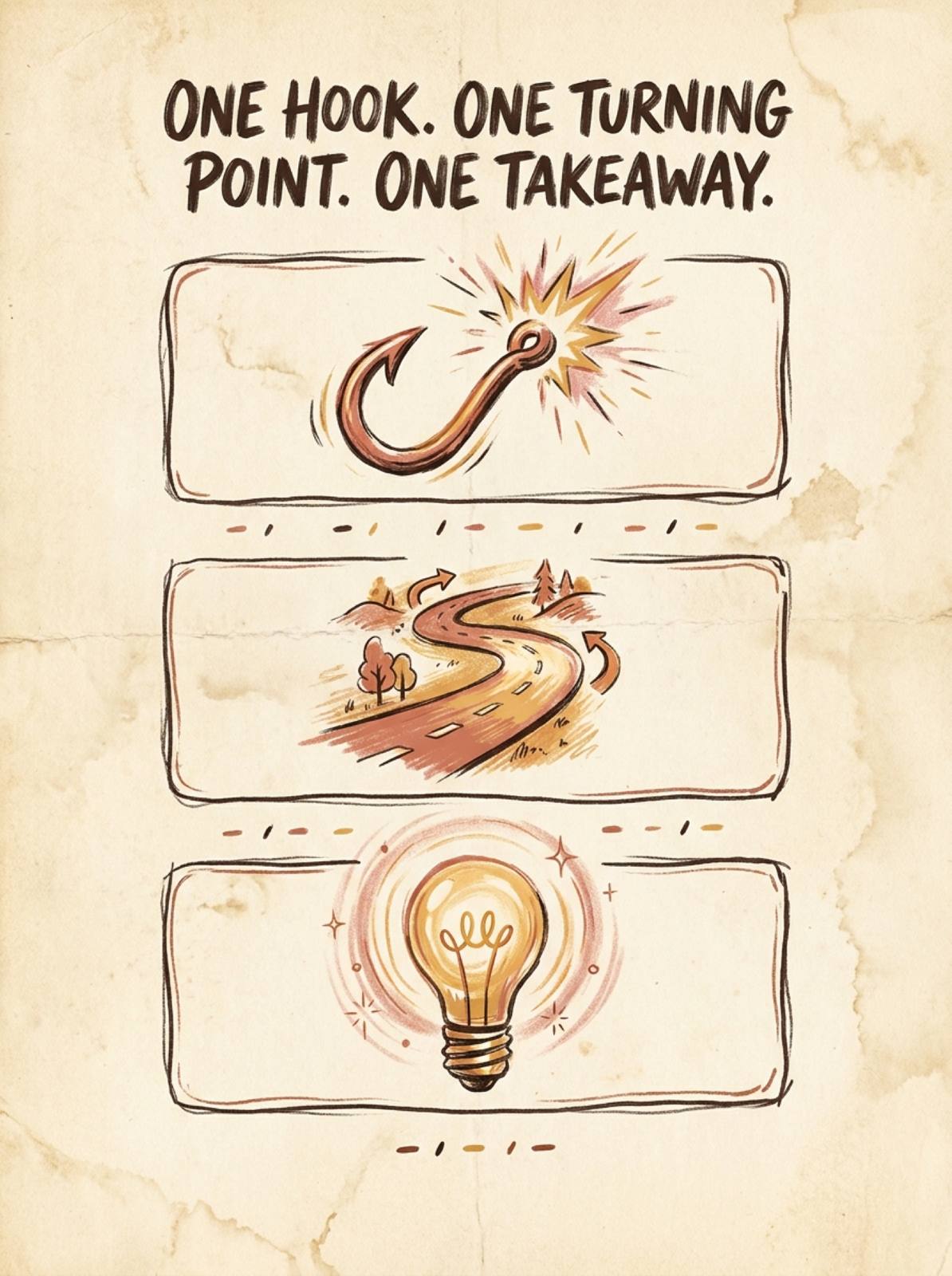
The example uses “ONE HOOK. ONE TURNING POINT. ONE TAKEAWAY.” This card is not a generic list of storytelling advice; it is the story’s new organizing principle. The visual shows the sequence as a compact structure.
End with a transferable takeaway
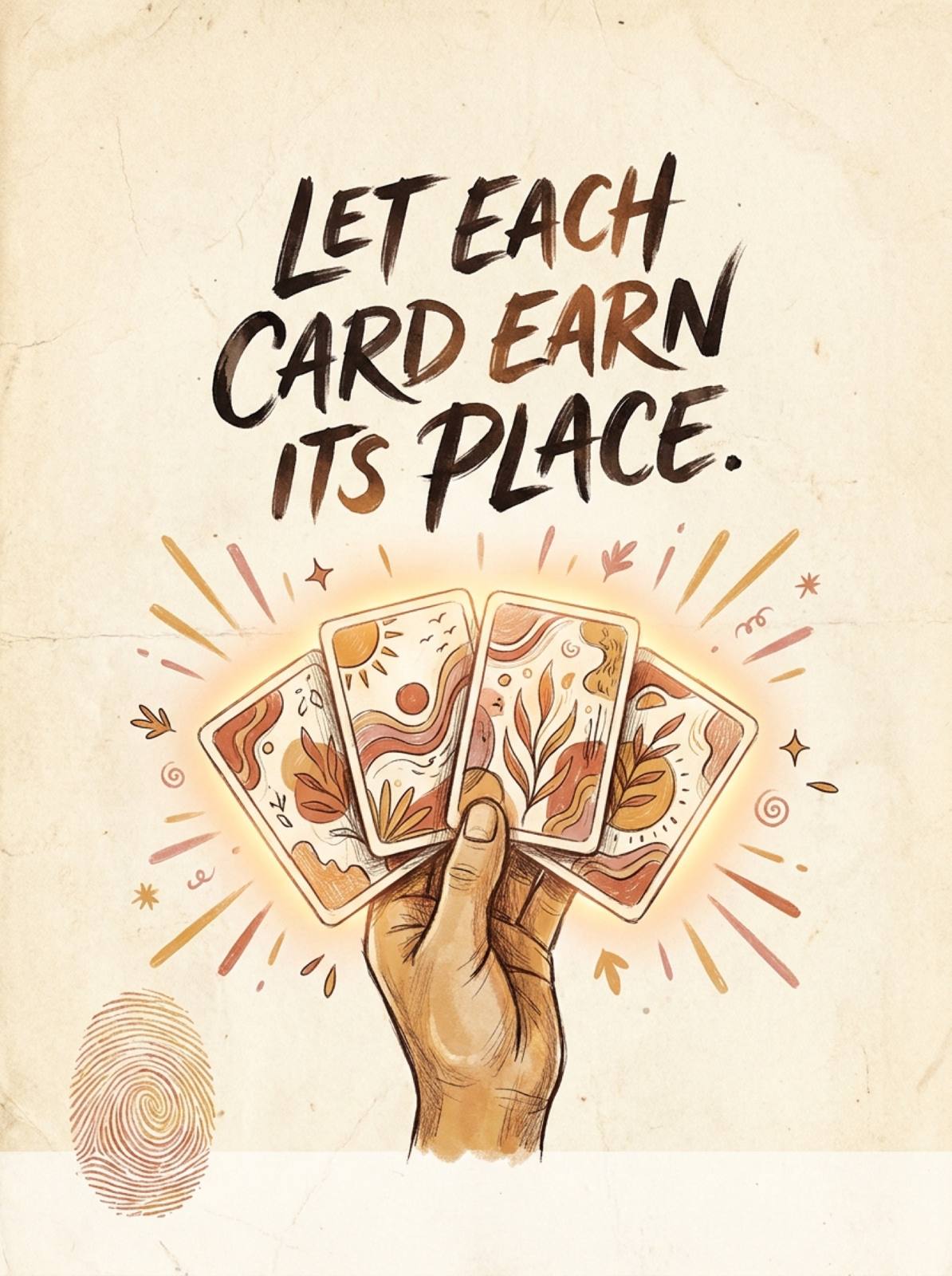
The ending should close this story and give the reader a usable idea. “LET EACH CARD EARN ITS PLACE.” turns the narrative into a practical rule for planning a series. It is more useful than a vague “be consistent” ending because it tells the reader what to review.
A compact visual story gives each card a distinct narrative job.
The Test case produced a visibly distinct hook → problem → structure → takeaway arc. One minor bottom-band artifact was recorded on the final card. The case is therefore evidence for narrative sequencing and reviewability, not a claim that every generation will be pixel-perfect.
Keep story and styling separate
Choose the style after the arc is clear. Then check whether the style supports the story:
- Does the cover have enough visual emphasis?
- Does the problem look different from the resolution?
- Can the turning point be recognized without reading a paragraph?
- Does the ending feel like a close rather than another setup?
- Do all cards still look like one image card series?
The design companion, Social Media Graphic Design Tips for a Readable Image Card Series, covers text, ratio, layout, palette, and full-series QA. Use those checks after the story beats are fixed, not as a substitute for them.
A practical story brief
Create a four-card English image card series from this illustrative story:
[situation]
[problem]
[change]
[takeaway]

Card 1 is the hook, Card 2 is the problem, Card 3 is the turning point, and Card 4 is the takeaway. Provide exact visible text for each card. Use one narrative job per card and review the complete series for continuity.
The exact phrases, audience, language, card count, and ratio are inputs to verify. Do not treat a generated image as proof of an outcome that was not in the source.
Limits
Stories can be compressed too far. If the reader cannot identify what changed, add a card or simplify the source before choosing another style. Generated text and composition can vary, so inspect the returned cards. The Skill does not publish to social platforms and does not report engagement or conversion.
Try it
Start with four plain-language story beats and an exact text allowlist. Begin with the change in the story; the visuals should make that change easier to follow.
About The Author