











 Ima Studio
Create an AI Video with MAGI-2
Sand.ai released MAGI-2 on November 24. Within hours, the threads in r/StableDiffusion were mostly asking not what it can do, but whether anyone can run it. At 480 billion parameters, probably not on a home GPU.
That’s the open-model crowd’s problem, and it’s a fair one. If you make videos for a living, the questions are different: how long a clip, how good the sound is, how many references it takes, and what it costs to try. This article covers what Sand.ai has published, what people are arguing about, and where the gaps still are.
Key takeaways
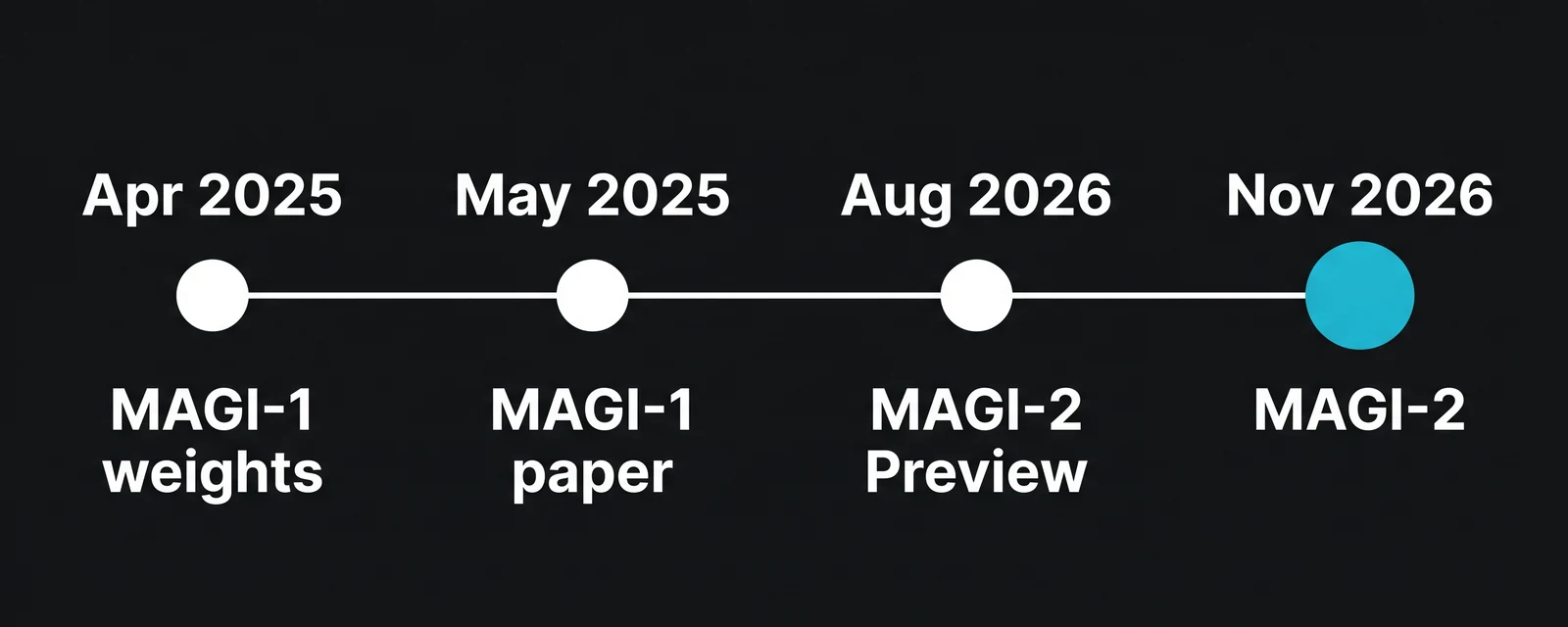
- Sand.ai announced MAGI-2 on November 24, 2026, as the full-scale follow-up to MAGI-2 Preview from August.
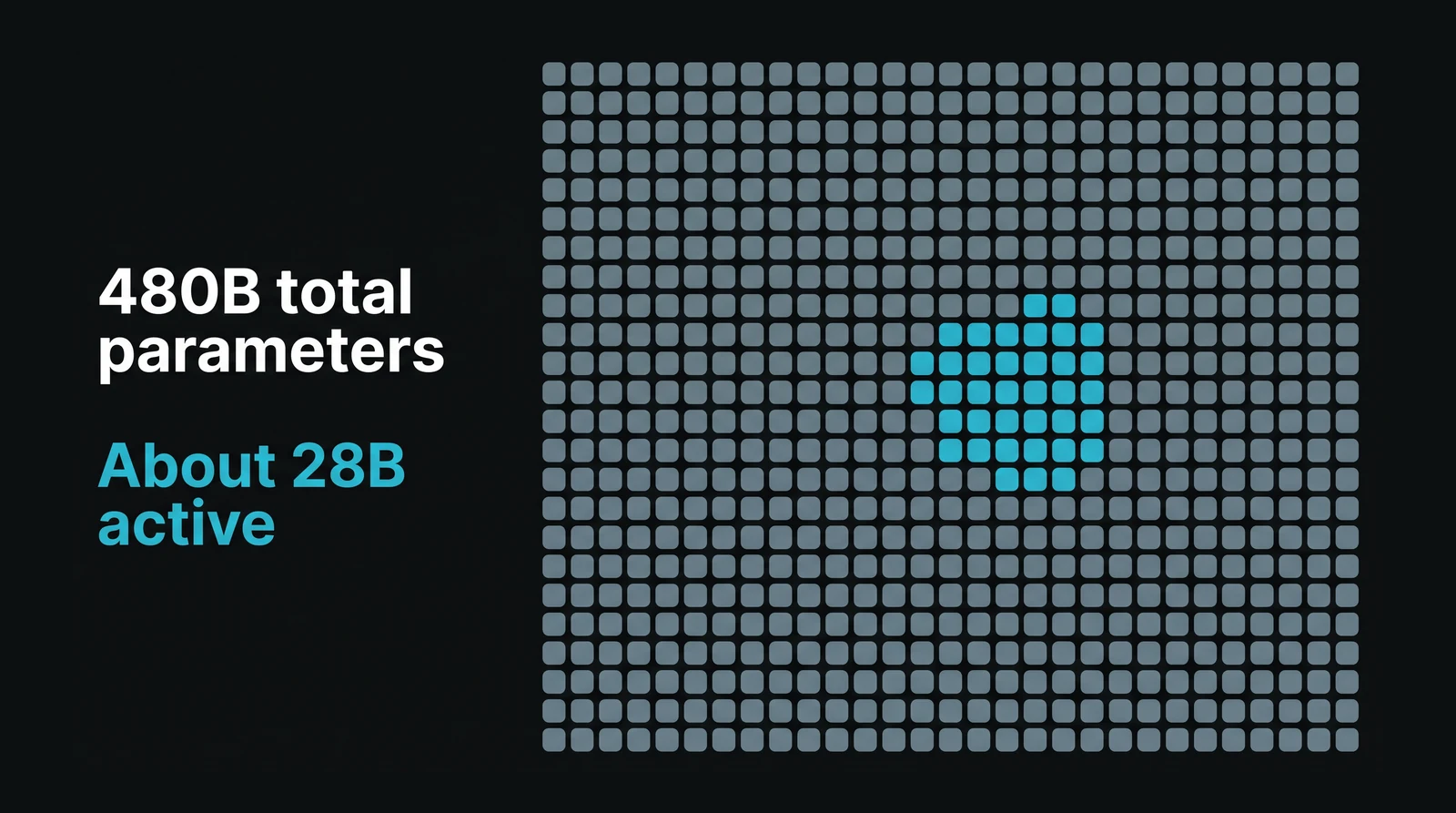
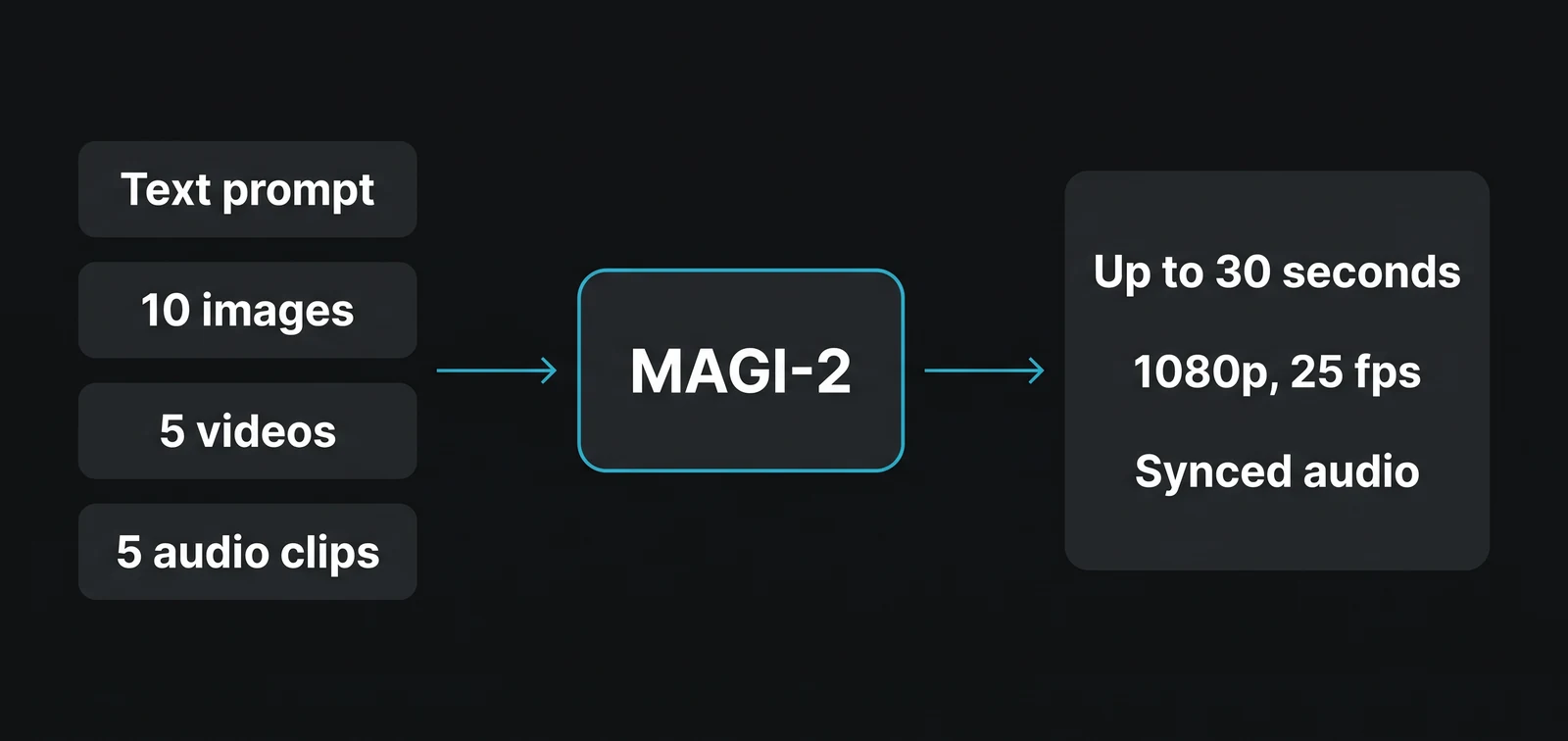
- It has 480B total parameters with about 28B active, and generates up to 30 seconds of 1080p video at 25 fps with synchronized audio.
- One prompt can carry up to 20 references: 10 images, 5 videos and 5 audio clips.
- Sand.ai names extreme high-speed motion and complex soundscapes as areas that still need work.
- Pricing, API details and open weights for this release haven’t been announced.
What Sand.ai announced
MAGI-2 is the flagship version of the model Sand.ai previewed in August, which its announcement describes as “a research release introducing our Multi-Head Latent MoE architecture.” The base model grew more than 4× to 480B total parameters, and pre-training data grew roughly 3× to 4T tokens. It’s a mixture-of-experts design, so only about 28B of those parameters are active at a time.
| What | Sand.ai’s stated spec |
|---|---|
| Output | Up to 30 seconds, 1080p, 25 fps |
| Audio | Generated with the video in one pass: dialogue with lip-sync, foley, ambient sound and music |
| References | Up to 20: 10 images, 5 videos and 5 audio clips |
| Formats | Six aspect ratios |
| Controls | Precise timeline control, editing of existing video, autonomous camera planning |
Sand.ai also reports a 4-task average of 1150.3 on Artificial Analysis Video Arena v2.1, up 151.8 points from the Preview’s 998.5. That’s the company citing a third-party leaderboard, so look at the live board before you treat it as settled.
Who is Sand.ai
Sand.ai is a China-based startup, as TechCrunch described it in April 2025. Its public record is mostly its models. MAGI-1 came first: weights and inference code for the 24B model on April 21, 2025, and a 4.5B version on April 30, all under the Apache 2.0 license, as its Hugging Face page records. The MAGI-1 paper followed on arXiv on May 19, 2025, credited to “Sand.ai and 38 other authors.” MAGI-2 Preview arrived in August 2026, and MAGI-2 now.
The company itself says little. Its site carries the tagline “Advance AI to benefit everyone,” but it doesn’t list founders, a head office or funding, and press reports on its funding disagree with each other. We’ve left those details out rather than pick a number.
What people are saying about MAGI-2
On November 25 we read two r/StableDiffusion threads about the release, roughly 70 comments between them. Three themes came up again and again.
Size. Most of the replies were about 480B. Commenters pointed out that a mixture-of-experts model still has to keep all its weights somewhere, and that most people can’t run something this big at home. Many were hoping for a smaller or distilled version.
Comparisons. The model people kept measuring it against was MiniMax H3, which commenters described as a much smaller open model. One poster ran the same prompt through both and found that H3 had better framing, depth and camera movement, while MAGI-2 looked more lifelike. Another commenter had tried MAGI-2 on a hosted service and thought the voices and color looked a lot like Seedance 2.5. Those are first impressions from a few hours after launch, not tests.
The demos. One commenter thought Sand.ai’s demo clips leaned toward stylized, cartoon-like footage rather than realistic people. Another said a posted side-by-side was too simple to tell the models apart, and several asked what hardware, prompts and generation times were behind the comparisons.
Keep the sample in mind. These are two threads from a community that mostly runs models on its own machines. People who work on hosted tools will probably weigh different things.
What Sand.ai says MAGI-2 still gets wrong
The announcement is upfront about two limits. Extreme high-speed motion can occasionally produce trajectory or continuity artifacts. And complex soundscapes still have room for richer layering and physical realism.
Both matter for planning. A fight scene or a race with fast camera moves is the kind of shot to test early, and a busy street scene is a fair stress test for the audio.
How to try MAGI-2 without running it yourself
You don’t need a GPU cluster to see what it does. In ImaStudio you can open the video creator, pick MAGI-2 and add your own references.
Our list price for 1080p is ¥0.5 per second. At roughly 6.67 yuan to the dollar, that’s about $0.075 per second, so a 30-second clip comes to about $2.25. For comparison, our Seedance 2.5 page estimated about $0.86 per second at 1080p on the Basic plan, in a snapshot from September 4 to 7. MAGI-2 comes to roughly a tenth of that. The two numbers aren’t measured the same way (a converted list price against a plan-based estimate), and your actual cost depends on your plan and the day’s exchange rate, so check the creation page before you generate.
A few places to start from our own tests:
- Choosing between two models on the same product shot? Our Seedance 2.5 Flash vs Seedance 2.5 test shows the method we use: same photo, same prompt, then check which clip you could actually use.
- Planning a longer ad? The 30-second Seedance 2.5 UGC tutorial shows how we break one ad into shots. Whether that structure suits MAGI-2 is something we haven’t tested yet.
- Prefer to work from an AI assistant? Generating videos in Claude with ImaStudio covers the setup.
What hasn’t been announced
Sand.ai’s announcement doesn’t include pricing, and its API Platform is only linked, with no details on the page. The company says it “will follow up soon with open-source releases and a detailed technical report,” but gives no date. Until then, nobody outside Sand.ai can say how MAGI-2 behaves on consumer hardware or what it costs through Sand.ai’s own API.
FAQ
Is MAGI-2 open source?
Not yet. Sand.ai says open-source releases will follow soon but hasn’t given a date. The earlier MAGI-2 Preview shipped with public weights.
How long a video can MAGI-2 make?
Up to 30 seconds in one pass, at 1080p and 25 fps, with audio generated alongside the picture.
How much does MAGI-2 cost on ImaStudio?
Our list price for 1080p is ¥0.5 per second, about $0.075 per second at current exchange rates. Check the creation page for the price that applies to your plan.
Try a shot from your own project. Start with the kind of shot Sand.ai flags as hard, like fast camera movement, so you see the limits first.
Create an AI Video with MAGI-2
About The Author


 SeeDream 5.5 vs GPT Image 2.6 Sunburst vs Nano Banana 2.1 for Realistic Portraits
 How to Add ImaStudio to VS Code and Generate Videos
 How to Add ImaStudio to Cursor and Generate Videos
